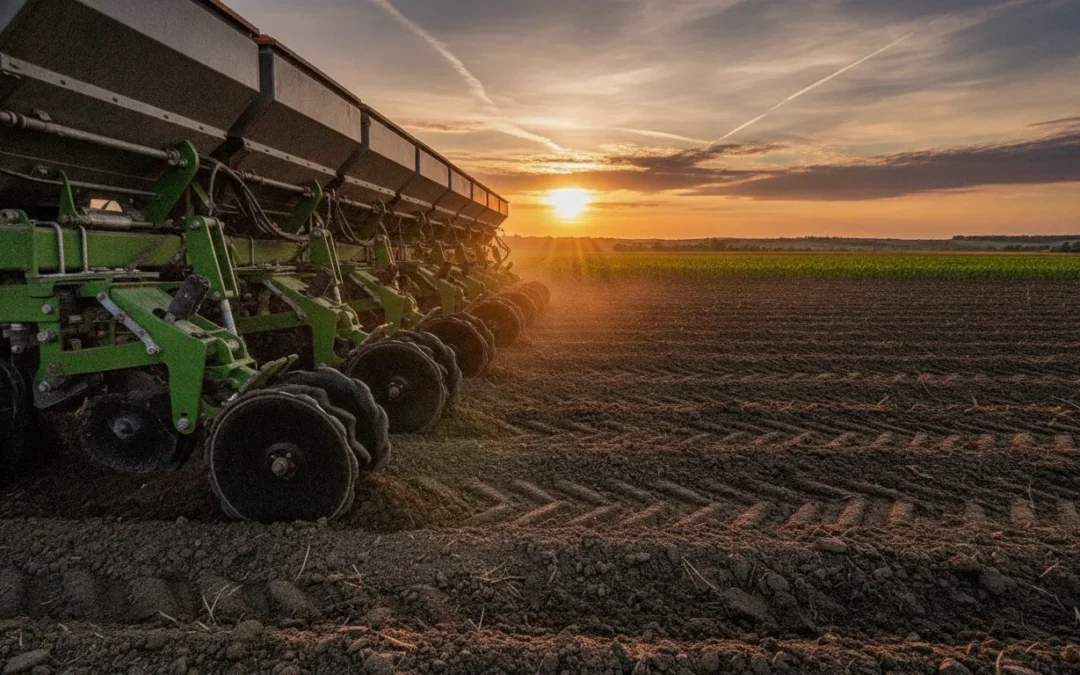
Every successful harvest begins with a perfect seedbed, but even the best planter setup can fail if the seed trench is not closed properly.
Planter closing wheels are critical agricultural components that seal the seed trench, eliminate air pockets, and ensure optimal seed-to-soil contact for uniform crop emergence. By replacing standard rubber wheels with high-performance aftermarket options, farmers can prevent destructive sidewall compaction and improve corn plant emergence by approximately 2% in challenging soil conditions. According to a University of Wisconsin Extension study, these advanced closing wheel setups significantly improve final corn emergence compared to traditional factory setups. Investing in the right closing wheel system protects your seed investment, secures your stand establishment, and directly maximizes your harvest yield potential from day one.
Standard rubber wheels often struggle to seal the trench in wet or heavy soils, leaving air pockets that dry out the seeds. To overcome these common planting issues, many farmers turn to heavy-duty steel alternatives that deliver consistent closure acre after acre. Shop Germinator closing wheels today and see the difference in your stand.
What Are Closing Wheels and How Do They Work?
Closing wheels are the last mechanical parts to touch the ground on a row crop planter. Their job is to collapse the seed trench, pack the soil around the seed, and seal the seed zone so moisture reaches the seed for rapid germination. Aftermarket steel wheels outperform standard rubber by pinching the trench from the bottom-up rather than pressing from the top-down, eliminating the air pockets that cause uneven emergence.
As your planter moves through the field, the double disk openers cut a V-shaped trench in the soil to drop the seed. The primary job of your planter closing system is to collapse this trench, pack the soil, and seal the seed zone. This step is critical for improving seed-to-soil contact and ensuring that moisture can reach the seed for quick germination.
How the Trench Is Closed
Standard row crop planters use two wheels set at an angle to press the soil inward. When these wheels pass over the seed trench, they must apply enough force to crumble the side walls. This action fills the trench with loose soil and seals the top to prevent the seed zone from drying out. If the soil is too wet or too hard, standard wheels may fail to seal the bottom of the trench. This failure leaves air pockets around the seed, which slows down root growth and delays plant development.
The Main Types of Closing Wheels
Farmers can choose from several types of wheels based on their soil types and tillage practices. Standard rubber wheels are common and work well in soft, conventional tilled soil. Cast iron wheels are much heavier and are often used to close tough, wet clays. Spiked and angled wheels use sharp teeth to pinch the soil from the sides rather than pushing down from the top. According to a University of Wisconsin Extension study, aftermarket closing wheels increase corn emergence by about 2% over standard rubber wheels. This small boost in stand uniformity can lead to higher yield potential across your entire field.
Why Steel Outperforms Plastic
Many aftermarket wheels are made of hard plastic or nylon to save weight and reduce cost. However, plastic teeth wear down quickly when they hit rocks, roots, or hard dry soils. Once the teeth lose their shape, they can no longer pinch the bottom of the trench or crumble the sidewalls. High-grade 50-grade steel wheels maintain their sharp edge and overall weight over thousands of acres. Steel wheels provide the consistent force needed to break up tough soil without the need for heavy, complex spring systems. Choosing steel over plastic ensures your planter maintains proper closing wheel pressure from the first acre of the season to the last.
How Do Closing Wheels Improve Seed-to-Soil Contact?
Closing wheels determine how tightly the soil wraps around the seed. Good seed-to-soil contact draws moisture into the seed coat for fast germination. Air pockets block this flow and cause uneven stands. Steel spiked wheels pinch the bottom of the seed trench first, filling voids with moist soil, while leaving the top layer loose so seedlings push through easily.
Every seed needs a warm, damp home to sprout. The soil must wrap tightly around the seed with no air pockets. This fit is what farmers call seed-to-soil contact. If the fit is good, the seed drinks water fast and grows. If air pockets remain, the seed stalls or dies. Your choice of closing wheels is what determines this fit at the bottom of the seed zone.
The Science of Seed-to-Soil Contact
When a planter passes, its disk openers cut a V-shaped trench in the soil. The seed drops to the bottom of this V. To sprout fast, the seed must touch solid, moist soil on all sides. This contact acts like a wick to draw water into the seed coat. Air pockets around the seed block this flow of water, which slows down growth. Getting this zone right requires proper closing wheel pressure to firm the dirt without packing it too hard.
The Failure of Top-Down Smushing
Standard rubber closing wheels try to seal the trench by pressing down from the top. In soft soil, this can work. But in tough soils or no-till fields, top-down pressure fails. It often seals only the very top of the trench. This leaves a hollow space at the bottom where the seed sits. According to a University of Vermont factsheet, conventional rubber wheels force the trench closed from the top, while spiked wheels pinch the bottom of the trench shut. Standard wheels smush the soil, but spiked wheels lift and tuck the soil around the seed.
Bottom-Up Pinching for Uniform Stand
Spiked or steel wheels use a pinching action. They do not press down from the top. Instead, they pierce the dirt on both sides of the V. They push soil inward at the bottom of the trench first. This fills the air pockets and embeds the seed in moist dirt. This bottom-up pinch leaves the soil above the seed loose and crumbly. This loose top soil makes it easy for the new plant to break through. When seeds sprout at the same time, you get a uniform stand. This even growth prevents late plants from becoming weeds that steal nutrients from their neighbors.
What University Field Data Shows
Studies show that aftermarket closing wheels beat standard rubber wheels. Research from a University of Wisconsin Extension study found that aftermarket wheels significantly improve corn plant emergence compared to standard rubber wheels. The data shows that aftermarket closing wheels can increase corn emergence by about 2% over standard rubber. That 2% boost means more plants per acre and higher potential at harvest time. Starting with the right wheel setup is the easiest way to protect your seed investment.
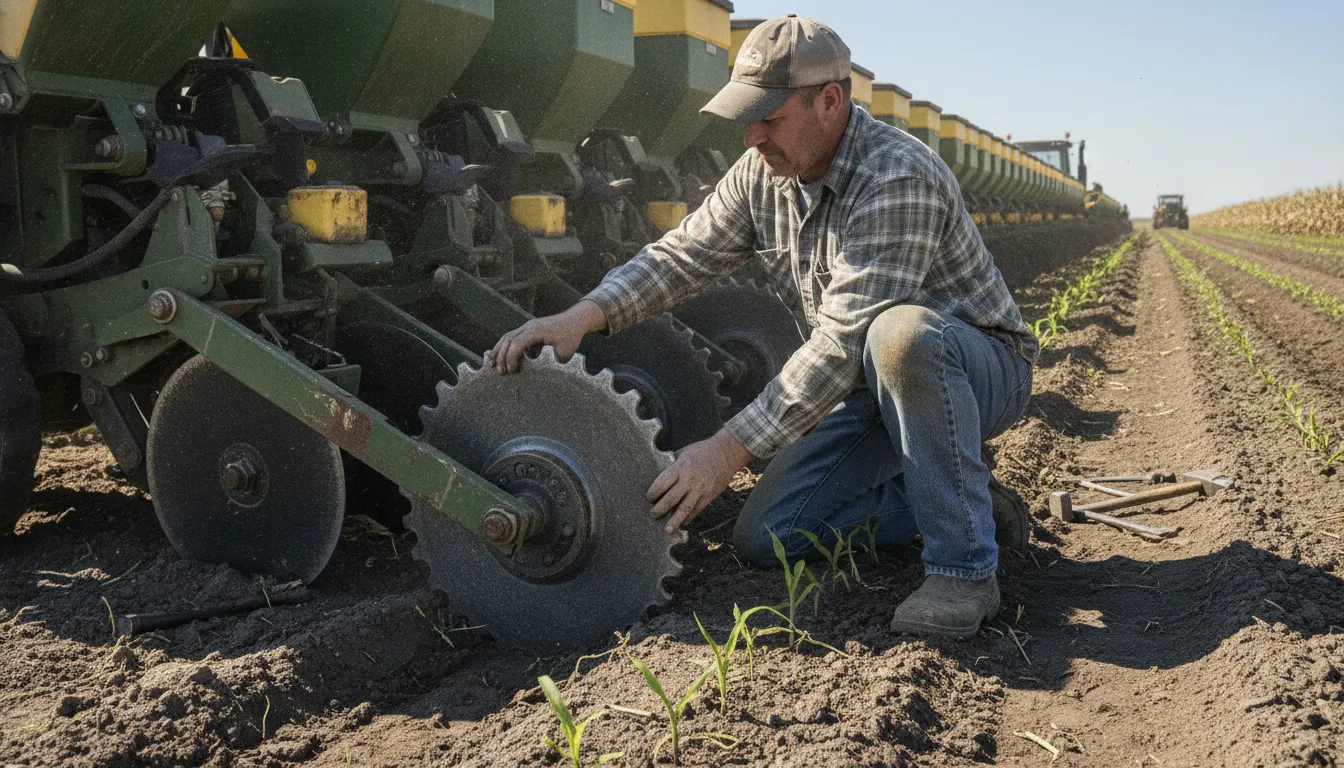
Proper planter closing wheel setup is the difference between a uniform stand and costly yield loss.
Can the Right Closing Wheel Prevent Sidewall Compaction?
Yes. Spiked steel wheels break through the hard sidewall glaze that rubber wheels create in wet soils. Instead of smearing the trench closed from the top. They chip away the packed soil from the sides and fill the bottom of the seed zone with loose, crumbly dirt. This action eliminates mohawk rooting and allows roots to spread freely for better drought tolerance.
When planting into damp or heavy soils, the disc openers on your planter press outward. This pressure packs the soil along the sides of the trench, creating slick, hard dirt barriers. Farmers call this sidewall compaction, and it can ruin your crop yield. If the seed trench walls are too hard, tender young roots cannot break through. Instead, they grow flat along the slot in a shape called mohawk rooting, which restricts their access to water and nutrients.
The Danger of Rubber Wheels in Wet Dirt
Standard rubber closing wheels often make this problem worse in wet conditions. Rubber wheels are wide and flat, so they force the furrow closed from the top of the trench. In soft, wet soils, this downward force smushes the upper dirt and glazes the sidewalls. The top of the slot looks sealed, but the bottom can remain open. This trap dries out the seed and leaves the root zone packed solid.
How Spiked Wheels Crumble the Trench Wall
Using spiked closing wheels solves this issue by changing how the soil closes. According to a University of Vermont factsheet on planter setup, spiked closing wheels pinch the bottom of the seed trench while keeping the soil above it loose. Instead of pushing down from the top, the metal spikes enter the soil at an angle. They chip and crumble the packed sidewall, breaking the hard glaze.
Healthy Root Growth and Better Stands
Breaking that sidewall glaze allows young roots to spread out in all directions. It ensures deep root growth, which helps plants find water during summer dry spells. Crumbling the trench also keeps the soil above the seed loose and crumbly. This loose soil makes it much easier for young shoots to push through to the surface. It leads to rapid, even emergence across your whole field, which is key to hitting your yield goals.
Why Does Closing Wheel Setup Matter in No-Till Systems?
No-till fields present the toughest closing conditions: cool soil, heavy residue, and firm ground that rubber wheels cannot penetrate. Steel closing wheels with spiked teeth slice through trash, break sidewall smearing, and pinch the trench from the bottom up. Proper down-pressure adjustment is essential to prevent open slots or over-packed crusts.
No-till farming helps save soil and hold moisture, but it also brings tough field conditions. With no tillage to loose the ground, the soil surface remains firm and covered in heavy crop residue. In these environments, your planter setup can make or break your entire stand. For successful no-till planting, finely tuned planters are essential because the planter is often the only tool that touches the soil, as noted by researchers at the University of Vermont Extension. If your setup is not perfect, you risk poor stand establishment and lost yield.
The Real Challenges of No-Till Fields
No-till fields often have cool, damp soil and thick residue from the last crop. Standard rubber closing wheels struggle here. They are built to press loose dirt together, not to slice through thick trash or break hard soil. When rubber wheels pass over damp, heavy soil, they tend to smear the sides of the trench. This seals the slot from the top but leaves a hollow air pocket around the seed. Over time, as the sun dries the ground, the trench can crack open, exposing the seed to dry air and pests.
Managing Trench Closure and Sidewall Smearing
To overcome no-till challenges, you must change how you close the seed trench. Instead of pushing down on top of the slot, you need to pinch it from the bottom up. This is where advanced closing wheels become vital. They break the sidewall mud, crumble the soil, and fill the trench completely. This action eliminates air pockets while keeping the soil loose enough above the seed for fast emergence. By using proper equipment, you can focus on improving seed-to-soil contact and ensuring a uniform crop stand.
How to Set Closing Wheel Pressure
Getting your closing wheels to work right in no-till requires proper pressure settings. You must adjust down pressure based on residue thickness and soil moisture. If you set the pressure too low, the wheels will ride on top of the trash, leaving the trench wide open. If you set it too high, you will pack the soil too tight, making it hard for the seed to sprout. Check your row units in the field. Make sure the wheels crumble the trench wall and press soil firmly around the seed without packing the top layer into a hard crust.
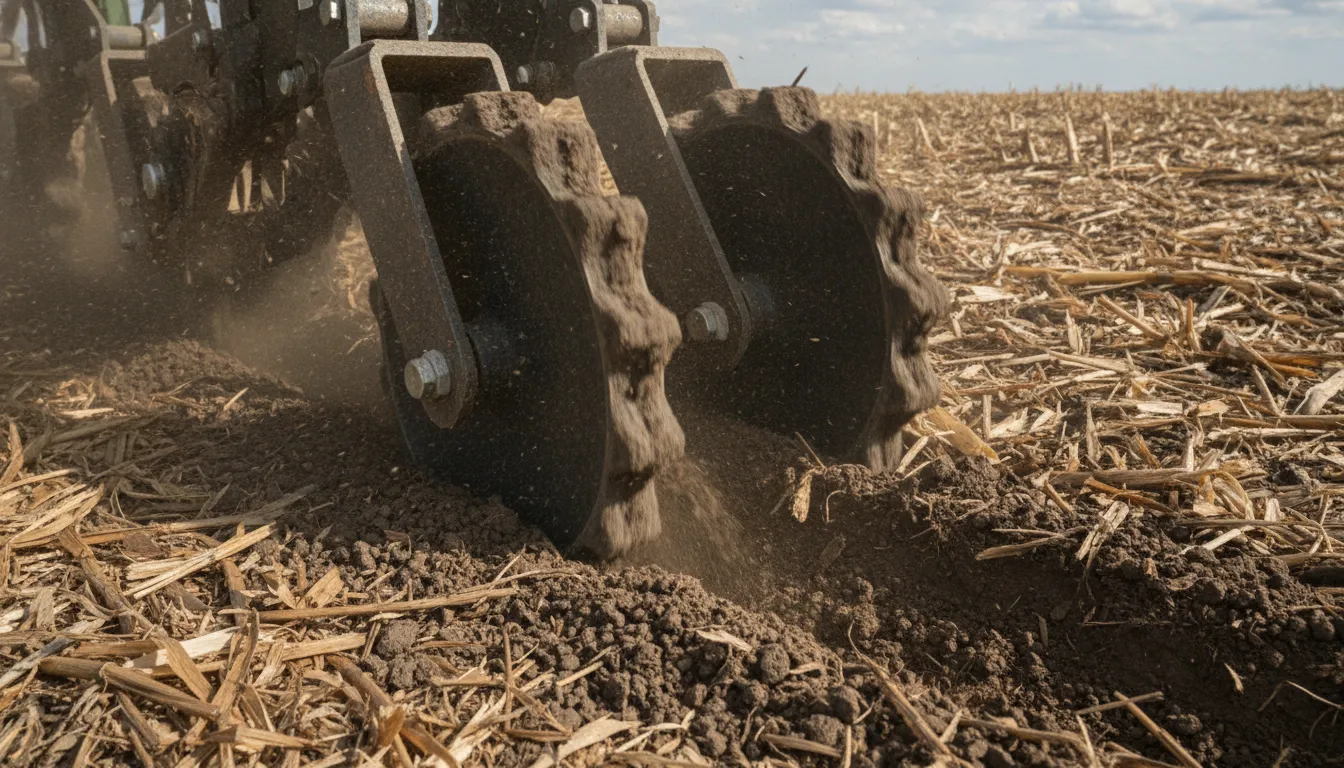
Steel closing wheels cut through heavy residue and close the seed trench from the bottom up in no-till conditions.
Steel vs Plastic vs Cast Iron: What the Field Data Says
Planter closing wheel materials directly affect seed-to-soil contact quality and lifetime cost. High-grade 50-grade steel offers the best durability-to-weight ratio, lasting 4,500+ acres with no visible wear. Poly plastic wears out quickly in abrasive soils. Cast iron adds excessive row-unit weight that can over-compact the seed zone.
Planter closing wheel materials have a direct impact on seed-to-soil contact and the lifetime cost of your planter. Farmers can choose from three main options when upgrading: high-grade steel, poly plastic, and cast iron. Each material performs differently under tough field conditions, and selecting the wrong style can lead to rapid wear or insufficient trench closure.
How High-Grade Steel Compares in the Field
Premium steel wheels offer the best balance of strength and weight. For example, Germinator closing wheels are built from heavy 50-grade steel rather than thin stamped metal or plastic. Field data shows that these steel wheels still look new after 4,500 acres of use, providing elite durability. This high-grade steel cuts through tough residue and closes the seed trench without the need for heavy, soil-packing cast iron designs.
The Real-World Performance of Plastic and Cast Iron Wheels
Many aftermarket brands use molded poly plastic, such as Yetter Twister closing wheels. While plastic is light and cheap upfront, it wears down quickly in abrasive soils or heavy residue, leading to frequent replacement costs. On the other side, cast iron wheels like the Copperhead Cruiser Xtreme are highly durable but add a lot of weight to the row unit. Excess weight can create deep soil compaction over the seed, which slows down crop emergence and reduces overall stand uniformity.
Closing Wheel Material Performance Comparison
| Material type | Typical product | Weight per row | Wear life (acres) | Compaction risk |
|---|---|---|---|---|
| 50-Grade Steel | Germinator Wheel | Medium (9 lbs) | 4,500+ (looks new) | Very Low |
| Poly Plastic | Yetter Twister | Light (4 lbs) | 1,200 to 2,000 | Low |
| Cast Iron | Copperhead Cruiser | Heavy (21 lbs) | 3,000 to 4,000 | High |
Understanding Your Lifetime Cost Per Acre
Buying cheap parts often leads to higher long-term costs. Plastic wheels require more maintenance and need to be replaced much sooner than steel. Opting for Germinator closing wheels helps farmers avoid these repeated purchases while securing elite seed trench closure. Over several seasons, high-grade steel wheels provide the lowest cost per acre because they maintain their shape and teeth profile through thousands of planting runs.
Choosing a durable wheel is especially critical in no-till systems where soil is firm. According to University of Vermont research, specialized spiked wheels pinch the bottom of the seed trench shut while keeping the soil above it loose. Premium steel wheels deliver this exact pinch action year after year, guaranteeing that your seeds get the protection they need to grow strong roots.
Closing Wheel ROI: What Farmers Can Expect in the First Season
Upgrading to premium steel closing wheels delivers first-season ROI in as few as 142 acres. At 4 bushels per acre yield improvement and $4.50 corn, a 12-row planter pays for itself and generates $15,456 in year-one profit. Competitor setups can cost $1,208 per row, while Germinator steel wheels cost $180 to $212 per row — an 85% savings on the initial investment.
Every equipment purchase on a farm has to answer one question: How soon will it pay for itself? Unlike complex technology upgrades that take years to break even, upgrading your planter closing system offers some of the fastest, most direct ROI you can achieve. When you look at the actual numbers behind seed-to-soil contact and emergence uniformity, the math becomes clear.
Let us talk about the upfront cost first. Outfitting a planter with high-end, aftermarket closing systems can easily get cost-prohibitive. Some competitor setups cost as much as $1,208 per row. That is a massive capital layout before you even drop a seed. In comparison, Germinator closing wheels cost between $180 and $212 per row. That represents an 85% cost saving on the initial investment while delivering the heavy-duty, 50-grade steel construction needed to handle tough, high-residue, and no-till conditions without wearing out like plastic alternatives.
Now, let us look at the yield side of the ledger. Solid seed-to-soil contact and the elimination of sidewall compaction lead directly to faster, more uniform emergence. Across standard conditions, growers document an average yield improvement of 3 to 5 bushels per acre. In challenging no-till systems, where closing the furrow is notoriously difficult, that benefit can jump to up to 13 bushels per acre.
To see how quickly this pays off, we can do some simple first-season payback math. Let us assume a conservative corn price of $4.50 per bushel and a modest 4 bushels per acre yield increase:
- Extra revenue per acre: 4 bushels x $4.50 = $18.00 per acre in extra return.
- Cost to outfit: At $212 per row for a standard 12-row planter (30-inch spacing, covering 30 feet per pass), the total investment is $2,544.
- Acreage to break even: $2,544 total cost divided by $18.00 revenue gain per acre = 141.3 acres.
For a typical 1,000-acre corn operation, a yield bump of just 4 bushels per acre generates $18,000 in additional first-season revenue. After subtracting the initial $2,544 equipment cost, that leaves $15,456 of pure profit added to your bottom line in year one. You cover the cost of the upgrade in the first 142 acres, and the wheels continue to generate pure return for years to come.
No two fields are identical, and what works perfectly in the loose, sandy loam of Oklahoma might fail in the heavy, wet clay of the Dakotas. Achieving uniform emergence means matching your planter closing system to your specific soil conditions and planter model.
Matching Planter Models and Soil Types
Planter compatibility and soil makeup dictate your closing wheel setup:
- John Deere and Kinze Planters: Standard tail section designs on JD (MaxEmerge series) and Kinze row units are built for dual angled closing wheels. Upgrading these from stock rubber to heavy-duty steel Germinator closing wheels eliminates the flexing and rapid wear common in high-clay or high-residue fields.
- Case IH Planters: Case IH utilizes a specialized wedge-shaped press wheel system. When adapting heavy-duty metal closing systems to these units. Ensure you utilize the proper row-unit mount brackets to maintain correct depth and alignment without altering the factory seed-trench design.
- Heavy Clay and Wet Soils: Standard rubber wheels simply cannot close a sticky clay trench. They over-compact the sidewall or slide right over the top, leaving a hollow pocket. You need dual steel Germinator wheels with a prominent inner shoulder. The inner shoulder controls depth and prevents seed trench crushing, while the high-tensile steel breaks the sidewall compaction and crumbles the clay over the seed.
- Sandy and Light Loam Soils: In loose, sandy soils, aggressive spiking can over-agitate the seedbed. The flat-machined face and controlled depth profile of 50-grade steel Germinator wheels prevent over-penetration, ensuring the trench is firm and sealed without digging out the shallow seed.
Step-by-Step: Setting Closing Wheel Pressure
Proper down pressure is the difference between a sealed trench and a baked-shut crust. Adjust your row unit springs or air bags before heading to the field.
- Start with the baseline. Use the manufacturer recommended pressure for your planter model.
- Run a test strip. Drive a short strip at normal planting speed.
- Dig and inspect. Dig up seeds every 20 feet and check the trench profile. Look for air pockets below the seed or a hard crust above it.
- Adjust each row. If you see open air pockets, increase down pressure. If the soil above the seed is packed into a hard crust, reduce down pressure. Fine-tune each row unit independently, since wear and frame flex can cause variation across the bar.
- Confirm the seal. The goal is firm soil contact at seed depth with loose, crumbly soil on top. Repeat this check whenever you change fields or soil conditions.
Compare Germinator closing wheels for your planter model
More Closing Wheel Resources for Your Planter
Use these focused guides to compare equipment, set up your planter, and protect seed-to-soil contact across different crops and field conditions:
- Read the guide on compare Germinator, Yetter, and Precision Planting closing wheels: compare Germinator, Yetter, and Precision Planting closing wheels.
- Read the guide on Germinator closing wheel reviews: Germinator closing wheel reviews.
- Read the guide on closing wheels for Case IH and Kinze planters: closing wheels for Case IH and Kinze planters.
- Read the guide on how to install closing wheels on a planter: how to install closing wheels on a planter.
- Read the guide on when to replace worn closing wheels: when to replace worn closing wheels.
- Read the guide on closing wheels and soybean seed cracking: closing wheels and soybean seed cracking.
- Read the guide on the best closing wheels for corn, based on field-trial data: the best closing wheels for corn, based on field-trial data.
- Read the guide on closing wheels for better seed-to-soil contact: closing wheels for better seed-to-soil contact.
- Read the guide on closing wheel upgrade ROI and first-season payback: closing wheel upgrade ROI and first-season payback.
- Read the guide on aftermarket closing wheels for John Deere planters: aftermarket closing wheels for John Deere planters.
- Read the guide on Germinator closing wheels vs. Precision Planting: Germinator closing wheels vs. Precision Planting.
- Read the guide on steel vs. plastic closing wheels: steel vs. plastic closing wheels.
- Read the guide on sidewall compaction in planters: sidewall compaction in planters.
- Read the guide on what closing wheels are on a planter and why they matter: what closing wheels are on a planter and why they matter.
- Read the guide on how to choose closing wheels for corn: how to choose closing wheels for corn.
Frequently Asked Questions About Closing Wheels
Are aftermarket closing wheels worth the investment?
Yes. Factory rubber closing wheels often pinch the top of the furrow or fail to break down sidewall compaction, particularly in wet or high-clay conditions. Upgrading to a heavy-duty, farmer-designed aftermarket closing wheel, like the Germinator, is widely considered one of the highest-ROI planter upgrades you can make. By crumbling the trench walls and sealing the furrow from the bottom up, they eliminate air pockets, prevent crusting. And deliver the uniform seedling emergence that directly translates to higher bushels per acre and a rapid first-season ROI.
What are the best planter closing wheels?
The best planter closing wheels are made of high-strength, premium material rather than wear-prone plastic or cast iron that can clog with mud. The Germinator closing wheels are highly rated because they are constructed from heavy-duty 50-grade steel and utilize a custom-engineered inner-ring shoulder. This shoulder functions as a depth gauge to prevent seed displacement while the spiked teeth work to break up sidewall compaction. Making them exceptionally versatile across conventional, minimum-till, and heavy residue no-till operations.
How do you set closing wheels for proper spacing and alignment?
Properly setting your closing wheels is critical to achieving a uniform furrow seal. Start by ensuring your closing wheel tailpiece is parallel with the ground. If the tailpiece is angled too far forward, the wheel will skid across the soil rather than rolling. If it is angled too far back, the wheel will dig too deep and push mud over the seed. Use the adjuster bolts on the tailpiece arm to set the parallel alignment. Then set the wheel-to-wheel gap at approximately 1 to 1.5 inches where the wheels meet behind the seed tube. A gap that is too wide leaves the trench open. A gap that is too narrow crushes the seed zone.
How long do steel closing wheels last compared to plastic?
Premium 50-grade steel wheels, such as the Germinator, show no visible signs of wear after 4,500 acres of use under typical conditions. Poly plastic wheels from brands like Yetter typically wear out between 1,200 and 2,000 acres, depending on soil abrasiveness and residue load. Over a five-year period on a 1,000-acre farm, steel wheels will likely outlast two to three sets of plastic wheels. Making steel the lower-cost option over the full ownership cycle.
Can closing wheels fix sidewall compaction after it happens?
Yes and no. The right closing wheels prevent sidewall compaction from forming in the first place by crumbling the trench walls as the planter passes. Steel spiked wheels break the hard glaze that rubber wheels create, allowing roots to spread immediately. If sidewall compaction is already present from a previous pass, closing wheels cannot undo that damage. The preventative approach — installing the right wheels before planting — is the only effective strategy. Once the trench is sealed with compacted sidewalls, the damage to root development is done for that season.
Ready to Upgrade Your Planter Closing System?
Every day you plant with standard rubber closing wheels is a day you leave yield potential in the field. Germinator closing wheels are built from heavy-duty 50-grade steel and engineered specifically by farmers for farmers. They are proven to eliminate sidewall compaction, optimize emergence uniformity, and deliver a full ROI in your very first season.