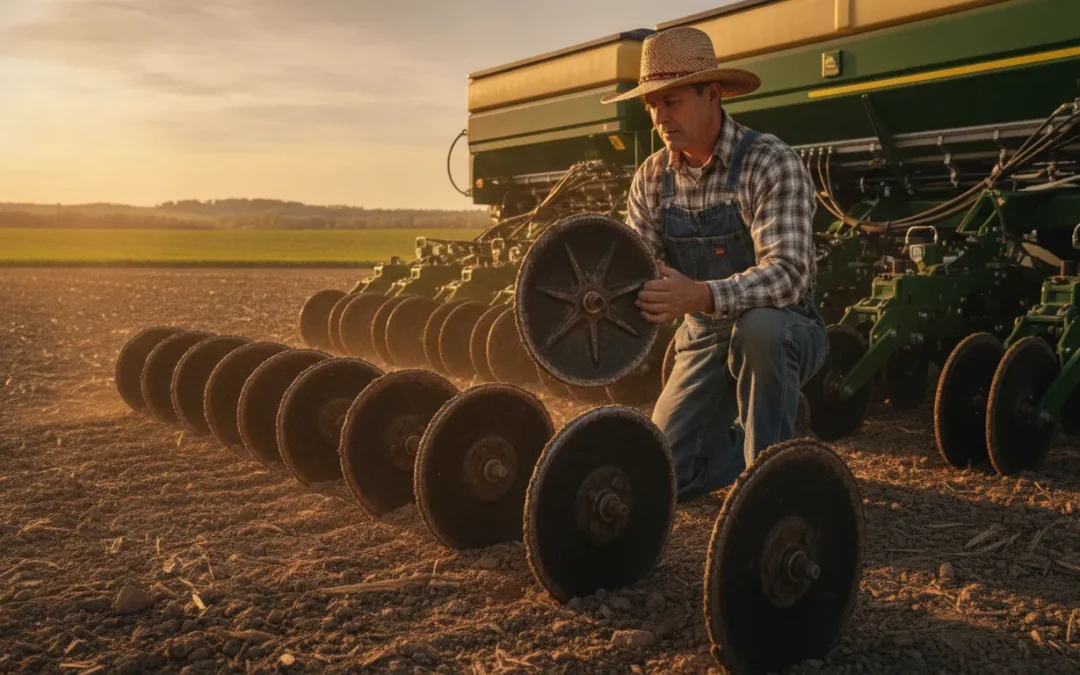
Closing wheels do more than finish the seed trench. They help crumble the furrow sidewall and protect seed-to-soil contact, so a worn wheel can create a planting problem before it looks completely failed. Abrasive soil can wear plastic wheels significantly in one planting season, while steel alternatives are built for a longer service life. Answering the closing wheel wear replacement when question comes down to what the wheel profile and the furrow tell you in the field.
If you are asking when closing wheel wear requires replacing, use the wheel profile and the furrow as your guide. Replace the wheel when it can no longer crumble the sidewall effectively, shows excessive wear, or has a bearing that no longer functions properly. Upgrading to premium 50-grade steel can extend wear life compared with standard plastic options.
Contact Farm Shop MFG for planter closing wheel advice before you plant.
A quick inspection before the planter goes to the field can reveal whether you need a like-for-like repair or a more durable upgrade. For the broader equipment decision, review our premium planter guide to Germinator closing wheels, then start with the wear patterns that indicate replacement time.
When Closing Wheel Wear Means It’s Replacement Time
Knowing when closing wheel wear requires replacement starts with one field question: can the wheel still crumble the furrow sidewall and leave reliable seed-to-soil contact? If the working profile has rounded off, narrowed, or otherwise lost its ability to break down the sidewall, the wheel is no longer doing its core job. That is the replacement point, even if it still appears usable from a distance.
Do not judge the wheel by appearance alone. With the planter raised and safely secured, inspect each closing wheel for an uneven or worn profile, then check for looseness, rough rotation, and bearing damage. Ohio State University Extension’s planter inspection guidance recommends checking closing wheels or discs and their bearings, and replacing wheels when they are excessively worn: review the planter check recommendations.
Use the furrow as your field test
A worn wheel can pass a shop inspection yet fail in the soil. Dig behind the row unit in representative fields and look at the closed furrow. The goal is a firm, properly closed seed zone without a persistent sidewall that limits seed-to-soil contact. If the wheel leaves the sidewall intact, creates an inconsistent closure pattern. Or requires excessive pressure to finish the job, measure the result against a new or known-good wheel. Those are practical signs that the profile has gone beyond adjustment and needs replacement.
This matters because sidewall compaction can interfere with the seed zone even when the row unit appears to be operating normally. For a deeper look at the problem, see closing wheels and sidewall compaction.
Account for soil and wheel material
Replacement timing depends on acres, soil abrasiveness, field conditions, and wheel material. Plastic wheels may show significant wear after one planting season in abrasive soil, so a preseason inspection is not optional for those row units. Compare the profile across every row rather than replacing only the most visibly damaged wheel. Uneven wear can produce inconsistent furrow closure across the planter.
If repeated replacement is becoming a seasonal expense, the issue may be material choice rather than poor maintenance. Start with this premium planter guide to Germinator closing wheels before deciding whether a longer-wearing wheel makes more sense for your acres.
How Long Do Planter Closing Wheels Last?
There is no universal replacement interval for planter closing wheels. Wear depends on soil type, tillage, acres covered, and how much abrasive material the wheel encounters. A closing wheel working through rocky or sandy ground will wear faster than one planting in mellow, low-abrasion soil. The practical question is not simply how many seasons a wheel has been on the planter. It is whether the wheel still has the shape and working edge needed to close the furrow correctly.
Material makes a major difference. Standard plastic wheels can show significant wear after one full planting season in abrasive soil. Once the profile rounds off, the wheel may not crumble the furrow sidewall as intended. That can leave poorer seed-to-soil contact even though the wheel still appears intact at a glance. Steel alternatives offer significantly longer wear life than standard plastic, which is why many farmers evaluate the total cost per acre instead of the purchase price alone.
What 4,500 acres can tell you
Farm Shop MFG reports that its Germinator closing wheels, made from premium 50-grade steel, still look new after covering 4,500 acres. That is a field-use reference point, not a promise that every set will have the same life. Soil conditions and operating practices still matter. It does show what a durable steel wheel can look like when it is built to handle repeated contact with the furrow and field residue.
Inspect the wheel at the end of each season and before planting. Look for a worn or rounded profile, chips, cracks, looseness, and bearings that do not turn smoothly. If the wheel no longer works the sidewall effectively, replace it rather than waiting for a visible failure in the field. The when to replace closing wheels guide can help you evaluate wear before the planter goes back to work.
Signs Your Closing Wheels Need Replacing
Walk the row unit and inspect the closing wheels before the planter goes back to the field. The warning signs are usually visible or easy to feel:
- A slick, rounded profile where the wheel used to have a defined working edge.
- Cracks, chips, or other damage in the wheel.
- A worn or flattened edge that no longer shapes the furrow correctly.
- Loose bearings, side-to-side wobble, or rough movement when the wheel is spun.
- A wheel that rolls through the furrow without crumbling the sidewall.
- A visible gap between the seed and the soil after the furrow is closed.
Profile loss is more than a cosmetic problem. Closing wheels need a working edge to break down the furrow sidewall and press soil back around the seed. When the wheel becomes rounded or flat, it may leave the sidewall intact instead of creating consistent seed-to-soil contact. That is one of the clearest signs that closing wheel wear has moved from normal use to replacement territory.
Pay close attention to the furrow itself. If the closing wheels are no longer crumbling the sidewall, the underlying issue may be closing wheels and sidewall compaction. A compacted sidewall can restrict roots and leave the seed in a poor environment, even when the seed depth appears correct. Worn wheels can allow that problem to continue across every row.
Check the bearings as well as the wheel
Do not inspect the rubber or steel surface and ignore the hardware. Spin each wheel by hand, check for roughness, and move it side to side to find looseness. Ohio State University Extension recommends inspecting closing wheels or discs, confirming that the bearings function properly, and replacing wheels when they are excessively worn. Its planter inspection guidance is a useful pre-season checklist.
Replace a wheel when wear changes how it closes the furrow, not simply when it reaches a certain age. Soil type, acres, residue, down pressure, and bearing condition all affect service life. If the wheel no longer forms a consistent closure behind the seed, it is costing you planting accuracy every pass.
Compare steel vs plastic closing wheel durability before you replace another wheel.
Plastic vs Steel Wear Rates: What the Numbers Show
Material choice changes how often a closing wheel needs attention. Common plastic wheels can wear prematurely, especially when a row unit works through abrasive soil. Premium steel does not eliminate inspection, but it generally preserves its working profile longer. That matters because a wheel that no longer crumbles the furrow sidewall can reduce seed-to-soil contact.
| Comparison point | Common plastic wheel | Premium steel wheel |
|---|---|---|
| Typical wear life | May show significant wear after one planting season in abrasive soil. | Offers significantly longer wear life than standard plastic alternatives. |
| Resistance to abrasive soil | More vulnerable to premature wear as abrasive soil removes the working profile. | Premium 50-grade steel is built for greater durability in demanding soil. |
| Replacement frequency | May require replacement sooner when the profile or sidewall-crumbling action is lost. | Typically requires less frequent replacement, though inspection remains necessary. |
| Per-row cost example | Varies by product and configuration; a universal plastic price is not established here. | Germinator is listed at $212 per row, compared with $1,208 per row for Precision Planting. |
The honest takeaway is not that every plastic wheel fails after one season or that every steel wheel lasts indefinitely. Soil abrasiveness, acres covered, row-unit setup, down pressure, and bearing condition all affect service life. The evidence supports a practical pattern: plastic deserves close inspection after each season in abrasive conditions. While steel is the longer-wearing option when preserving the wheel profile is the priority.
Use the same standard for either material. Inspect the wheel and bearings, then replace it when excessive wear prevents the wheel from closing the furrow properly. Ohio State University Extension recommends checking closing wheels or discs and ensuring the bearings function correctly before planting. For a closer look at the material decision, review steel vs plastic closing wheel durability. If cost is part of the decision, compare the Germinator vs Precision Planting closing wheel upgrade using the actual per-row figures rather than assuming a higher purchase price means a better value.
The Hidden Cost of Running Worn Closing Wheels
A worn closing wheel does more than look rough at the end of the season. Once the wheel loses its working profile, it may stop crumbling and pressing the furrow sidewall back around the seed. That can leave air pockets beside the seed and create uneven seed-to-soil contact across the row. The problem is easy to miss from the cab, but emergence will show the difference.
Uniform germination starts with consistent conditions at every seed. Ohio State University Extension recommends inspecting closing wheels or discs, checking that the bearings function properly, and replacing wheels when they are excessively worn. The same planter check emphasizes adjusting closing-wheel pressure to soil conditions, with enough pressure to close the furrow without overworking the seed zone. A new wheel cannot correct every setup issue, but a rounded wheel cannot do its part reliably, even when the row unit is otherwise adjusted.
The loss compounds through the season. Plants that emerge unevenly do not begin with the same access to light, moisture, or nutrients. That does not support a blanket yield promise, because soil, weather, hybrid, and planter setup all matter. It does mean worn hardware removes consistency from one of the most important jobs the planter performs. Sidewall compaction adds another risk. A compacted sidewall can restrict root growth and reduce the quality of the seed-to-soil contact the closing system is supposed to restore. Review the details on planter sidewall compaction causes before deciding that a wheel is only cosmetically worn.
Before the next planting season, inspect the wheel profile, bearing condition, and furrow closure in the field. If the wheel no longer closes the trench cleanly, replacement is a field-readiness decision, not just a parts expense. Catching that wear before acres are planted protects the uniformity your seed, fertilizer, and fieldwork are already costing you.
When to Upgrade vs Replace Like-for-Like
If you have already replaced a set of plastic closing wheels, the next decision is not simply which wheel costs less today. It is whether another like-for-like replacement will put you back in the same maintenance cycle. Or whether a steel upgrade can lower the cost of keeping each row unit working correctly.
Start with the condition of the wheels you have. If the profile is worn enough that the wheels no longer crumble the furrow sidewall, the row unit may struggle to maintain good seed-to-soil contact. Inspect the bearings as well as the wheel itself. A new plastic wheel may restore the shape. But it does not change the wear pattern caused by abrasive soil, repeated acres, or the way the planter is used.
Compare the replacement cycle, not just the invoice
Plastic wheels can show significant wear after one planting season in abrasive conditions. If that describes your ground, replacing plastic with plastic may be familiar, but it can also mean buying the same repair again before long. Steel alternatives offer significantly longer wear life than standard plastic options. That longer service interval is the central ROI question: how many seasons, acres, and planting windows do you gain before the next replacement?
Germinator closing wheels are listed at $212 per row, compared with $1,208 per row for the Precision Planting alternative. The lower purchase price is useful, but the more important comparison for a farmer who has already paid for replacement wheels is durability per dollar. A steel wheel that holds its working profile longer can protect the closing function across different crops and systems, including corn, soybeans, and no-till fields.
That is why an upgrade can make sense even when the current plastic wheels still have some life left. If their wear is uneven, the profile is visibly narrowing, or you are planning a high-acre season, calculate the cost of another plastic set plus labor and downtime. Then compare it with the upfront cost and expected service life of Germinator steel closing wheels. For the broader design and fit considerations, see this premium planter guide to Germinator closing wheels. The right choice is the one that keeps each row unit closing the furrow properly without making you buy the same solution twice.
Contact the farm shop to compare a steel Germinator upgrade with another plastic replacement.
Frequently Asked Questions
When should you replace planter closing wheels?
Replace them when the wheel loses its working profile or can no longer crumble the furrow sidewall effectively. That loss can reduce seed-to-soil contact. Inspect the wheels before planting and replace any showing excessive wear; Ohio State University Extension also recommends checking that the bearings function properly (Ohio State University Extension).
How do you know if your closing wheels are worn out?
Look for a reduced or uneven profile, damaged plastic or rubber, cracks, and a wheel that no longer closes the seed furrow firmly. Check the bearing for play or rough movement as well. If the wheel cannot consistently crumble the sidewall, it is no longer doing its job, even if it still turns.
What is the difference between plastic and steel closing wheels for wear?
Plastic wheels can show significant wear after one planting season in abrasive soil, while steel alternatives offer significantly longer wear life. Germinator wheels use premium 50-grade steel rather than plastic components that commonly wear prematurely. Soil conditions still matter, so inspect every row unit rather than relying on a calendar alone.
Does soil type affect when you should replace closing wheels?
Yes. Abrasive soil can wear plastic wheels quickly, with significant wear possible after one full season. Rocky or abrasive fields justify closer inspections before planting and during the season. In less abrasive soil, condition and profile are still the deciding factors, not a fixed replacement interval.
Are there benefits to upgrading to steel closing wheels?
A steel upgrade can provide longer wear life and a more durable option than standard plastic. Germinator closing wheels use 50-grade steel and cost $212 per row, compared with $1,208 per row for the cited Precision Planting alternative. Compare your current wear, replacement frequency, and row count to determine whether the upgrade fits your ROI plan.
Contact Us About Your Closing Wheels
Choosing between another plastic replacement and a steel Germinator upgrade depends on your planter, field conditions, and how your current wheels are wearing. A quick conversation can help you sort through the signs you are seeing and identify the next practical step. Contact the farm shop to talk through when to replace your closing wheels and whether a steel set fits your planter.