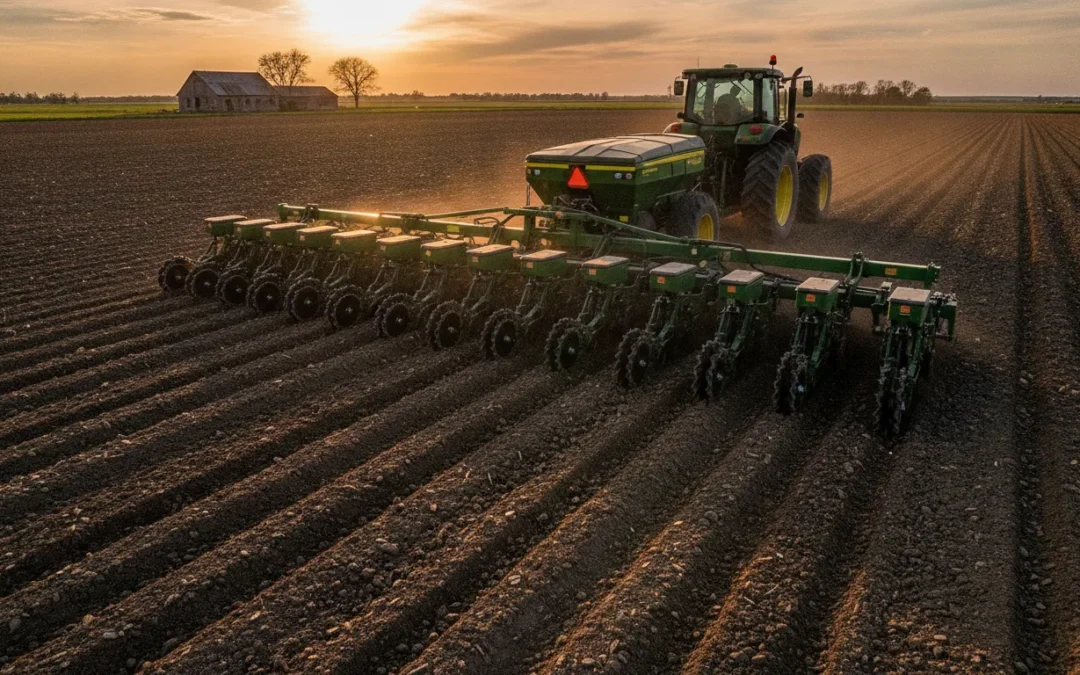
Uneven emergence often starts below the cab: a closing wheel that leaves sidewall compaction. Weak seed-to-soil contact, or an inconsistent furrow can cost stand quality before the crop is visible. That is why brand comparisons should begin with field data, not catalog claims. For this comparison, we focus on the Germinator closing wheels, a farmer-designed steel option built for consistent corn planting performance.
Choosing the best closing wheels for corn means matching the wheel design and material to your soil and planting conditions, then checking the results against credible trials. Beck’s Practical Farm Research reported up to a 5.1-bushel-per-acre corn advantage from aftermarket closing wheels, with Yetter Poly Twister recording the strongest result in that study. That benchmark is useful, but it does not make every farm’s answer automatic.
The practical question is what produced that advantage, how consistently a wheel closes the furrow, and whether it holds up across acres. Start with the performance traits that matter most in real corn planting conditions.
What Makes a Closing Wheel Best for Corn?
Corn does not forgive an inconsistent seed trench. The closing system has to place soil back around the seed, protect seed-to-soil contact, and leave an emergence-friendly path for the root. A wheel that simply makes the surface look flat may still leave compaction below ground.
Seed-to-soil contact without a sealed sidewall
The best closing wheel design works from the bottom of the trench instead of forcing the furrow shut from the top. Spiked wheels pinch the seed trench closed while keeping the soil above it looser, which helps improve seed-to-soil contact. They also typically need less down pressure than traditional rubber wheels because the spikes work the trench from the bottom. That matters in corn, where uniform emergence starts with consistent seed placement and a properly closed furrow.
Sidewall damage is another performance test. Improperly adjusted closing wheels can compact the trench wall, restricting root expansion and limiting access to water. Spiked wheels fracture and crumble that wall, giving new roots an easier path through the soil. Read more about the causes and fixes in this guide to sidewall compaction problems.
Adaptability across soil and moisture conditions
Soil type changes the job. Rubber wheels tend to perform best in drier conditions, while high-moisture, high-clay fields can make them struggle to close the trench without creating a compacted sidewall. Spiked designs are often better suited to those conditions because they fracture the wall and close the seed zone from below. The right setup still depends on the planter, tillage system, residue, and field moisture. Do not judge performance by appearance alone. Check the trench and emerging stand.
Durability that holds its adjustment
Material affects more than replacement cost. Germinator wheels use premium 50-grade steel rather than plastic, combining the closing action needed for seed-to-soil contact with a construction intended to withstand repeated field use. Plastic components can wear faster, changing the working edge and eventually the way the wheel contacts the trench. See the practical differences in steel vs plastic closing wheels.
For corn, the best closing wheel is not defined by one feature. It should close the seed zone, avoid sidewall compaction, adapt to field conditions, and keep doing that work season after season.
Top Closing Wheel Options for Corn Planters Compared
Farmers comparing the best closing wheels for corn are usually balancing three things: how well a wheel closes the seed trench, how long it will hold its shape, and what each row costs. The table below puts the main options side by side. Prices are per row where the available product information provides a price; dealer pricing and planter configuration can change the final number.
| Closing wheel | Material or design | Approx. price per row | Yield data or decision point |
|---|---|---|---|
| Yetter Poly Twister | UHMW plastic | $198-$272 | Beck’s PFR reported a 5.1 bu/ac corn advantage and 2.5 bu/ac soybean advantage in its testing. |
| Precision Planting FurrowForce | Automated closing system | $1,208 | Higher upfront cost for automated control. Compare the added control against your acres and payback target. |
| Germinator Steel | 50-grade steel | $212 | Steel construction targets consistent trench closure and durability at a price about 85% below the Precision Planting comparison. |
| Copperhead Furrow Cruiser | Aftermarket closing-wheel design | Dealer pricing | Evaluate the wheel shape, soil fit, and replacement cost for your planting conditions. |
| Schaffert Zipper | Aftermarket closing-wheel design | Dealer pricing | Consider how the design handles your soil and whether its maintenance demands fit your operation. |
Beck’s PFR data gives the Yetter Poly Twister a documented performance result, but one trial result should not be treated as a guarantee for every field. Soil texture, tillage, down pressure, residue, and planting speed all affect emergence. Material is another practical consideration. A plastic wheel can offer a lower entry price, while a steel wheel is intended for farmers who want a harder-wearing contact surface. Read our comparison of Germinator closing wheels and Precision Planting before you make a row-by-row investment.
The right choice is the wheel that closes the furrow without rebuilding sidewall compaction, supports seed-to-soil contact, and earns back its cost on your acres. Use the published yield data as a starting point, then weigh construction, price, and local field conditions together.
Beck’s PFR Data: Which Closing Wheel Wins on Corn Stand?
Beck’s Practical Farm Research gives farmers a useful benchmark because it looks beyond a single plot or one planting season. Beck’s operates seven PFR farms and three cooperator sites throughout the Midwest. Its “PFR Proven” label is reserved for products or practices tested for at least three years. With a yield gain in each year and an average positive return on investment.
What the Beck’s numbers show
In Beck’s closing wheel comparisons, the Yetter Poly Twister recorded a 5.1 bushel-per-acre advantage in corn and a 2.5 bushel-per-acre advantage in soybeans. Those results were the strongest among the aftermarket closing wheels included in the comparison. The practical takeaway is not that one attachment guarantees the same result on every farm. Soil texture, planting conditions, down pressure, residue, and field preparation still matter. The takeaway is that the closing wheel is a measurable part of the seed placement system, not a cosmetic planter upgrade.
For corn, the key question is whether the wheel closes the furrow without recreating sidewall compaction. A properly working wheel helps press soil around the seed and supports consistent seed-to-soil contact. That can help reduce uneven emergence when planting conditions vary across a field.
How the results fit with other field data
Precision Planting’s 2023 comparison also reported a substantial advantage for aftermarket closing wheel performance over traditional rubber closing wheels. The study found 13 bushels per acre in no-till and 7 bushels per acre in conventional tillage. These figures come from a separate study, so they should not be blended directly with Beck’s results. Together, however, the studies point in the same direction: closing wheel design and soil conditions can materially affect the final stand and yield outcome.
When evaluating the best closing wheels for corn, compare the trial conditions with your own acres. The Germinator’s steel construction and design focus on closing the furrow while improving seed-to-soil contact. That gives you a data-informed starting point, followed by the variables only your planter and fields can confirm.
Our Pick: Why the Germinator Outperforms in Corn
For corn growers comparing closing wheels. The Germinator earns the pick by combining the part that does the work in the furrow with the economics that make sense across a full planter. Its inner-shoulder design works the trench to improve seed-to-soil contact and address sidewall compaction, while the wheel is built from premium 50-grade steel instead of plastic. That is a practical advantage when uniform emergence matters and the planter will cover thousands of acres.
Farm Shop MFG reports that the steel construction can outlast plastic closing-wheel components by 3 to 5 times, depending on conditions and use. The product has also been used across more than 4,500 acres. Those durability claims should be judged against your soil, residue, settings, and annual acres. But the construction gives farmers a longer-wearing option than replacing plastic parts as they wear.
See the steel vs plastic closing wheels comparison for a closer look at the material tradeoff.
More seed-to-soil contact without paying for a premium name
The Germinator is priced at $212 per row, compared with $1,208 per row for the comparable Precision Planting option. That makes it 85% cheaper on the stated comparison, before considering service life. The lower entry cost leaves more room in the planter budget while preserving the core job: closing the furrow around the seed and supporting consistent placement.
There are no subscription fees or vendor lock-in. Farm Shop MFG documents a first-season ROI case, and orders covering 12 or more rows qualify for free shipping. For a farmer outfitting a complete planter, those details matter because the purchase remains a straightforward equipment investment rather than an ongoing software or service commitment.
Field feedback from working farmers
Todd Z. of Parkston, South Dakota, reported a 3.5 to 5 bushels-per-acre advantage. Greg H., who has 48 years of farming experience, also endorses the Germinator. These are farmer reports, not a guarantee for every field, so evaluate them alongside your own emergence records and field conditions. The broader case is simple: durable steel, purposeful furrow contact, and a price built for real farm budgets.
Review the Germinator closing wheels for planter fit and product details.
Installation Tips for Corn Planting Conditions
- Order the kit for your exact planter. The Germinator is available for John Deere, Case-IH, Kinze, and White planters, but tailpiece geometry varies by model. Select the correct adapter kit rather than assuming one wheel assembly fits every row unit. Case-IH operators should use the appropriate conversion kit. The goal is a secure fit with the closing wheels tracking the seed trench correctly. Farm Shop MFG provides model-specific options because every planter model is different. See the Germinator closing wheels product details before ordering.
- Install with ordinary shop tools and inspect each row. The farmer-friendly design does not require special tools. Before heading to the field, check that each wheel turns freely, the hardware is tight, and the wheels are centered behind the opener. Confirm the trench closes at the seed zone, not merely that the soil looks flat from above. A flat surface can come from excess pressure, while the more important test is whether the bottom of the trench is properly closed. For a quick explanation of the job these components perform, review what closing wheels do on a planter.
- Start with less down pressure for spiked wheels. Spiked wheels are designed to work the trench from the bottom, so they generally perform better with very little down pressure. University of Vermont guidance explains that excessive pressure is not the objective. Begin conservatively, then inspect the seed trench and emergence pattern. Increase pressure only when field conditions show the trench is not closing consistently. This approach helps avoid pushing wet soil against the sidewall.
- Adjust for the field, not the calendar. In no-till corn, watch residue flow and make sure residue is not pinned into the trench. Heavy residue and high-moisture or clay soil may require a different setting than a clean, conventionally tilled field. Spiked wheels fracture the sidewall and pinch the bottom while leaving the surface looser, which can improve seed-to-soil contact. In conventional till, start with the same careful inspection, then adjust for the firmer, more uniform seedbed rather than copying a no-till setting.
- Choose the configuration that fits your operation. Germinator wheels are available in Black, Green, and Blue. Free shipping is available on orders of 12 or more rows, which suits common corn planter sizes. After installation, check several rows across the planter in different soil conditions. Small adjustments made before planting speed can prevent uneven emergence later.
Frequently Asked Questions
What is the best no-till closing wheel for corn?
The best choice depends on soil moisture, clay content, residue, and planter setup. In wet or high-clay conditions, spiked wheels can pinch the bottom of the seed trench and fracture the sidewall. Helping maintain seed-to-soil contact without forcing the furrow closed from the top. The University of Vermont notes that spiked wheels are generally more effective than rubber wheels as moisture increases in high-clay soil: University of Vermont closing wheel factsheet.
Are steel or plastic closing wheels better for corn?
Material choice comes down to the balance between purchase price, wear, and field conditions. Steel provides a durable working surface for farmers who want a long-term closing system. While plastic can be a lower-cost option but may wear more quickly in abrasive soil. The wheel design still matters most: it must close the seed trench, manage residue, and avoid creating sidewall compaction.
How much down pressure should closing wheels have?
Use only enough pressure to close the trench and establish consistent seed-to-soil contact. More pressure is not automatically better, especially with spiked wheels. Because they work from the bottom of the trench upward, spiked wheels can perform effectively with relatively little down pressure, according to the University of Vermont factsheet. Check the trench behind the row unit instead of judging the setup by how flat the soil looks.
Do closing wheels affect corn emergence and yield?
Yes, closing wheels can influence emergence by changing seed-to-soil contact, sidewall compaction, residue handling, and trench closure. The Wisconsin Integrated Cropping Systems Trial identifies plant emergence and yield as key performance questions when no-till planting corn into heavy residue: Wisconsin Extension trial resource. Evaluate a wheel by digging behind the planter, checking the trench, and comparing emergence across representative field conditions.
Contact us about your corn planter
The right closing wheel setup can help you address sidewall compaction and improve seed-to-soil contact in your planting conditions. Contact Farm Shop MFG to discuss your planter and upgrade options with a farmer-focused equipment manufacturer. Contact us online at farmshopmfg.com/contact to talk through the next step and reach your yield potential.