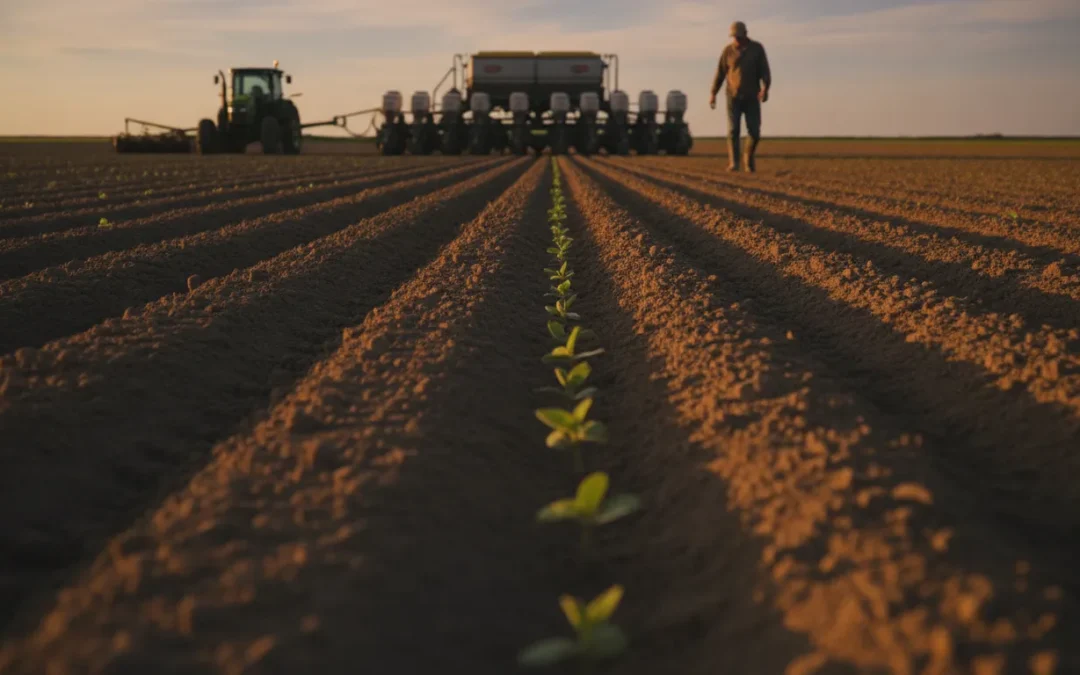
A soybean seed can be placed at the right depth and still fail to produce a strong stand if the closing wheels damage the seed or leave the trench poorly sealed. Mechanical stress, sidewall compaction, and weak seed-to-soil contact all show up later as uneven emergence and missing plants, when the opportunity to correct the problem has passed.
Closing wheels soybeans seed cracking is a preventable planting problem: use wheels that close the trench without crushing the seed zone. Then adjust pressure and alignment for current soil conditions. The goal is consistent seed-to-soil contact and uniform emergence, not maximum closing-wheel force.
Invest in your soybean stand: shop the Germinator closing wheels or call (712) 520-6051 to talk it through.
Farmers evaluating a planter upgrade should start with the interaction between wheel design, seed sensitivity, and soil moisture. The Germinator Closing Wheels: Ultimate Planter Guide provides broader setup context, while the next section explains how closing-wheel contact can crack soybean seeds before emergence.
How Closing Wheels Can Crack Soybean Seeds
Closing wheels work close to the seed, so their adjustment affects more than trench closure. When a wheel is aggressive, misaligned, or carrying excess pressure, it can put direct mechanical stress on a soybean seed as the furrow closes. That matters because mechanical damage during planting remains one of the largest sources of stand reduction in commercial soybean production, according to Mississippi State University research. The mechanical damage review identifies planting as a critical point where seed handling can cost plants before they ever break the soil surface.
Why the Soybean Seed Coat Matters
A soybean seed coat is not just packaging. Its outer palisade cuticle helps protect the embryo from physical injury and soilborne pathogens. Research on soybean seed coats shows that cracks in this protective layer can create an opening for damage and infection. The study of cracks in the palisade cuticle connects seed coat integrity directly to embryo protection. Related research also documents soybean sensitivity to cracking during emergence and early establishment. Soybean seed-cracking research supports treating the seed gently from meter to soil.
That is why a closing wheel should close the trench without pinching or crushing the seed zone. The goal is firm seed-to-soil contact, not maximum force. If the wheel angle or tracking is off, one side of the closing system can rub against the seed trench harder than the other. In variable soil, that uneven force can turn a small adjustment problem into damaged seed and uneven emergence.
What Happens When a Seed Cracks
A cracked seed may absorb water unevenly, lose vigor, or become more exposed to fungal infection in the soil. The result is often not a dramatic failure across the entire field. It is scattered stand loss that shows up when you dig plants, count skips, or compare emergence from one pass to the next. Those missing plants are expensive because the seed, fertilizer, field pass, and yield opportunity have already been invested.
Jason Ward, a North Carolina State University Extension precision agriculture specialist, reported a useful field example: 14 days after planting. 5,000 seeds per acre were still un-emerged against a target population of 27,000. Final populations in the comparison averaged roughly 19,000 to 22,000 plants per acre. Ward’s closing-wheel discussion shows how a modest-looking emergence gap can become a major stand decision.
Check the seed trench behind the planter, not just the wheel itself. Look for cracked seed, uneven closure, sidewall smearing, and different pressure marks between rows. Correct alignment and use only enough pressure to close the trench. Better closing wheel design can protect the seed while preserving the contact and moisture conditions soybean seedlings need.
What Closing Wheel Settings Minimize Soybean Damage?
Soybean closing wheel settings should do two jobs at once: close the seed trench and protect the seed zone from being packed too tightly. The right setup is not the heaviest setting. It is the setting that gives consistent seed-to-soil contact while maintaining uniform depth across changing field conditions.
Pressure: Too Little Closes Nothing, Too Much Compacts the Seed Zone
Start with enough closing wheel pressure to bring the trench walls together and eliminate open voids around the seed. Air pockets interrupt seed-to-soil contact and can contribute to uneven emergence. However, excessive pressure can compact the soil around the seed, restricting the conditions needed for the seedling to emerge.
Consistency matters as much as the initial adjustment. Soil moisture can change within the same field, and a closing system with consistent pressure helps compensate for that variation. Check the trench behind the row unit rather than relying only on a spring position or a setting number. You want a closed trench without a deep, continuous groove or a heavily pinched seed zone.
For more detail on the problem and its effect on stand establishment, see our guide to preventing sidewall compaction.
Depth and Gauge Wheels: Keep the Seed at One Level
Closing wheels cannot correct a row unit that is running at inconsistent depth. Set the gauge wheels so the opener maintains the intended soybean depth, then inspect several rows in representative soil. Uniform planting depth gives every seed a more consistent moisture environment and keeps emergence from becoming a race between shallow and deep placements.
Look for changes in trench shape, soil throw, and seed exposure as the planter crosses headlands, compacted areas, and lighter ground. If the closing wheels are forcing the row unit deeper or leaving the trench open, reduce the problem at the row-unit setup before adding more pressure. The goal is a level, closed seed trench, not maximum soil movement.
Speed and Soil Moisture Still Set the Limits
Planting too fast makes it harder for the opener and closing system to maintain depth and closure, especially when soil conditions vary. Michigan State University notes that a 40-foot planter traveling 5 miles per hour covers about 19 acres per hour at 80 percent planting efficiency. That figure is a useful reminder that field capacity depends on more than the number on the speed display. If the trench is not closing cleanly, slowing down may protect the stand more effectively than increasing downforce.
Soil moisture deserves the same attention. Avoid working soil when it is plastic and likely to smear the sidewall, but do not let a dry, loose trench remain open. Make adjustments from the soil behind the planter, then recheck after conditions change. A consistent pressure system, correct depth, controlled speed, and workable moisture give soybeans the best chance at uniform emergence without adding avoidable compaction.
Source: Michigan State University on reducing sidewall compaction in field crops.
Steel vs Rubber Closing Wheels for Soybeans
In no-till soybeans, the closing wheel material matters because the wheel has to close the trench without leaving poor seed-to-soil contact or creating a rough, inconsistent seed zone. The 2025 Precision Planting PTI Farm study provides a useful comparison point. Dual traditional rubber wheels recorded the largest loss potential. That deficit measured 3.3 bu/A and the revenue loss reached $32.77 per acre. Upgraded steel closing systems kept seed-to-soil contact and preserved yield potential in the same no-till conditions. Read the full no-till soybean closing-system study for the test details.
| Material | Soybean no-till performance | Durability | Cost per row |
|---|---|---|---|
| Traditional rubber | Can struggle in tough no-till conditions. Dual traditional rubber recorded the largest loss potential in the PTI study, at -3.3 bu/A and about -$32.77 per acre. | Rubber can be affected by wear and changing field conditions. Inspect the wheel profile and closing action regularly. | Varies by system |
| 50-grade steel | Upgraded steel systems are designed to maintain seed-to-soil contact and preserve yield potential when closing a difficult no-till trench. | Farm Shop MFG reports that its premium 50-grade steel units still look new after 4,500 acres, while plastic alternatives wear faster. | $212 for Germinator |
| Premium name-brand equivalent | Performance depends on the specific design, soil, pressure, and field conditions. Compare actual trench closure and emergence, not just the material name. | Review the construction and replacement cost before buying a system for high-acreage use. | $1,208 for Precision Planting equivalent |
For farmers comparing options, the practical question is not whether rubber works in every field. It is whether the system consistently closes the seed trench under your no-till conditions without sacrificing contact or emergence. Steel also changes the ownership calculation. Germinator costs $212 per row compared with $1,208 per row for the Precision Planting equivalent. And the 50-grade construction is built for repeated acres rather than short replacement cycles. See the guide to Germinator closing wheels and this comparison of steel vs plastic closing wheels before selecting a setup.
Germinator Performance on Soybean Stands: Field Results
A closing wheel earns its place on a soybean planter by doing two jobs at once: closing the seed trench and protecting the seed zone from unnecessary compaction. The Germinator is built to improve seed-to-soil contact while avoiding the hard, compressed trench conditions that can make emergence less uniform. That matters because soybean stand establishment depends on consistent contact, moisture, and depth, not simply getting seed into the ground.
What the Field Trials Show
Farm Shop MFG reports a documented 3-5 bushels per acre yield increase associated with improved germination in field trials. That is a documented trial result, not a promise for every field. Soil type, planting conditions, variety, weather, and final stand all affect the outcome. The practical takeaway is that better emergence can protect yield potential that was already in the seed. That protection matters most when poor trench closure or sidewall compaction leaves gaps around the seed.
For growers evaluating Germinator closing wheels for soybeans, the value is not limited to one emergence count. The wheel is made from premium 50-grade steel, and users report units still looking new after more than 4,500 acres. That durability is important on a 500-acre operation, and it becomes even more meaningful when one planter covers several thousand acres each season. A wheel that holds its working shape helps keep trench closure more consistent instead of gradually changing as a softer or plastic component wears.
The upgrade also targets the economics of the planter you already own. Farm Shop MFG lists the Germinator at $212 per row, compared with $1,208 per row for the Precision Planting equivalent. That price difference can make it practical to address seed-to-soil contact and stand risk without replacing the planter. Review the equipment and cost details in this comparison of Germinator vs Precision Planting.
There is no subscription fee and no vendor lock-in. The Germinator is a standalone equipment upgrade, so the return is tied to field performance and service life rather than a recurring software bill. For a farmer watching input costs closely, that combination of documented trial performance, 50-grade steel, and row-by-row pricing is the basis for an ROI decision. It does not eliminate the need to set planting depth and closing pressure correctly. But it gives the planter a more durable tool for building a uniform soybean stand.
Best Practices for Soybean Planting Closing Wheel Pressure
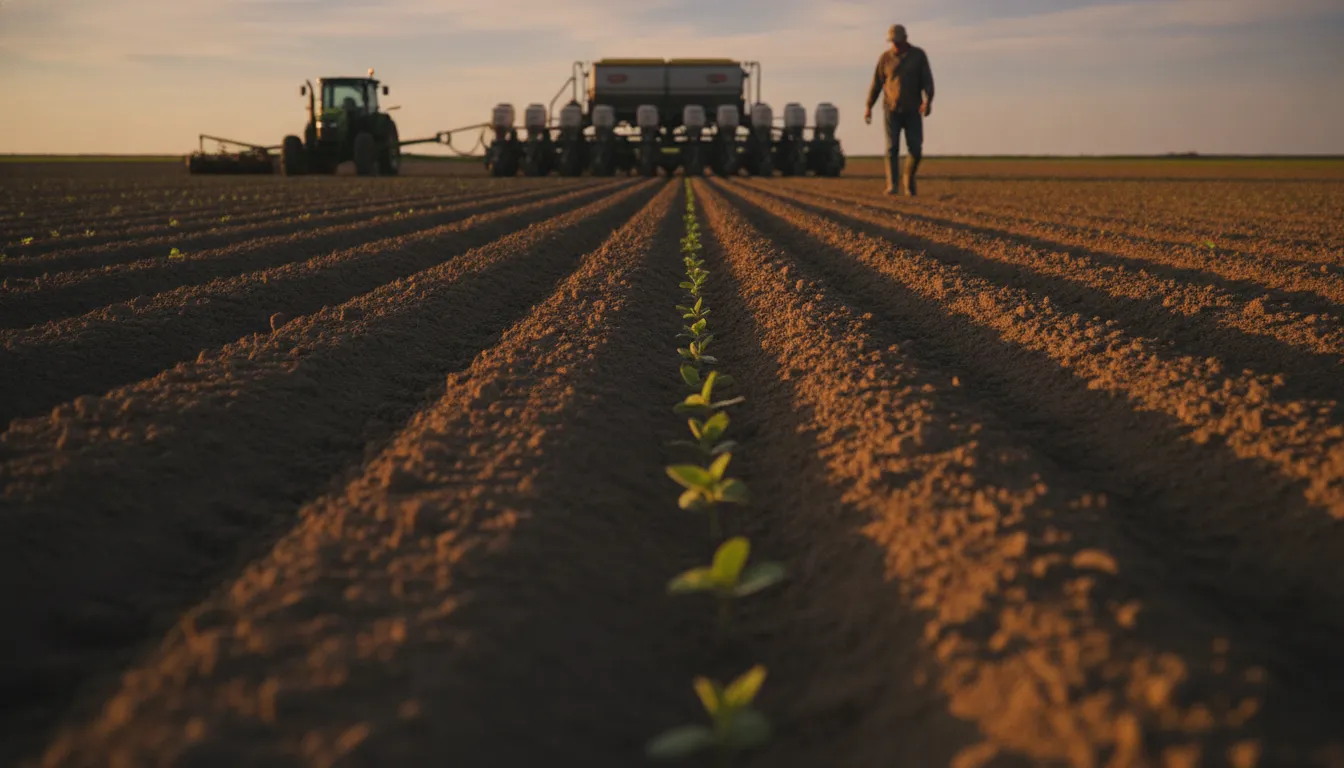
Closing wheel pressure is not a number you set once and forget. The right setting closes the trench, protects the seed zone, and leaves the seed in firm contact with soil without turning the row into a compacted strip. Use this field checklist when conditions change.
Make the adjustment from the trench, not the tractor seat
- Set enough pressure to close the V, then stop. Dig behind the planter and inspect the trench. You want the furrow closed over the seed, not a deep wheel track pressed into the row. Excess pressure can compact soil around the seed and restrict the air and water movement needed for emergence. Start lighter, then add pressure until the trench closes consistently across the row units. This is the practical balance described in Farm Shop MFG’s closing wheel guidance.
- Check for air pockets and firm seed contact. Open several newly planted rows with a spade. The seed should be surrounded by firm soil, with no visible void beneath or beside it. Air pockets interrupt seed-to-soil contact and can contribute to stand loss. Closing wheels should collapse those pockets without shoving the seed sideways or crushing the seed zone. For more detail on why this matters, see better seed-to-soil contact.
- Confirm the gauge wheels and closing wheels work in time. The gauge wheels control planting depth, while the closing wheels finish the trench. Check that the row unit is running level and that the closing action begins after the seed is placed, not early enough to disturb placement. Walk the field and compare trench closure, seed depth, and spacing across multiple rows. If one row unit leaves an open trench or inconsistent depth, correct its alignment or wear before adding pressure to every unit.
- Adjust for soil moisture swings across the field. A setting that works in dry clay may be too aggressive in a wetter low spot. Stop at representative soil types and inspect the trench again whenever moisture changes. Consistent pressure helps overcome those field-to-field differences and supports more uniform planting depth, but it still needs a field check. Do not use extra down pressure to force a wet trench closed if the wheels are smearing the sidewall.
- Verify the trench stays closed after the planter passes. Recheck rows later in the day, especially in drying or crust-prone soil. The closure should retain moisture around the seed instead of reopening behind the wheels. Steel closing wheels are designed to help keep the trench closed, supporting a more consistent moisture micro-environment for emergence. If the trench springs open, inspect wheel contact, pressure, row-unit alignment, and soil condition before changing the whole planter setting.
Make these checks whenever you enter a different soil zone, change planting speed, or see emergence vary. The goal is simple: a closed trench, stable moisture, and seed-to-soil contact without unnecessary compaction.
Ready to protect your soybean stand this season? Call (712) 520-6051 or visit the Germinator product page to get the right setup.
Frequently Asked Questions
What causes seed cracking in soybeans during planting?
Mechanical stress during planting can damage the soybean seed coat, which protects the embryo from injury and soilborne pathogens. Excessive pressure, rough seed trench handling, and poor alignment can all increase risk. Seed condition also matters, because cracking is influenced by factors such as drying and relative humidity before planting. See the research on soybean seed-coat structure for the underlying mechanics.
Do closing wheels affect seed-to-soil contact in soybeans?
Yes. Properly adjusted closing wheels collapse air pockets, press soil around the seed, and help maintain a consistent moisture environment in the trench. That contact supports more uniform emergence. The goal is not maximum pressure. It is enough pressure to close the trench without compacting the seed zone.
How do I prevent sidewall compaction when planting soybeans?
Start by checking that the seed trench is properly closed and that closing wheel pressure matches field conditions. Excessive pressure can compact soil beside or over the seed, while insufficient pressure leaves the trench open. Check the trench in several areas of the field, especially where soil moisture or texture changes, and adjust for consistent closure and depth.
Are dual rubber closing wheels effective for no-till soybeans?
They can work in some conditions, but performance depends on soil moisture, residue, and compaction. In tough no-till fields, traditional dual rubber wheels may not provide the same trench management as an upgraded system. A 2025 Precision Planting PTI no-till soybean study reported a 3.3-bushel-per-acre yield deficit for dual traditional rubber in its comparison. So field conditions and test design should be considered when applying that result.
How does closing wheel pressure impact soybean emergence?
Pressure that is too light may leave air pockets or allow the trench to reopen, reducing seed-to-soil contact. Pressure that is too heavy can compact the seed zone and restrict emergence. Adjust until the trench is closed, the seed remains at uniform depth, and the soil is firm without being sealed or smeared.
Contact us about your soybean closing wheel setup
Closing wheel setup affects how well the seed trench closes and how evenly your soybean stand gets established. If you want a practical conversation about your acres, planter, and field conditions, call the Farm Shop MFG team at (712) 520-6051 to ask which setup fits your operation.