
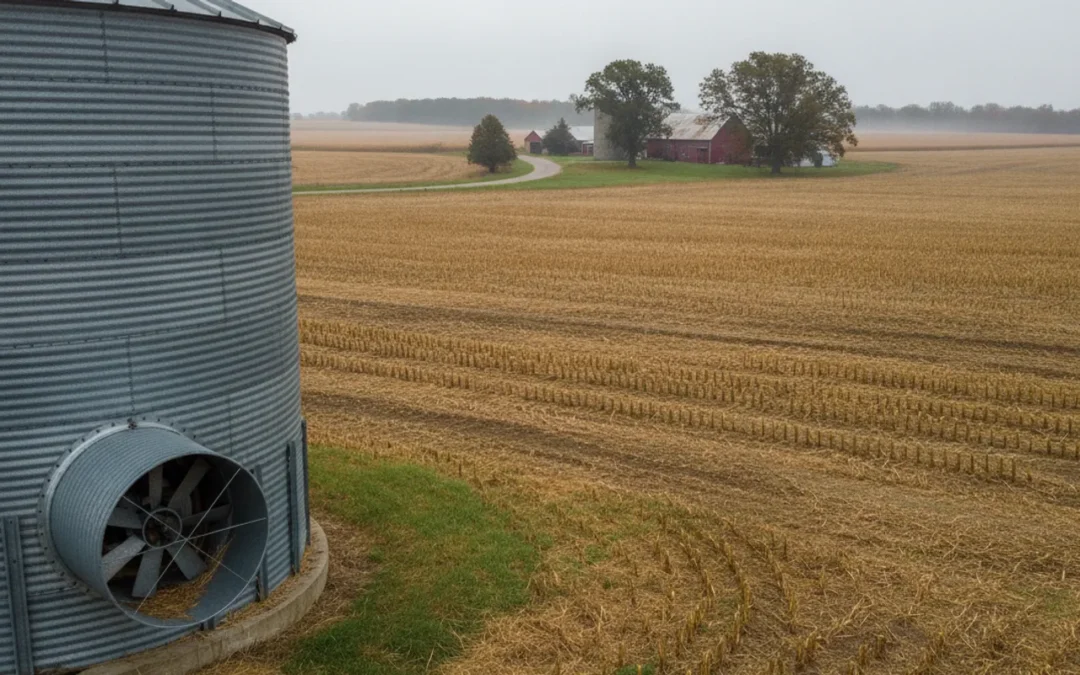
Knowing when to run a grain bin fan after harvest is a matter of matching the air outside the bin to the grain inside it. Start with the crop’s temperature and moisture, your storage goal, and the weather, not the calendar alone. For many farms, the first useful aeration opportunity comes when outside air is cooler than the grain and conditions suit the job, but a fan run should have a clear purpose and a way to verify progress.
Contact us to discuss your grain bin setup
When to Run Grain Bin Fan After Harvest: Start With the Goal
Before switching a fan on, decide whether you are trying to cool grain, dry it, or equalize conditions through the bin. Those are related jobs, but not interchangeable. Aeration commonly moves air through stored grain to manage temperature. Natural-air drying uses airflow to remove moisture, and its performance depends on several interacting factors, including the fan, bin, grain depth, and weather.
That distinction matters because a fan can move air without achieving the result you want. A cooling pass is not automatically a drying plan, and a fan that is too small for the grain depth may take much longer to move a temperature front through the full bin. If grain moisture is above your safe-storage target, use guidance specific to your crop, bin, and drying system rather than assuming that ordinary aeration will finish the job.
Set a practical goal for each run. Examples include bringing the grain mass toward a more uniform temperature, reducing a warm layer, or starting a planned drying cycle. Record the starting grain temperature and moisture where available, the weather, and the run time. Then check whether the intended change reached the grain, not just whether the motor ran.
When Should You Start the First Fan Run?
There is no single date that works for every bin. A sensible first run depends on harvest timing, grain condition, the temperature difference between the grain and incoming air, fan capacity, and the weather forecast. Newly harvested grain can be warm; waiting for cooler air may create an opportunity to move a cooling front through it. But a warm day is not automatically a good aeration day if it brings air that could warm the grain or add unwanted moisture.
As a broad rule, evaluate the air before every run. For cooling, look for outside air cooler than the grain. Consider relative humidity and the expected temperature swing too, especially when grain is cold or the weather is warming. The University of Nebraska-Lincoln’s stored-grain aeration guidance illustrates why: running a fan on a warm spring day can introduce air much warmer than frozen grain. Do not judge suitability by air temperature alone or by a sunny forecast.
Also consider the kind of system you have. A low-airflow aeration fan may be intended to cool and condition stored grain gradually. A drying setup is designed around a different airflow and management plan. Consult the fan and bin instructions, and seek local extension advice for crop-specific moisture and temperature decisions when the situation is uncertain.
Use conditions, not a fixed schedule
Instead of deciding ‘run every afternoon’ or ‘run for one day’, ask these questions first:
- What is the grain’s current condition? Check representative temperatures and moisture readings, and note whether readings differ by location or depth.
- What should this run accomplish? Identify cooling, drying, or another defined objective.
- Is the incoming air suitable for that objective? Compare its temperature and humidity with the grain and your management plan.
- Can the fan deliver the needed airflow? Fan capability, grain depth, and bin configuration affect how quickly air moves through the grain.
- How will you know the run is complete? Plan to monitor the temperature front and recheck grain after the fan is shut off.
If the answers are unclear, pause and get advice rather than running a fan simply because the bin is full. For another overview of keeping stored grain in good condition, see our guide to how to keep grain from spoiling.
How Weather Affects When to Run Grain Bin Fan After Harvest
Air moving through grain exchanges heat and moisture with it. The direction and amount of change depend on the air and grain conditions, as well as airflow and exposure time. That is why a forecast high temperature alone cannot tell you whether the fan should run. Compare the air entering the bin with the grain temperature, account for humidity, and follow recommendations for your crop and equipment.
For example, grain that is warm after harvest may benefit from a cooling front when cooler, appropriate air is available. If a fan pulls warmer air into colder grain, it can undo cooling or create an undesirable temperature pattern. In fall, weather can swing quickly; in spring, a pleasant day may still be too warm for a bin that remains cold. The Purdue winter grain-storage guidance recommends aiming to cool stored grain to at least 40 degrees by December, weather permitting. Treat that as a seasonal goal from the cited guidance, not a universal instruction for every crop, location, or bin.
Moisture decisions need extra care. Relative humidity in the incoming air affects the drying potential, but airflow, grain depth, and the time available also matter. Clemson Extension’s overview of grain drying factors notes that fan size, bin diameter, and grain depth all affect bin drying. If you are targeting a specific final moisture, use a crop-appropriate drying plan and measure the result. Do not infer that grain is dry simply because the fan ran for a set number of hours.
How Can You Plan the First Week After Filling the Bin?
A short routine helps turn the first fan decision into a series of measured choices rather than a guess. It does not replace crop-specific recommendations or the equipment manual, but it gives you a practical way to organize observations as harvest conditions change.
- At filling, establish a baseline. Record the crop, approximate fill date, grain moisture readings if available, and grain temperatures at accessible, representative points. Note any areas that read warmer or wetter than others. Keep the readings tied to their location so you can compare like with like.
- Check the forecast and the air at the bin. Before choosing a run window, look at current outdoor temperature and humidity and how long conditions are expected to remain suitable. A forecast is a planning aid; local conditions at the bin and the grain’s measured state still matter.
- Write down the objective for the run. For example, state that you are beginning a cooling front, not simply ‘running the fan’. If the goal is drying, make sure the equipment and management plan are intended for that outcome.
- Start only when the operating conditions fit. Follow the fan and bin maker’s instructions. Monitor the system as appropriate, then record start and stop times, weather, and any unusual sound, odor, or airflow issue.
- Recheck before repeating. Compare the new readings with your baseline and decide whether the change matches the goal. If the grain is not changing as expected, investigate the airflow path, fan suitability, measurement coverage, and weather rather than blindly extending the next run.
For example, suppose a newly filled bin has warm grain, while the first forecasted cool period is brief. The useful question is not simply whether the fan can run all night. Check whether the incoming conditions suit cooling, whether the fan and grain depth can make progress during that window, and how you will observe the front afterward. If the window is too short to assess or conditions are mixed, logging the decision and waiting for a clearer opportunity may be wiser than treating a single overnight run as a complete cooling cycle.
Sensor information can help establish that baseline, but the readings are only useful when you know what part of the grain mass they represent. Our resources on monitoring corn in a grain bin and setting up sensors for soybeans discuss crop-specific monitoring considerations.
What Should You Check Before Turning the Fan On?
A short pre-run check helps avoid wasted electricity and reduces the chance of making conditions worse. Use the equipment manufacturer’s operating instructions and follow your farm’s electrical and confined-space safety procedures. Never enter a grain bin while unloading equipment or an aeration system is operating.
- Inspect the grain and bin. Look for signs of heating, unusual odors, crusting, condensation, or other changes that warrant investigation. Check that the bin is in condition for safe operation.
- Check the fan and airflow path. Make sure the fan, guards, transitions, and vents are clear and that the fan is appropriate for the planned use. Do not assume a fan rated for one setup will deliver the same airflow in another.
- Read conditions at more than one point. A single sensor or surface reading may not represent the whole grain mass. Compare available readings and note where and when they were taken.
- Review current and expected weather. Check outdoor temperature and humidity for the planned run, and consider whether conditions will remain suitable long enough to make progress.
- Set a stopping and checking plan. Decide how you will track the cooling or drying front and when you will inspect the bin again. Keep a simple log of run times and readings.
If you rely on sensors, use readings as decision support, not as a substitute for understanding their placement and coverage. Our article on grain bin temperature monitoring explains how temperature information can fit into a storage routine. A suitable monitor can make it easier to compare changes over time, but it cannot correct poor airflow or determine a drying target without the right crop and bin context.
How Long Should You Run the Fan?
Run time depends on the fan’s airflow, the amount and depth of grain, the crop, the starting conditions, and the goal. There is no reliable universal number of hours for every bin. A run that advances a cooling front in one bin may not do the same in a deeper bin or with a different fan.
Monitor progress rather than relying on the motor’s run time alone. Temperature cables or other suitable measurement methods can help you observe whether the change is moving through the grain. Check the manufacturer’s instructions for how to interpret readings and how to operate the equipment. After a run, allow conditions to settle as appropriate for your measurement method, then compare readings and decide whether another suitable weather window is needed.
For a drying objective, use a system-specific plan and verify moisture. The required time can vary substantially with grain depth, fan performance, weather, and incoming grain condition. Clemson’s overview above describes some of these variables. If the required outcome is not being achieved, review the fan sizing and airflow rather than simply extending a run without checking what is happening in the bin.
What If the Weather Changes During a Fan Run?
Weather is not fixed for the entire time a fan is operating. A run that begins under suitable conditions can continue into a period with a different temperature or humidity. How to respond depends on the objective, the system’s controls, the equipment instructions, and the way conditions affect the grain. Check conditions during a long run rather than assuming the starting weather will hold until morning.
Build a decision point into the plan. If a front is passing and outdoor air is changing, compare the current conditions with your cooling or drying goal. If the air is no longer appropriate, use the system’s normal safe stopping procedure and note where the grain front appears to be. Do not restart automatically when weather improves without rechecking grain readings and the new forecast. When the concern is a rapid temperature change, condensation, or suspected spoilage, get crop- and bin-specific advice promptly.
This is also where a written log pays off. If you note when conditions shifted and what the sensors showed, the next decision is based on the bin’s response rather than memory. A controller that operates fans based on ambient conditions can assist with repeated weather checks, but it does not remove the need to set sensible operating goals or verify grain condition.
Which Fan-Run Approach Fits Your Goal?
| Goal | Conditions to evaluate | What to monitor | Important caution |
|---|---|---|---|
| Cool grain | Incoming air cooler than the grain; suitable humidity and a useful weather window | Grain temperature at multiple points and movement of the cooling front | Do not use a warm day just because it is convenient; avoid reversing a cooling trend. |
| Dry grain | Crop moisture, fan and bin capacity, grain depth, and air conditions | Moisture readings and progress through the grain mass | Aeration alone may not meet a drying target; follow a drying plan for the system. |
| Maintain stored grain | Seasonal temperature trends and changes in grain condition | Regular readings, unusual odors, and signs of heating or condensation | Do not treat a calendar schedule as a substitute for checking conditions. |
What Common Fan-Running Mistakes Should You Avoid?
- Running by the clock. A fixed daily schedule ignores changing weather. Reassess conditions before each run.
- Confusing cooling with drying. Moving air through grain does not guarantee that a moisture target has been reached.
- Looking at only one temperature reading. Grain conditions can vary across the bin. Use available measurements at representative locations.
- Ignoring fan capacity and grain depth. These affect airflow and the time needed for a front to move.
- Stopping without checking the result. Record the run and compare readings so the next decision is based on what changed.
- Overlooking changing seasons. Conditions that helped cool grain in fall may be unsuitable in a warm spring. Reassess before restarting fans.
- Assuming automation decides the storage goal. A controller can help manage fan operation, but it does not replace grain checks or a drying plan.
Keep your records simple: date and time, outdoor conditions, grain readings, fan run time, and the result at the next check. A few consistent notes can reveal whether a pattern is working for your own equipment and storage conditions. If a reading changes sharply or the grain shows concerning signs, do not rely on a routine log alone; investigate and seek appropriate advice.
Can Automated Fan Control Help?
Automation can help manage the repeated decision of whether outside conditions are appropriate for a fan run. Farm Shop MFG’s EndZone automated fan control is designed to control grain-bin fans based on ambient conditions. Its role is to support fan operation; farmers still need a clear storage goal, appropriate equipment, and a plan for monitoring grain condition.
Before choosing an automated controller, consider which fans and bins you want to manage, how you currently check grain, what conditions should trigger operation, and whether the system fits your existing setup. See the EndZone fan control product information and the Grain Temp Guard monitoring information for more context. If you are weighing a purchase, compare the equipment requirements with the decisions you need to make, such as whether ambient-condition automation complements your current checking routine.
Contact us about your grain bin fan setup
Frequently Asked Questions
Should I run the fan as soon as the bin is full?
Not automatically. First check the grain’s temperature and moisture, the outdoor air, and your intended goal. Run the fan when conditions and the system are appropriate for that purpose, and monitor the result.
Is a cool night always the best time to run a grain bin fan?
No. Cooler air may be useful for cooling warm grain, but temperature alone is not the full decision. Evaluate humidity, grain condition, fan capacity, and the expected duration of suitable conditions.
Can I use an aeration fan to dry wet grain?
It depends on the fan, bin, grain depth, crop, and drying plan. Aeration and drying are different objectives. Confirm that your system is designed for the moisture reduction you need, and measure grain moisture rather than assuming a target has been reached.
How do I know when a cooling run is finished?
Use grain temperature measurements at representative locations and follow the operating guidance for your bin and measurement equipment. Run time by itself does not confirm that a cooling front has reached the intended part of the grain mass.
Should fans run again in spring?
Only when current conditions suit the goal and your grain readings indicate a reason to run them. Spring air can be warmer than cold grain, so reassess temperature and humidity instead of restarting on a fixed date.
The best time to run a grain bin fan after harvest is the weather window that fits your grain condition, system, and storage goal. Check conditions before each run, measure what changes, and use a crop- and bin-specific plan whenever drying or long-term storage decisions are involved.