
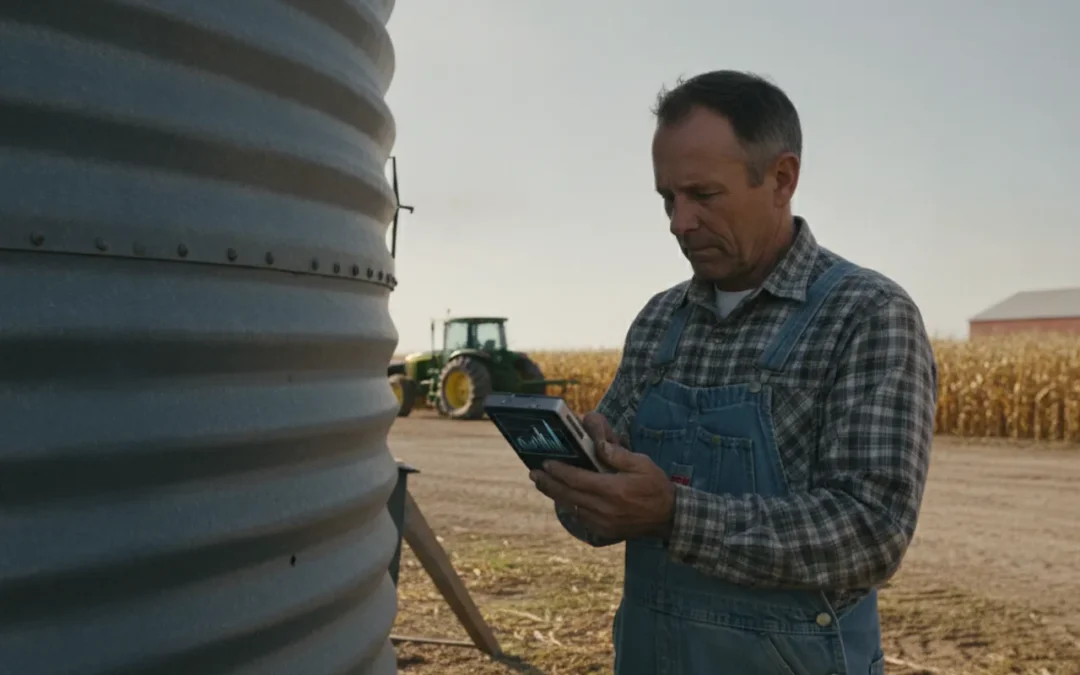
Grain temperature trend monitoring helps you see whether conditions in a bin are steady, rising, falling, or changing unevenly. A single reading is only a snapshot. Comparing readings from the same places over time gives you context for deciding whether to check the grain more closely. That difference matters throughout storage, when conditions can change and a number without a history can be hard to interpret.
Why is one temperature reading not enough?
A measurement describes one place at one moment. It does not tell you whether that spot was cooler the day before, whether a change is continuing, or whether the value is an isolated variation. Without a comparison point, you may not know whether a reading is typical for that bin or signals a change worth investigating.
Think of each reading as one point on a timeline, not a verdict on the whole grain mass. A useful review pairs the value with its location, date and time, earlier readings from that same location, and relevant observations from a physical check. Temperature data can direct attention, but it cannot by itself identify a cause or replace inspection.
One reading can still be useful. It gives you a starting point, helps establish a baseline, and may prompt a check if it is unexpected. Its limits matter when you try to decide what to do next. For example, a warm measurement might reflect a real local condition, a different sensor position, or a measurement problem. A series of comparable measurements helps separate those possibilities.
A single value also hides the pace of change. Imagine that two readings are identical, but one was recorded after a long stable period and the other follows several gradual increases. The displayed number is the same, while the history is different. In the second case, the sequence gives you a reason to review the bin and verify the measurements rather than treating the current value as an isolated fact.
What can a temperature trend tell you?
A trend is the direction and pace of change across a series of comparable observations. It helps you ask practical questions rather than focus on a number in isolation:
- Are readings generally steady, or are they moving upward over successive checks?
- Is one monitored area changing while other areas remain similar?
- Did readings change after fan operation, a weather shift, or another management action?
- Is a value returning toward its earlier range, or continuing to move?
- Are the readings complete and consistent enough to support a comparison?
These clues help prioritize follow-up. A repeated change over several checks may deserve a different response than a lone unusual value that does not recur. Neither pattern diagnoses the cause on its own. Confirm the measurement, inspect the grain and bin, and consider the full management context before deciding on action. For a practical look at whether this approach fits a smaller operation, see whether grain bin monitoring is worth it for a small farm.
Trends can also show where to direct attention. If readings at one monitored point move differently from those at other points, do not assume the difference is meaningless. It might be a localized change, a sensor issue, or a difference in where measurements are being taken. Preserve the individual readings and verify the discrepancy rather than combining everything into one average that hides the variation.
The shape of the sequence matters, too. A gradual shift across multiple checks, a sudden one-time jump, and a reading that changes after a documented event are different observations. Describe what the record shows before guessing why it happened. A plain note such as “three checks trending upward at this point” is more useful than labeling a situation with a cause that has not been confirmed.
How should you compare readings over time?
- Keep measurement points consistent. Compare the same sensor or location whenever possible. A reading from another depth or zone may describe a different part of the grain mass, not a change at the original point. Label locations clearly so that a future reader can tell which measurements belong together.
- Record when the reading was taken. Include the date, time, bin identity, sensor location, temperature, and units shown by the system. If readings are collected at different intervals, note the interval rather than implying that observations are evenly spaced.
- Look at a series, not just the endpoints. Ask whether the direction persists through several observations and whether the change is consistent across comparable points. A simple chronological list can be enough to reveal a pattern; a chart can help when the record grows.
- Include relevant events. Note fan operation, a physical inspection, a change in management, or other conditions that may help explain what happened around a measurement. The note does not prove cause; it gives you context to review.
- Check reliability when a value stands out. Confirm that the sensor is in place and functioning as expected. If practical, recheck the reading and compare it with nearby measurements and physical observations.
- Pair the record with inspection. Temperature is one part of storage management. Consider grain condition and other relevant indicators, including moisture, rather than relying on a temperature series alone.
For more background on grain condition, see this moisture sensor guide and the practical information on how to keep grain from spoiling. A separate grain bin sensor guide for corn can help you think through what sensor information is relevant to your setup. Each bin and crop has its own context, so use records alongside established storage practices and qualified advice when needed.
What should you put in a trend record?
A record is useful when it is consistent enough to compare and simple enough to maintain. A notebook, spreadsheet, or monitoring display can work if you preserve the same basic details. Keep one history for each bin and identify measurement points in a way that remains understandable to someone checking the record later.
Before you start, choose a naming scheme that will still make sense months later. “North bin, cable A, upper point” is clearer than an unexplained initial or number. If equipment already displays a point name, use it consistently and keep a brief key that maps display labels to actual locations. This reduces the chance that two people will compare readings from different places as if they belonged to the same series.
| Record item | What to note | How it supports review |
|---|---|---|
| Bin and crop | Bin label and grain type | Keeps separate storage histories from being mixed together |
| Measurement point | Sensor or location, such as cable or zone | Helps compare like locations over time |
| Date and time | When the measurement was captured | Shows sequence and spacing between observations |
| Temperature | Value and units displayed | Preserves the observation being compared |
| Management context | Fan use, inspection, or relevant change | Helps interpret events around a change |
| Follow-up | Recheck, inspection, or action taken | Creates a clear record of the response |
Do not make the log complicated just to make it look technical. A short note such as “fan operated before afternoon reading” is more useful than an empty context column. If you manage several bins, use distinct labels and keep the same location names from one check to the next. Avoid relying on memory to reconstruct when an event occurred.
A practical entry might read: “Bin 2, cable B, point 3; Tuesday, 8 a.m.; reading as displayed; fan ran overnight; next check scheduled.” If a follow-up inspection adds useful information, add it as a separate dated note instead of rewriting the original entry. That way, the record shows what was known at each step and what you checked afterward.
Keep missing data visible. If a sensor does not report, or a manual reading was skipped, mark that gap instead of drawing a line that suggests a value was captured. A gap may mean that two observations are farther apart than usual, which affects how confidently you can describe the pace of change. Record a sensor problem and any troubleshooting separately from the grain measurements.
How can you tell a meaningful change from noise?
Start by verifying that you are comparing equivalent measurements. Different sensor positions, inconsistent timing, or a faulty connection can make readings appear to disagree. Check the location label, inspect the equipment as appropriate, and repeat an unexpected measurement when practical. If a value conflicts with nearby readings or what you observe physically, record that conflict and investigate it.
Then consider persistence and context. A direction that appears repeatedly may be more informative than a lone spike, but the significance of a change depends on the grain, bin, sensor placement, and conditions. Do not treat one universal threshold as a substitute for sound management judgment. If a pattern concerns you, inspect the grain and seek guidance from an appropriate grain-storage professional or equipment support.
Consider a hypothetical example: a sensor shows a higher value than it did on the previous check. Instead of acting on that one comparison alone, confirm that the same point was measured, check whether the sensor is operating properly, review the intervening record, and note whether fans ran. Then decide whether a follow-up measurement or physical inspection is warranted. This sequence does not prescribe a particular fan action; it makes the evidence more useful before you decide.
Now compare that with a different example. Several readings at one point move in the same direction, while other points do not. The right first step is not to calculate one blended bin-wide value. Preserve the locations separately, check whether the sensor at the changing point is giving a reliable reading, and compare that point with its own earlier history. If the difference remains, use it to guide closer examination and qualified follow-up.
In a third case, a reading appears to jump after an extended gap in the log. You cannot tell from the two endpoints whether the shift happened quickly or gradually. Mark the gap, check that the current measurement is comparable, then establish a clear follow-up record. Avoid describing a rate of change that the observations do not support.
Disagreement between monitored points deserves care, too. If one point changes while others do not, averaging the values could conceal a local pattern. Keep the readings separate, recheck the point that changed, and compare it with the history for that location. If the difference persists or you observe a condition that needs attention, use your established inspection and consultation process.
How do fan operation and weather fit into the pattern?
Temperature readings need context. Fan operation can alter conditions in a bin, and outside conditions can affect how you interpret observations. Record when fans run and when readings are taken so you can see what happened before and after an operation. Keep notes factual: record the event and timing without assuming that it explains every change.
A reading taken soon after a management action may not be directly comparable to one taken under different circumstances. That does not make either reading useless; it means you should preserve the context and avoid claiming that a value alone proves the action worked or failed. A consistent routine makes comparisons clearer, while event notes explain why a check may not fit the usual pattern.
Fan decisions depend on management goals and grain conditions. Do not assume that a temperature change proves grain is safe or unsafe, or that a fan should automatically be switched on or off. For background on the different purposes of grain drying and aeration, consider what the equipment is intended to do and which conditions you are managing.
Weather notes can be brief. You might record a notable change in outside conditions or describe the conditions around a check if they help explain why readings were collected differently. The point is not to create a complete weather diary. It is to preserve enough context to avoid treating every measurement as if it were taken under identical circumstances.
When you review a sequence after fan operation, compare the same measurement points and record the timing. Do not use a single before-and-after pair to claim a general result. More observations and a physical check may be needed to understand what changed. If an operating decision is uncertain, consult the equipment instructions and a qualified source familiar with the grain and storage conditions.
What monitoring approach supports trend review?
The right approach is one that gives you readings you can interpret and compare for the bins you manage. Before choosing, consider which locations are monitored, how readings are displayed or recorded, how you will check the equipment, and whether information is accessible when you need it. A feature list matters less than whether the system fits your routine and gives you a consistent history.
For grain monitoring decisions, first write down what you need to know: which bins require attention, which measurement points matter, who will review the readings, and how follow-up will be recorded. Then compare available monitoring methods against those needs. Ask how readings are associated with locations, how you can recognize missing or unexpected data, and what steps the equipment instructions recommend for checking the system.
For example, a farm managing several bins may want a clear way to keep each bin’s observations separate, while another operation may focus on one bin and prefer a simple routine that is easy to maintain. In either case, decide who checks the readings and what they will do when a value stands out. A monitoring method only helps if someone can interpret its output and follow up consistently.
Farm Shop MFG’s grain temperature monitoring product information describes Grain Temp Guard. You can also review the overview of grain bin monitoring with Grain Temp Guard and compare it with your bin setup and record-keeping needs. The Farm Shop MFG product overview provides broader equipment information. Check product details and instructions directly to determine what fits your operation.
To compare options fairly, write down the same questions for each one: What measurement points are included? How are readings labeled? What does the display or record show over time? How will you know a reading is missing or unusual? What inspection or maintenance instructions apply? If a product page does not answer a question that matters to your operation, ask the supplier before choosing.
Also separate monitoring from other equipment functions. Seeing a trend does not automatically control a fan or determine whether grain is ready for a particular action. Make sure you understand which task a device performs and what remains part of your management routine. The EndZone fan controller information is a separate resource for learning about fan control, while temperature tracking supports observation and review.
For general grain-storage information from a federal agricultural research agency, consult the USDA Agricultural Research Service. Use authoritative references for background, and apply recommendations with attention to the crop, equipment, and conditions in your bin.
What are common mistakes when reviewing trends?
- Reacting to one number without checking it. Confirm an unexpected measurement and compare it with the same point over time.
- Mixing locations. Keep readings from different zones distinct instead of treating them as a continuous series.
- Leaving out timing and actions. Dates and relevant fan or inspection notes make changes easier to interpret.
- Relying only on a display. Use monitoring information to guide checks, not to replace them.
- Assuming every bin behaves alike. Keep separate histories and consider each bin’s crop, setup, and management.
- Deleting unusual readings. Preserve the original value and add a note if you rechecked it. The contrast between initial and follow-up observations can help explain what happened.
- Over-interpreting a chart. A line rising on a screen shows a sequence of measurements; it does not establish the cause or dictate a management decision.
- Comparing readings with different units or routines. Confirm the displayed units and document changes in how observations were collected before drawing a conclusion.
- Turning a trend into an unsupported diagnosis. Describe what the measurements show, then verify with equipment checks, inspection, and appropriate advice.
A reliable process does not require elaborate analysis. It requires comparable observations, a record that preserves context, and a clear plan for what you will check when something changes. If you cannot explain how two readings were collected, treat the comparison cautiously and improve the record for the next check.
How can you build a useful routine for each bin?
Begin with a baseline. Label the bin and monitored points, record the conditions shown by the system, and note the date and time. Continue using a consistent checking pattern that fits your storage practices. The objective is not to create a perfect data set; it is to make the next reading comparable and to know where to look when one is unexpected.
At each review, ask three questions: What changed compared with the same point’s history? Is the change repeated or isolated? What should be verified through a sensor check or physical inspection? Write down the follow-up and its outcome. If a reading seems implausible, preserve it with a note rather than silently replacing it. This keeps the record honest and makes later review more useful.
When you manage multiple bins, review each history on its own before looking for broad patterns. Similar readings from separate bins do not necessarily mean the bins have identical conditions. Note differences in crop, sensor location, and management. A compact summary can help you prioritize which bin needs attention without losing the underlying measurements.
A simple review can follow the same sequence every time:
- Confirm the bin and point labels before comparing values.
- Check the date, time, units, and whether any observations are missing.
- Read the sequence from oldest to newest and describe the direction without guessing the cause.
- Review fan operation, inspections, and other notes around the readings.
- Verify unusual measurements and decide whether a closer inspection or qualified advice is needed.
- Record the follow-up and the next review point so the process continues.
This routine also helps when another person takes over a check. A clear location key and dated notes make it easier for someone else to understand what was observed and what remains to be done. If a reading is concerning, communicate the actual measurement, its location, the comparison period, and what verification has already occurred rather than passing along a vague summary.
For a refresher on taking moisture readings as part of broader storage decisions, review this guide to grain moisture meters. Moisture and temperature are distinct observations; record them clearly and interpret each in the proper context rather than treating one as a substitute for the other.
What is a practical next step?
Choose a consistent check routine and start recording comparable readings for each bin. Include location, time, temperature, and relevant management notes. When a pattern changes or measurements conflict, verify the reading, inspect the grain and equipment, and seek qualified guidance when needed. For monitoring information, review the product details and compare them with your setup.
Learn more about Grain Temp Guard
Consistent comparisons turn scattered measurements into a clearer record of how conditions are changing, helping you decide when closer inspection is warranted.