
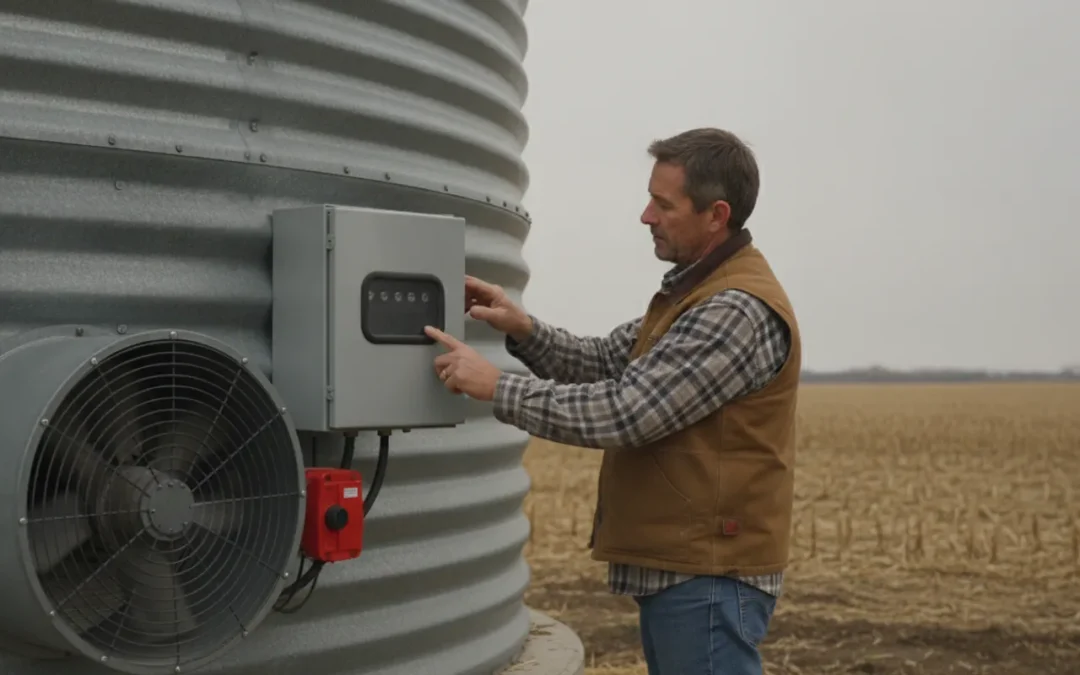
A grain bin fan controller installation is not just a matter of mounting a box beside a fan. The system has to match the fan and power supply, use the right operating inputs, and be installed in a way that is safe to inspect and maintain. A little planning before harvest can prevent a rushed setup when grain is already in the bin.
Contact us to discuss your bin setup
What should you know before installing a grain bin fan controller?
Start by identifying what you want the controller to do. A basic switch lets an operator turn a fan on or off. An automated controller makes decisions from operating inputs, such as ambient conditions, and may handle fan operation without someone checking the bin at every start. Those are different jobs, so first define the control goal for each bin.
Write down the bin and fan details before shopping or laying out the installation. Record the bin’s stored crop, approximate capacity, fan make and model, electrical supply information from its nameplate, and the location of the existing disconnect and controls. Note whether the fan is used for aeration, drying, or a planned sequence that changes as grain conditions change. The controller must suit the actual fan and the way you use it.
Then check the controller’s installation documentation. Confirm what equipment it is designed to control, what inputs it needs, where its sensors should be installed, and whether the installation calls for qualified electrical work. Do not assume that a controller is compatible because it is sold for grain bins or because its enclosure looks similar to another unit. If a nameplate, wiring diagram, or specification is unclear, pause and ask the manufacturer or a qualified electrician before connecting anything.
Farm Shop MFG’s EndZone fan control system is described as an automated fan controller that manages aeration based on ambient conditions and works with Grain Temp Guard. That describes the system’s role, not a universal wiring plan. Use the product’s instructions and the details of your own fan to determine the installation method. For a closer look at grain monitoring, review the Grain Temp Guard monitoring system as well.
What information should you collect about the bin and fan?
A useful pre-installation inventory prevents avoidable trips and exposes fit questions early. Gather the information below for every bin where you plan to add control. If you have several bins, make a separate record for each; fan and electrical arrangements may differ even when the bins are the same size.
- Bin and crop: Note bin capacity, crop, and whether the bin is used for drying, aeration, or storage management.
- Fan identification: Record the manufacturer, model, motor information, and any relevant nameplate details. Photograph the nameplate if it is safe and accessible.
- Existing electrical equipment: Identify the supply, disconnect, starter or existing control equipment, and how an operator currently switches the fan. Do not open electrical enclosures to gather information unless qualified to do so.
- Control objective: Decide whether you need automatic fan operation, monitoring, or both. List which conditions should influence the decision and who will review readings or alerts.
- Sensor locations: Note the proposed locations, access route, cable path, weather exposure, and whether a sensor could be damaged during routine work.
- Site conditions: Consider dust, moisture, vibration, rodents, snow or standing water, and the ability to safely reach the equipment for service.
If you already have bin temperature equipment, document its type and where it is installed. Temperature monitoring and fan control are related, but one does not automatically perform the other’s job. For example, a sensor system can help you observe bin conditions while a fan controller governs operation according to its own design and inputs.
A simple equipment list is useful when you contact a supplier or electrician. Include photos from a safe distance, the fan and motor nameplate information, and a sketch of the bin, fan, disconnect, and intended controller location. Do not photograph or handle exposed conductors. A clear description of the existing setup is more useful than guessing at electrical ratings.
How do you check controller and fan compatibility?
Compatibility is the first go-or-no-go decision. Compare the controller’s stated electrical and operating requirements with the fan and site information you collected. Check voltage, phase, current or motor capacity, switching method, and any required protection against the controller’s documentation. These are examples of items to verify, not specifications for every product. A qualified electrician should confirm any electrical match that you cannot safely and confidently establish from product documentation.
Also determine whether the controller is intended to switch the fan directly or operate in coordination with existing control equipment. Do not infer the answer from the enclosure, a product photo, or a general marketing description. A mismatch may lead to unreliable operation or equipment damage, and it can create a serious electrical hazard.
Ask the manufacturer or installer specific questions before purchasing or mounting:
- Is this controller approved for the make, model, and electrical characteristics of my fan?
- Does it connect directly to the fan circuit or work through an existing starter or control arrangement?
- Which sensors or other inputs are needed, and are they included?
- What is the required location and environmental protection for the control enclosure?
- Can a manual override be used, and what is the correct procedure?
- What should happen if a sensor reading is unavailable or the control loses power?
- What inspections and maintenance does the manufacturer require?
Get the answers in writing or refer to the current installation manual. If the instructions conflict with existing equipment or local requirements, do not improvise a workaround. Resolve the conflict with the manufacturer and a qualified professional first.
Where should you mount the controller and sensors?
Choose the controller location based on its installation instructions, access, and exposure. A good location is reachable for normal operation and inspection without putting a person in the path of moving equipment or requiring unsafe climbing. It should also avoid unnecessary exposure to water, dust buildup, physical impact, and farm traffic. Follow the manufacturer’s enclosure and mounting requirements rather than relying on a generic height or distance.
Plan the path for sensor cables and other connections before drilling, fastening, or routing anything. Keep routes protected from sharp edges, hot surfaces, moving parts, and likely damage from ladders, augers, vehicles, or seasonal work. Preserve safe access to disconnects and other equipment. Never block a service panel or place a new enclosure where it makes an existing control hard to reach.
Sensor placement depends on what the sensor measures and the system’s instructions. Ambient-condition sensors need to measure representative outdoor conditions; a location affected by a fan exhaust, heated surface, direct equipment airflow, or unusual shade may give readings that do not represent the surrounding air. Grain temperature sensors, by contrast, measure conditions inside the stored grain. Do not treat those sensor types as interchangeable.
For a monitoring system, use its placement guidance and the bin’s size and layout to plan coverage. The grain bin sensor setup guide for corn and the sensor guide for soybeans can help you think through crop-specific monitoring questions. Those guides do not replace the controller manual or electrician’s advice about wiring and mounting.
What does a safe installation process look like?
The exact sequence depends on the selected controller and the farm’s electrical layout. Use the manufacturer’s manual as the controlling procedure. The outline below is a planning checklist, not a wiring instruction.
- Confirm the plan. Match the controller to the fan, identify its inputs, settle the mounting location, and confirm who is qualified to complete the electrical work.
- Schedule the work before it is urgent. Install and test when the bin and fan can be safely taken out of service. Avoid leaving commissioning until a weather window or grain-management decision makes the fan immediately necessary.
- Isolate equipment safely. Have the qualified person follow applicable lockout, verification, and electrical-safety procedures before work begins. A switch position alone is not proof that equipment is de-energized.
- Mount and route according to the manual. Secure the enclosure, protect cables, keep access clear, and use the specified fittings and environmental protection.
- Make connections only as specified. A qualified installer should follow the wiring diagrams and applicable electrical requirements. Do not guess at terminals, bypass safeguards, or alter the system to make an incompatible fan work.
- Check sensors and settings. Verify that each sensor is the right type, placed as directed, and recognized by the controller. Set operating parameters only after understanding what each setting means.
- Restore power and commission. Follow the startup and test procedure in the manual. Confirm that the fan responds as intended and that the controller’s displayed status or sensor readings make sense.
- Document the finished setup. Keep the manual, wiring or installation records, settings, sensor locations, and installer information together where the person managing the bin can find them.
Grain handling controls can monitor and adjust different operating conditions, but the specific capability depends on the equipment. OSU Extension’s overview of grain handling automation and controls discusses automatic controls that can adjust and record conditions as grain moves through a dryer. That is useful context for automation in grain handling, but it is not an installation manual for a bin fan controller; follow the instructions for your particular system.
How can you test the system before relying on it?
Commission the controller when you can observe the system without putting stored grain or equipment at risk. Follow its manual and test the full operating path: sensor readings, settings, controller status, fan response, and any manual control or fault indication the system provides. The goal is to establish that the system behaves as documented, not merely that the display turns on.
Use a written checklist and record the result of each check. Include the date, bin and fan identification, sensor readings, selected settings, and any issue you corrected. Ask the installer to explain normal status indicators and the steps to take if the system reports a problem. If readings appear implausible or the fan response differs from the manual, stop and investigate rather than assuming the system will correct itself.
Test any manual operating mode as described by the manufacturer, and make sure the people responsible for the bin know how to return to the intended control mode. Avoid repeated power cycling or undocumented setting changes. If the controller has alarms or records, confirm that the farm can actually receive or review them; a feature that nobody checks is not a dependable operating plan.
Before grain goes into the bin, confirm that the equipment can be safely accessed and that no tools, temporary leads, or packing material remain near the fan or controls. Keep guards and covers in place as instructed. Write down whom to contact if the system does not pass a test or fails during operation.
What installation mistakes should you avoid?
| Common mistake | Why it causes trouble | Better approach |
|---|---|---|
| Choosing a controller before checking the fan | Electrical or control requirements may not match. | Record fan and motor information, then confirm compatibility with the product manual and a qualified electrician. |
| Assuming all sensors do the same job | Ambient readings and in-bin grain readings represent different conditions. | Identify each sensor’s purpose and install it in the location specified for that measurement. |
| Mounting based only on convenience | Exposure, access, or cable damage can undermine operation and service. | Choose a protected, serviceable location that follows the manufacturer’s requirements. |
| Guessing at wiring or changing a diagram | Incorrect connections can damage equipment or create an electrical hazard. | Stop and have a qualified installer resolve unclear instructions or mismatched equipment. |
| Skipping a real commissioning test | A powered display does not prove sensors and fan controls work as intended. | Test the complete system using the documented startup checklist before relying on automation. |
| Leaving settings and responsibilities undocumented | Another operator may not know what the system is doing or how to respond. | Record settings, sensor locations, test results, and the person responsible for checks. |
One more common problem is treating automation as a substitute for checking the bin. A controller can perform the control functions it was designed for, but you still need a routine for reviewing conditions, responding to changing grain or weather, and inspecting the equipment. Make sure everyone responsible understands what the controller does and what still requires an operator’s judgment.
How should you compare manual and automated fan control?
The right choice depends on the number of bins, how often someone can check them, the intended aeration routine, and whether the controller’s inputs fit the operation. Manual operation gives the operator direct involvement in each decision. Automated control can apply defined logic based on its inputs, but it still needs correct installation, sensible settings, and oversight.
| Consideration | Manual operation | Automated control |
|---|---|---|
| Who initiates operation? | An operator checks conditions and switches the fan. | The controller manages fan operation according to its supported inputs and settings. |
| What must be checked? | Conditions, fan status, and operating decisions need regular attention. | Sensor status, control settings, fan response, and system alerts still need review. |
| Installation scope | Existing switches and electrical equipment still need safe inspection and maintenance. | Requires a compatible controller, correctly placed inputs, and installation and commissioning per instructions. |
| Best fit question | Can an operator reliably make and carry out each decision? | Does the controller’s documented logic fit the farm’s fan, conditions, and operating plan? |
Automation is not automatically the better fit for every bin. If your current routine is dependable and the proposed controller does not match the fan or your management approach, adding equipment may not solve the actual problem. If frequent checks are difficult, automation may be worth evaluating, provided you have a clear plan for installation, sensor readings, maintenance, and operator oversight.
Farm Shop MFG describes EndZone fan controls as a way to automate bin fan operation and notes that the system works with Grain Temp Guard. Review its current product information and installation documentation to determine fit for your bin. You can also browse Farm Shop MFG’s equipment options if you are comparing monitoring and fan-control needs together.
What should you settle before buying or scheduling installation?
Before you commit, make sure you can answer the following questions:
- What specific job do I want this system to handle: switching, automatic control, monitoring, or a combination?
- Have I verified compatibility with the exact fan and existing electrical equipment?
- What sensors and inputs are required, and where will each one be installed?
- Who will do the electrical work and commissioning, and what information do they need beforehand?
- What operating conditions and settings will the controller use, and who is responsible for checking them?
- How will the operator respond to a sensor fault, unusual reading, outage, or fan that does not start?
- Where will manuals, settings, test records, and support details be kept?
If you cannot answer one of these, treat it as a planning item rather than a reason to guess. Get the manufacturer’s documentation, ask a qualified electrician about electrical compatibility, and make sure the people who manage the bin understand the system before relying on it.
Contact us to talk through your fan-control questions
Frequently asked questions
Can I install a grain bin fan controller myself?
It depends on the product instructions, the existing equipment, and your qualifications. Mounting and planning may be straightforward, but electrical connections must follow the manual and applicable requirements. If you are not qualified to verify and complete the electrical work safely, hire a qualified electrician. Never work on energized equipment or guess at a connection.
Does a fan controller measure grain temperature?
Not necessarily. Some controllers use ambient conditions to decide when a fan should run; grain temperature monitoring is a separate function unless the equipment is specifically designed to combine them. Check which sensors are included and what each one measures. Farm Shop MFG says EndZone works with Grain Temp Guard, but confirm the current product documentation for the configuration you plan to use.
Where should I put an ambient sensor?
Follow the controller manufacturer’s placement instructions. In general, the reading should represent surrounding outdoor conditions rather than air affected by a fan exhaust or nearby heat source. The exact mounting location, protection, and cable route depend on the sensor and system.
When should I test the controller?
Install and test it before you depend on the fan for a particular storage decision. Verify sensor readings, settings, operating status, and fan response according to the manual, then document the result. Also follow the manufacturer’s schedule for later checks and maintenance.
What if the controller and fan do not seem compatible?
Do not adapt wiring or bypass a safeguard to force a connection. Give the controller manufacturer and a qualified electrician the fan nameplate information and details of the existing controls. Confirm a supported installation before buying or connecting equipment.
Make the installation a planned part of grain management
A reliable grain bin fan controller installation starts with a clear goal, verified compatibility, and safe work—not with a wiring guess. Plan sensor placement, follow the product manual, have electrical work handled by someone qualified, and test the complete setup before relying on it. Keep records and continue checking bin conditions so automation supports, rather than replaces, good grain-management decisions.