
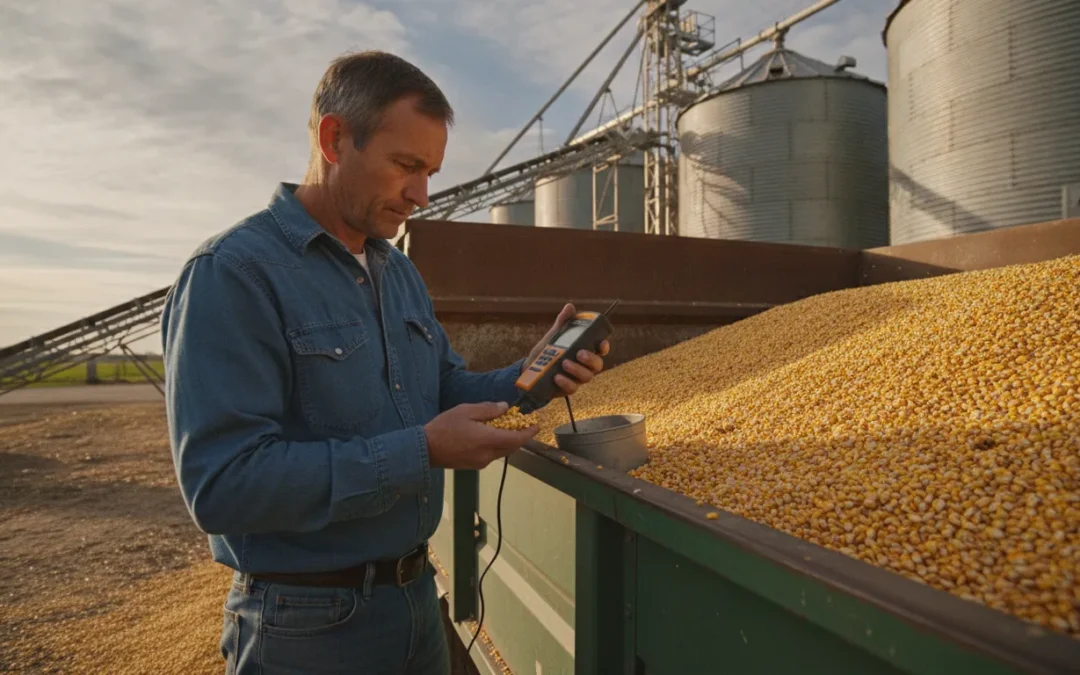
A moisture reading can change when you harvest, how hard you dry, what you market, and whether stored grain stays in condition. A number from a meter is only useful when the sample represents the load and the tester is calibrated for the crop and moisture range.
The best grain moisture meter is the one that gives repeatable readings from a consistent sample, supports the crops you grow, and matches the decision in front of you. Purdue Extension recommends representative sampling, proper tester use, and periodic calibration because inaccurate readings can increase drying costs, shrink, or spoilage risk: Purdue Extension guidance.
That handles the harvest decision. Once grain goes into the bin, spot checks cannot show every temperature or humidity change. So the right evaluation starts with how you will measure grain now and protect it later.
Talk with Farm Shop MFG about your grain-monitoring setup
How to Choose the Best Grain Moisture Meter for Harvest
The best grain moisture meter is not simply the one with the most features. It gives repeatable readings from a representative sample and is calibrated for the crops you grow. It should help you make a better harvest, drying, or marketing decision. A reading that changes because the sample was inconsistent or the grain was outside the meter’s useful range can create avoidable costs across hundreds or thousands of bushels.
Start with repeatable readings, not just claimed accuracy
Accuracy matters, but repeatability comes first in day-to-day harvest work. If the same well-mixed sample produces noticeably different results, you cannot confidently decide whether to keep harvesting, adjust the dryer, or hold a load. Purdue Extension recommends collecting a representative sample, using the tester correctly, and calibrating it periodically. It also recommends taking at least three readings from a mixed field sample and averaging them. Read the guidance in Purdue’s grain moisture testing recommendations before setting a farm testing routine.
Check the meter’s operating range, too. Purdue notes that many testers are not very accurate above 22 to 24 percent moisture unless they are specifically calibrated for wet grain. If you harvest high-moisture corn or another wet crop, confirm that the meter is designed for that condition rather than assuming a displayed number is dependable.
Match the meter to your crop, sample, and conditions
Crop-specific calibration is essential. Corn, soybeans, wheat, and other grains do not behave identically in a tester, so select the correct crop setting and follow the manufacturer’s sample-size and preparation instructions. Look for temperature compensation if grain may be hot from the field, cold from storage, or changing temperature during testing. Temperature differences can affect readings, and a meter that ignores those conditions may be harder to compare from load to load.
Sample preparation can matter as much as the instrument. Do not scoop a single container from the top of a load and treat it as representative. During unloading, collect across the grain stream at intervals, mix the sample, and cover it if testing will be delayed so its moisture does not change. For binned grain, sample from multiple depths or locations and test those samples separately when you are looking for a wet area or developing problem.
Finally, compare your meter with a known reference. Take a well-mixed sample to an elevator or another trusted testing point, then compare results under similar conditions. Record the crop, temperature, sample method, and readings. That check will not make every meter identical, but it will show whether your process is consistent enough to guide decisions. Once harvest ends, remember that a spot reading is only one moment in time. Pair moisture testing with a separate Grain Temp Guard grain-bin monitoring system, and review how often to check grain temperature to protect stored grain after the load is in the bin.
Which Grain Moisture Meter Type Fits Your Operation?
There is no single tool that handles every grain decision. The right setup depends on whether you need a quick reading from a load, a controlled analysis for repeated testing, or ongoing visibility after grain enters the bin. Treat these as separate jobs, not competing versions of the same device.
Three tools, three different decisions
| Tool. | Best use. | Tells you. | Limit. |
|---|---|---|---|
| Handheld meter. | Field samples and loads. | Sample moisture now. | Needs good sampling and calibration. |
| Benchtop analyzer. | Controlled, repeated testing. | Detailed sample results. | Less portable. |
| Bin monitor. | Stored grain. | Temperature and humidity trends. | Does not test a grain sample. |
Handheld meters are for samples, not the whole bin
A portable meter can be the most practical choice when the decision is immediate: keep harvesting. Adjust drying, separate a load, or verify what is headed to the elevator. Its value comes from repeatable technique. Collect a representative sample, use the correct crop setting, and compare readings with a known or elevator result when possible. Purdue Extension notes that accurate readings require a representative sample, proper tester use, and periodic calibration. It also recommends mixing field samples and taking multiple readings for an average. Review Purdue’s grain moisture sampling guidance before building a harvest routine.
When storage becomes the job
Once grain is in storage, a moisture reading from one sample is only a snapshot. Grain can develop changing conditions in different areas of a bin after the original test. That is where a separate monitoring layer earns its place. Grain Temp Guard is not a handheld moisture meter. It tracks grain-bin temperature and humidity, and visual and audio alarms can alert you when readings move outside a normal range. The system is designed to help identify storage problems early, alongside the sample testing used at harvest. Learn more about the Grain Temp Guard grain-bin monitoring system if your operation needs visibility after the load is stored.
The best grain moisture meter for harvest may be a portable unit, while the best protection for stored grain may be a moisture meter plus continuous bin monitoring. Choose each tool for the decision it can actually support.
What Makes a Moisture Reading Useful at Harvest?
A moisture number only helps when it represents the grain you are moving and the decision you are about to make. Harvest timing, drying settings, storage plans, and marketing decisions can all change with moisture content. A reading from one handful is not enough to represent a truckload, especially when conditions vary across the field or load. Purdue Extension notes that accurate moisture readings depend on a representative sample, correct tester use, and periodic calibration. Use this five-step workflow to make each test more useful.
Build a sample you can trust
- Collect a representative sample. Do not scoop a can from the top of a load and treat it as the whole load. During unloading, pass a sampling cup through the flowing grain at regular intervals, then combine the portions in a clean bucket. Purdue Extension describes sampling approximately every 50 bushels as one practical approach. For a field check, collect grain from several plants rather than relying on one ear or one location.
- Prepare every sample the same way. Mix the collected grain before testing. Remove obvious foreign material according to the tester instructions, and keep the sample covered if you cannot test it immediately. Grain can exchange moisture with the surrounding air, so an uncovered sample may not represent the grain as it was when collected. Consistent preparation gives you a better basis for comparing loads and making drying decisions.
- Account for temperature and crop setting. Select the correct crop calibration and follow the meter’s instructions for grain temperature. A tester that works well for one crop or temperature range may not translate directly to another. Pay particular attention when grain is unusually hot, cold, or very wet. Purdue Extension cautions that many testers may be less accurate above 22 to 24 percent moisture unless they are calibrated for wet grain: review the sampling and tester guidance before relying on an out-of-range reading.
Turn readings into a harvest decision
- Repeat the test. Take at least three readings from the mixed sample and compare the results. A consistent result is more useful than a single number that cannot be reproduced. If readings vary widely, check the sample preparation, crop setting, temperature, and tester condition before changing your harvest or drying plan.
- Record the result and act on it. Note the field or load, crop, test time, temperature, moisture readings, and what you did next. Compare your meter with an elevator or other known reference periodically, and calibrate it when needed. Then use the result to decide whether to harvest, dry, blend, store, or market the grain. The goal is not to chase a perfect number. It is to make a defensible decision with a repeatable process.
Remember that a moisture meter gives you a point-in-time sample. Once grain enters the bin, storage conditions can change, so harvest testing and ongoing bin monitoring solve different parts of the risk.
Why a Moisture Meter Alone Cannot Protect Stored Grain
A moisture meter is valuable at harvest, but it answers a specific question: what is the moisture content of this sample right now? That point-in-time reading can guide drying, handling, and marketing decisions. It cannot tell you what is happening throughout a full bin several days or weeks later.
A sample is not the same as a whole bin
Stored grain is not perfectly uniform. Grain enters the bin at different moisture levels and temperatures, and conditions can change as air moves through the grain mass. A reading from one sample may miss a developing problem in another location. Purdue Extension recommends using a probe to collect samples from multiple depths and locations, then testing those samples separately rather than blending them. Routine sampling can help identify hot spots and spoilage problems, but it still depends on someone deciding when to sample and reaching the right area.
That is why a harvest test and a storage plan belong together. Use a properly calibrated meter and representative samples to make the initial decision. Then follow a practical prevent grain spoilage in storage routine that includes inspections, aeration decisions, and ongoing condition checks.
Continuous monitoring closes the gap after harvest
Once grain is in the bin, temperature and humidity trends provide a different kind of information than a moisture reading. A rising temperature in one area can signal an abnormal condition before a scheduled manual check finds it. Monitoring does not replace good sampling or proper drying. It adds visibility between those checks, when the bin is closed and conditions can change.
Grain Temp Guard grain-bin monitoring system tracks grain-bin temperature and humidity and uses visual and audio alarms when readings move outside a normal range. It is not a handheld moisture meter. It is the storage-monitoring layer that follows the harvest measurement, helping you see whether bin conditions remain stable. For installation planning, review the guide to grain bin temperature cables and match sensor coverage to the bin and monitoring setup.
How to Compare Cost, Risk, and Payback
The purchase decision is not just the price of a moisture tester. Compare what the equipment helps you decide, what risk remains after the reading, and how much grain is exposed when a decision is wrong. A properly calibrated meter supports harvest, drying, storage, and marketing choices. A small reading error multiplied across hundreds of bushels can change the result from profit to loss. Purdue Extension explains why representative sampling, correct tester use, and periodic calibration matter.
Start with the loss you are trying to prevent
At harvest, the risk may be taking grain too wet to the dryer. Accepting extra shrink and drying charges, or drying below market standard and paying for unnecessary moisture removal. In storage, the risk changes. A point-in-time moisture reading tells you about the sample you tested, but it does not continuously show temperature or humidity changes inside a bin.
Farm Shop MFG states that each 1% of moisture loss reduces product weight by 1.5%, and that overdrying by 2% to 4% can create substantial financial losses. Those are not guaranteed savings for every farm. They are a way to frame the math against your own crop, grain price, bin size, and actual drying practices. The company gives a 30,000-bushel example in which preventing 1% overdrying is described as saving $1,650 for corn or $3,850 for beans. Treat that as a qualified example, not a promise.
Match the monitoring layer to the payback opportunity
For stored grain, Grain Temp Guard is not a handheld moisture meter. It is a separate monitoring layer that tracks grain-bin temperature and humidity, with visual and audio alarms when readings move outside a normal range. That distinction matters when comparing payback: the meter supports a harvest or load decision, while ongoing monitoring helps you identify abnormal conditions after the grain enters storage.
The Farm Shop MFG knowledge base lists a $499 basic entry point and no subscription or cloud dependency. Verify the current price and configuration before making a purchase decision. Setup also needs to match the bin. Farm Shop MFG recommends one Grain Temp Guard Alarm HT for 3,000 to 6,000 bushels, with additional units for larger bins. Probe lengths range from 10m to 45m, so the right comparison includes coverage, installation, and the value of earlier warning, not only the equipment line item. See the Grain Temp Guard grain-bin monitoring system details before comparing your own storage plan.
Contact Farm Shop MFG to compare the right monitoring setup for your bins.
Frequently Asked Questions
What is the most accurate handheld grain moisture tester?
The most accurate tester is not simply the one with the most features. Choose a model calibrated for your crops, use a representative sample, follow the preparation instructions, and compare readings with a trusted elevator or known check. Periodic calibration matters because a biased reading can change harvest, drying, storage, and marketing decisions. University of Arkansas guidance supports using a properly calibrated meter.
How many times should I test a grain sample?
Mix a representative sample and take at least three readings, then use the average rather than relying on one reading. For a grain load, collect samples from the flowing stream during unloading instead of scooping only from the top. Cover the sample if you cannot test it right away so its moisture does not change. Purdue Extension recommends repeated readings from mixed samples.
Can a moisture meter protect grain after it goes into the bin?
A moisture meter gives you a point-in-time reading from a sample. It cannot continuously show whether temperature or humidity is changing in another part of the bin. Continue checking stored grain, and consider a separate monitoring layer when you need ongoing visibility. Grain Temp Guard tracks bin temperature and humidity and provides visual and audio alarms when readings move outside a normal range.
What should I check when testing moisture in stored grain?
Sample from multiple depths and locations instead of testing only the surface. Keep samples from different areas separate, because comparing them can reveal trouble spots that a blended sample hides. Routine checks during storage help identify hot spots and spoilage risks. Purdue Extension recommends representative bin sampling and periodic monitoring.
Contact us to plan your grain monitoring setup
The right moisture meter can improve harvest decisions, but stored grain needs a monitoring plan that matches your bins, crops, and workflow. Farm Shop MFG can help you think through the handoff from spot readings to continuous bin monitoring with a practical, farmer-first approach.
Contact Farm Shop MFG to discuss the right setup for your operation.