
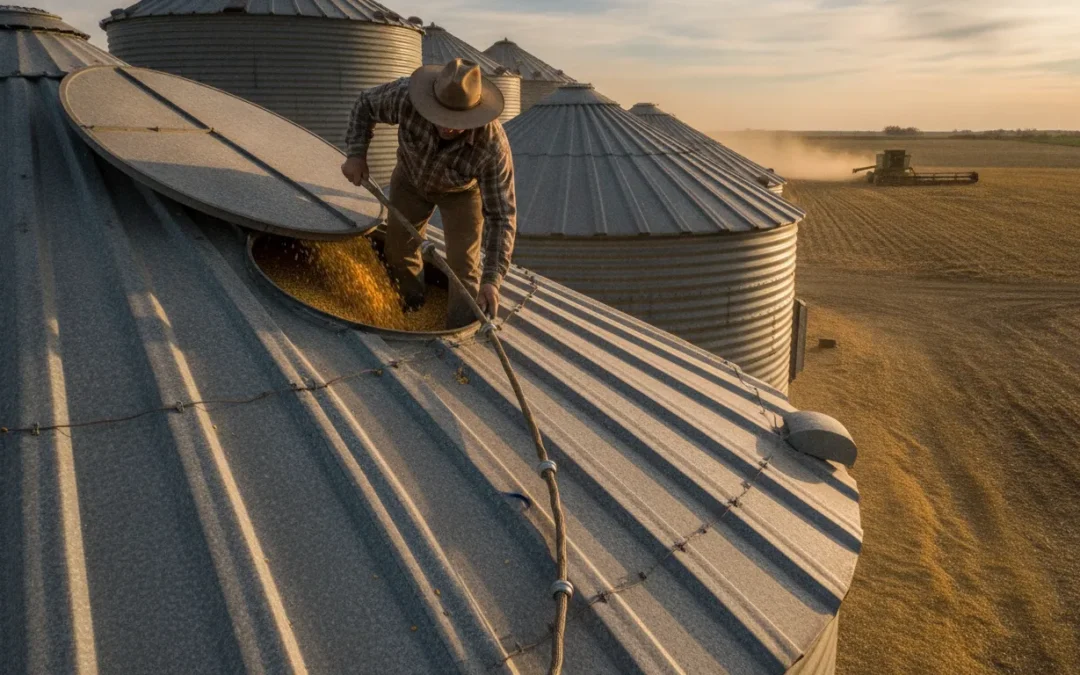
A grain bin can look quiet and sound normal while a hot spot develops below the surface. Moisture migration, insects, and fungal activity can raise temperatures before spoilage becomes obvious, putting both grain quality and drying dollars at risk.
A grain bin temperature monitoring system uses suspended cables with multiple digital sensors to measure conditions throughout the grain. Junction hardware sends readings to software that tracks trends and delivers alerts, while remote access helps you respond without entering the bin for routine checks.
That early warning matters when spring temperatures rise and dormant mold or insect activity can accelerate. In a 30,000-bushel bin, preventing just 1% of overdrying can protect about $1,650 in corn value or $3,850 in soybeans, based on Farm Shop MFG’s operating estimates. Review the grain bin temperature monitoring guide for the broader storage picture, then follow the system from sensor to alert.
Contact Farm Shop MFG to discuss the right monitoring setup for your bins.
How a Grain Bin Temperature Monitoring System Works
A grain bin temperature monitoring system watches conditions inside the grain mass without requiring constant manual checks. Suspended vertical cables carry multiple digital sensors at different depths. Those sensors measure temperature throughout the bin, rather than checking only the surface or one accessible location.
This coverage helps reveal developing hot spots caused by moisture migration, insects, or fungal activity. Iowa State University Extension recommends checking stored grain for hot spots with temperature cables or portable probes. Early detection gives you time to investigate, aerate, or move grain before a localized problem spreads. Read the grain bin temperature monitoring guide for a broader look at storage protection.
The cables connect to hardware outside the bin. A typical system includes the internal temperature cables, external junction or master units, and software that organizes the readings. The external unit collects sensor data and sends it to the monitoring platform. That architecture keeps the sensing equipment in the grain while giving you access from a safer location.
From there, the software turns individual readings into a usable dashboard. You can review temperature patterns, compare sensor locations, and watch for changes over time. Digital systems can provide 24/7 remote access through an app, reducing the need to climb into the structure for manual checks. Iowa State Extension identifies remote monitoring as a way to eliminate that bin-entry safety hazard. See the stored grain management guidance.
The value is not just a single temperature reading. A monitoring system shows where heat is developing and whether conditions are changing across the grain mass. That information supports more targeted decisions about aeration and inspection. For crop-specific guidance, see the wheat storage temperature monitoring guide.
Farm Shop MFG’s Grain Temp Guard follows this practical approach without subscription fees or vendor lock-in. You own the monitoring equipment and can use the data to manage your bins on your terms. For many farms, that makes continuous visibility easier to justify than a recurring service commitment.
What Is a Temperature Cable and Where Does It Go?
A temperature cable is a vertical probe suspended inside the grain mass. It contains multiple sensors positioned at intervals along its length.
Those sensors measure conditions at several depths instead of checking only the surface. That matters because grain can develop a problem below the visible surface.
Moisture migration, insect activity, and fungal activity can create hot spots inside a bin. A monitoring system can identify those changes early, before spoilage spreads. Iowa State Extension explains how stored-grain hot spots develop.
How the cable is positioned
In a typical installation, the cable hangs down through the grain from the bin roof or another overhead support point. The cable remains distributed through the grain column as the bin is filled.
Placement is not random. The goal is to sample representative areas of the grain mass and provide useful temperature readings at multiple elevations.
Some bins use a single center cable. Larger bins usually need several cables spaced across the diameter. The correct layout depends on the bin design, diameter, grain depth, and monitoring equipment.
How many cables does a bin need?
Standard configurations often use one cable in bins measuring 18 to 21 feet in diameter. Bins from 24 to 36 feet may use three cables.
A 42-foot bin may use five cables or more. These figures are starting points, not a substitute for an installation plan. Cable requirements vary by structure and system design.
More cables can provide broader coverage across a larger grain mass. However, the installation should still place sensors where they can reveal meaningful temperature changes.
What readings can reveal
A rising temperature at one sensor can point to a developing hot spot. Farmers can then investigate aeration, moisture, grain condition, or insect activity before the issue becomes more expensive.
Temperature readings work alongside physical observations. A musty odor can indicate early mold activity, while a sour smell from the aeration fan signals serious spoilage. Those warning signs deserve immediate attention.
The cable is the sensing hardware. Junction equipment and software turn its readings into trends and alerts, helping you decide when the grain needs closer inspection or aeration.
How Alerts Are Triggered and What They Mean
An alert is a decision signal, not a diagnosis. It tells you that temperature, moisture, or gas conditions deserve a closer look before grain quality declines.
- The system detects a change. Temperature cables track conditions at multiple points inside the grain mass. A rising reading can indicate a developing hot spot caused by moisture migration, insects, or fungal activity. Rising spring temperatures can also restart mold and insect activity in wet or low-quality grain. Iowa State Extension explains why this seasonal change deserves attention: stored grain management guidance.
- The reading crosses a risk threshold. Moisture content helps explain why some grain needs faster action. Recommended storage levels are 15% moisture for corn and 13% for soybeans. Grain above those levels should be dried or moved, especially as weather warms. A CO2 reading above 1,500 parts per million means you should act quickly to remove or treat the grain.
- The notification reaches your phone or inbox. A connected system can send an alert by phone, text, or email, depending on its communication setup. That notification gives you a specific bin and condition to investigate. It replaces a vague concern with a time-stamped event and a clear starting point.
- You confirm what is happening. Review the sensor location, recent temperature trend, moisture records, and bin conditions. Check for crusting, damp areas, unusual odors, or other visible signs. Treat a hot-spot alert seriously because early detection can prevent spoilage and reduce drying costs.
- You cool the grain when conditions support aeration. If CO2 measures 600 ppm and continues rising, Iowa State Extension recommends aeration with cool air to reduce grain temperature. Run a complete aeration cycle so the cooling front moves through the grain mass. An automated fan control system can help manage fan operation when grain and ambient conditions are suitable.
- You move grain when cooling is not enough. A high CO2 reading, persistent temperature rise, wet grain, or serious odor may require moving grain or professional evaluation. Follow your site safety procedures before opening a bin or entering any structure. Spoiled grain can increase entrapment risk, so never treat an alert as a reason to rush into a bin.
The goal is not to silence alerts. It is to catch changing conditions early, choose the right response, and protect the grain before a manageable problem becomes a load of damaged grain.
Wired vs Wireless Grain Temperature Systems
The right grain bin temperature monitoring system depends on your bins, labor, connectivity, and preferred level of automation. Both designs can identify temperature changes and help you respond before a localized problem becomes spoilage.
| Feature | Wired cable | Wireless/remote |
|---|---|---|
| How it works | Temperature cables run inside the bin and connect to a master or junction unit. Sensors report conditions from fixed points throughout the grain mass. | In-bin sensors send readings to a connected interface, often with cloud or app access. The system can present readings, alerts, and trends away from the bin. |
| Access | Readings are available at the master unit or local installation. This straightforward setup does not depend on an internet connection for routine checks. | Remote access can provide 24/7 visibility without climbing into the bin for manual checks. That reduces exposure to a serious bin-entry hazard. Iowa State Extension explains the safety benefit of digital monitoring. |
| Automation | Farmers typically use the temperature readings to decide when to run aeration fans. Fan selection still depends on grain depth, bin diameter, and grain volume. | Advanced systems may automate aeration fan control using grain conditions and ambient weather. The goal is to run fans when conditions support cooling, rather than running them unnecessarily. |
| Trend history | Local systems may provide current readings, but historical records depend on the equipment and how information is recorded. | Digital dashboards can store historical trends, helping you compare changes over time and spot developing hot spots earlier. |
| Cost and ownership | A wired design is often a practical choice when you want dependable local monitoring with fewer connectivity requirements. | A connected design can add convenience and automation. Look for a system without subscription fees or vendor lock-in, so ongoing ownership costs remain predictable. |
For a connected setup without recurring fees, review Grain Temp Guard. Farms monitoring more than one temperature zone can also compare the dual temperature monitoring system.
Neither design replaces sound aeration management. The monitoring system shows where conditions are changing, while the fan and grain setup determine how effectively you can correct them. Choose the format that fits your bin layout and the decisions you need to make during storage.
What Data Does a Monitoring System Actually Give You?
A monitoring system turns conditions inside the bin into a daily operating picture. The software combines temperature cables, junction or master units, and dashboards that display trends and alerts. That lets you see whether grain is holding steady or moving in the wrong direction. Iowa State Extension recommends checking stored grain for rising temperatures, warm spots, odors, crusting, and CO2 changes.
Temperature trends and hot-spot location
Temperature data shows the condition of the grain mass at each cable and sensor point. A single reading matters, but the trend usually matters more. A slow rise at one sensor can identify a developing hot spot before the problem spreads.
The system can show which cable and sensor reported the change. That gives you a location to investigate instead of treating the entire bin as a question mark. Moisture migration, insects, and fungal activity can create localized hot spots. Early detection gives you time to plan an aeration cycle, move grain, or correct the underlying condition.
Moisture, CO2, and alert history
Moisture readings help explain why temperatures are changing. They also help you judge whether grain is stable enough to remain in storage. For reference, Iowa State Extension identifies 15% for corn and 13% for soybeans as recommended moisture thresholds. Grain above those levels may need drying or movement.
CO2 adds another early warning signal. A CO2 monitor can indicate quality problems earlier than temperature cables alone. When readings reach 600 parts per million and continue rising, cool-air aeration may be needed. Levels above 1,500 ppm call for immediate action, such as moving or treating the grain.
Using the data to protect quality and people
Farmers use the history to time aeration during cool weather and confirm whether the temperature front moved through the grain. Headspace ventilation can limit surface warming from solar heat. Fans should be sealed when idle so warm air does not enter through the floor.
This information also supports safer decisions. Remote monitoring reduces unnecessary bin entry, and spoiled grain is linked to increased entrapment risk. The goal is not collecting numbers. It is knowing what changed, where it changed, and what action protects the crop.
Talk to the farm shop about setting up a monitoring system for your bins.
Frequently Asked Questions
How does a grain bin temperature monitoring system work?
Vertical cables suspend multiple digital sensors throughout the grain mass. The sensors measure temperature at different points, helping identify localized hot spots instead of relying on one surface reading. A connected interface can display current readings, trends, and alerts remotely. This gives you time to investigate moisture migration, insects, or fungal activity before a small problem becomes spoilage. Source: Iowa State University Extension.
Why use temperature cables for grain bin monitoring?
Temperature cables show where conditions are changing inside the bin. A rising reading can point to moisture movement or biological activity that may not be visible from outside. Early detection supports quicker aeration or marketing decisions, while reducing the need for frequent manual checks. Cables are one part of a broader grain-management routine that also includes checking odors, crusting, and damp areas.
What components make up a grain monitoring system?
A typical setup includes internal temperature cables, an exterior junction or master unit, and software for dashboards, historical trends, and alerts. Some systems add remote connectivity, humidity or CO2 monitoring, or automated fan controls. The right combination depends on your bin layout, storage goals, and how much of the process you want to manage remotely.
How many temperature cables do I need for my bin?
Bin diameter usually determines the starting configuration. Common examples include one cable for an 18- to 21-foot bin, three cables for a 24- to 36-foot bin, and five or more for larger structures. Confirm the final layout with the system manufacturer and account for bin height, grain depth, and sensor coverage. Source: Iowa State University Extension.
Can monitoring eliminate the need for bin entry?
Remote readings can reduce routine climbing and manual probing, but they do not remove the need for safe inspections or corrective work. Use the data to decide when a closer check is justified, follow lockout and confined-space procedures, and never enter flowing or bridged grain. Remote monitoring improves awareness, not safety discipline.
Contact us about grain bin monitoring
Keeping temperature trends in view can help you respond to developing hot spots before spoilage spreads through stored grain. Farm Shop MFG can help you discuss the right grain bin temperature monitoring system for your operation. Contact the farm shop to talk through your setup and next steps.
A grain bin can look quiet and sound normal while a hot spot develops below the surface. Moisture migration, insects, and fungal activity can raise temperatures before spoilage becomes obvious, putting both grain quality and drying dollars at risk.
A grain bin temperature monitoring system uses suspended cables with multiple digital sensors to measure conditions throughout the grain. Junction hardware sends readings to software that tracks trends and delivers alerts, while remote access helps you respond without entering the bin for routine checks.
That early warning matters when spring temperatures rise and dormant mold or insect activity can accelerate. In a 30,000-bushel bin, preventing just 1% of overdrying can protect about $1,650 in corn value or $3,850 in soybeans, based on Farm Shop MFG’s operating estimates. Review the grain bin temperature monitoring guide for the broader storage picture, then follow the system from sensor to alert.
Contact Farm Shop MFG to discuss the right monitoring setup for your bins.
How a Grain Bin Temperature Monitoring System Works
A grain bin temperature monitoring system watches conditions inside the grain mass without requiring constant manual checks. Suspended vertical cables carry multiple digital sensors at different depths. Those sensors measure temperature throughout the bin, rather than checking only the surface or one accessible location.
This coverage helps reveal developing hot spots caused by moisture migration, insects, or fungal activity. Iowa State University Extension recommends checking stored grain for hot spots with temperature cables or portable probes. Early detection gives you time to investigate, aerate, or move grain before a localized problem spreads. Read the grain bin temperature monitoring guide for a broader look at storage protection.
The cables connect to hardware outside the bin. A typical system includes the internal temperature cables, external junction or master units, and software that organizes the readings. The external unit collects sensor data and sends it to the monitoring platform. That architecture keeps the sensing equipment in the grain while giving you access from a safer location.
From there, the software turns individual readings into a usable dashboard. You can review temperature patterns, compare sensor locations, and watch for changes over time. Digital systems can provide 24/7 remote access through an app, reducing the need to climb into the structure for manual checks. Iowa State Extension identifies remote monitoring as a way to eliminate that bin-entry safety hazard. See the stored grain management guidance.
The value is not just a single temperature reading. A monitoring system shows where heat is developing and whether conditions are changing across the grain mass. That information supports more targeted decisions about aeration and inspection.
Farm Shop MFG’s Grain Temp Guard follows this practical approach without subscription fees or vendor lock-in. You own the monitoring equipment and can use the data to manage your bins on your terms. For many farms, that makes continuous visibility easier to justify than a recurring service commitment.
What Is a Temperature Cable and Where Does It Go?
A temperature cable is a vertical probe suspended inside the grain mass. It contains multiple sensors positioned at intervals along its length.
Those sensors measure conditions at several depths instead of checking only the surface. That matters because grain can develop a problem below the visible surface.
Moisture migration, insect activity, and fungal activity can create hot spots inside a bin. A monitoring system can identify those changes early, before spoilage spreads. Iowa State Extension explains how stored-grain hot spots develop.
How the cable is positioned
In a typical installation, the cable hangs down through the grain from the bin roof or another overhead support point. The cable remains distributed through the grain column as the bin is filled.
Placement is not random. The goal is to sample representative areas of the grain mass and provide useful temperature readings at multiple elevations.
Some bins use a single center cable. Larger bins usually need several cables spaced across the diameter. The correct layout depends on the bin design, diameter, grain depth, and monitoring equipment.
How many cables does a bin need?
Standard configurations often use one cable in bins measuring 18 to 21 feet in diameter. Bins from 24 to 36 feet may use three cables.
A 42-foot bin may use five cables or more. These figures are starting points, not a substitute for an installation plan. Cable requirements vary by structure and system design.
More cables can provide broader coverage across a larger grain mass. However, the installation should still place sensors where they can reveal meaningful temperature changes.
What readings can reveal
A rising temperature at one sensor can point to a developing hot spot. Farmers can then investigate aeration, moisture, grain condition, or insect activity before the issue becomes more expensive.
Temperature readings work alongside physical observations. A musty odor can indicate early mold activity, while a sour smell from the aeration fan signals serious spoilage. Those warning signs deserve immediate attention.
The cable is the sensing hardware. Junction equipment and software turn its readings into trends and alerts, helping you decide when the grain needs closer inspection or aeration.
How Alerts Are Triggered and What They Mean
An alert is a decision signal, not a diagnosis. It tells you that temperature, moisture, or gas conditions deserve a closer look before grain quality declines.
- The system detects a change. Temperature cables track conditions at multiple points inside the grain mass. A rising reading can indicate a developing hot spot caused by moisture migration, insects, or fungal activity. Rising spring temperatures can also restart mold and insect activity in wet or low-quality grain. Iowa State Extension explains why this seasonal change deserves attention: stored grain management guidance.
- The reading crosses a risk threshold. Moisture content helps explain why some grain needs faster action. Recommended storage levels are 15% moisture for corn and 13% for soybeans. Grain above those levels should be dried or moved, especially as weather warms. A CO2 reading above 1,500 parts per million means you should act quickly to remove or treat the grain.
- The notification reaches your phone or inbox. A connected system can send an alert by phone, text, or email, depending on its communication setup. That notification gives you a specific bin and condition to investigate. It replaces a vague concern with a time-stamped event and a clear starting point.
- You confirm what is happening. Review the sensor location, recent temperature trend, moisture records, and bin conditions. Check for crusting, damp areas, unusual odors, or other visible signs. Treat a hot-spot alert seriously because early detection can prevent spoilage and reduce drying costs.
- You cool the grain when conditions support aeration. If CO2 measures 600 ppm and continues rising, Iowa State Extension recommends aeration with cool air to reduce grain temperature. Run a complete aeration cycle so the cooling front moves through the grain mass. An automated fan control system can help manage fan operation when grain and ambient conditions are suitable.
- You move grain when cooling is not enough. A high CO2 reading, persistent temperature rise, wet grain, or serious odor may require moving grain or professional evaluation. Follow your site safety procedures before opening a bin or entering any structure. Spoiled grain can increase entrapment risk, so never treat an alert as a reason to rush into a bin.
The goal is not to silence alerts. It is to catch changing conditions early, choose the right response, and protect the grain before a manageable problem becomes a load of damaged grain.
Wired vs Wireless Grain Temperature Systems
The right grain bin temperature monitoring system depends on your bins, labor, connectivity, and preferred level of automation. Both designs can identify temperature changes and help you respond before a localized problem becomes spoilage.
| Feature | Wired cable | Wireless/remote |
|---|---|---|
| How it works | Temperature cables run inside the bin and connect to a master or junction unit. Sensors report conditions from fixed points throughout the grain mass. | In-bin sensors send readings to a connected interface, often with cloud or app access. The system can present readings, alerts, and trends away from the bin. |
| Access | Readings are available at the master unit or local installation. This straightforward setup does not depend on an internet connection for routine checks. | Remote access can provide 24/7 visibility without climbing into the bin for manual checks. That reduces exposure to a serious bin-entry hazard. Iowa State Extension explains the safety benefit of digital monitoring. |
| Automation | Farmers typically use the temperature readings to decide when to run aeration fans. Fan selection still depends on grain depth, bin diameter, and grain volume. | Advanced systems may automate aeration fan control using grain conditions and ambient weather. The goal is to run fans when conditions support cooling, rather than running them unnecessarily. |
| Trend history | Local systems may provide current readings, but historical records depend on the equipment and how information is recorded. | Digital dashboards can store historical trends, helping you compare changes over time and spot developing hot spots earlier. |
| Cost and ownership | A wired design is often a practical choice when you want dependable local monitoring with fewer connectivity requirements. | A connected design can add convenience and automation. Look for a system without subscription fees or vendor lock-in, so ongoing ownership costs remain predictable. |
For a connected setup without recurring fees, review Grain Temp Guard. Farms monitoring more than one temperature zone can also compare the dual temperature monitoring system.
Neither design replaces sound aeration management. The monitoring system shows where conditions are changing, while the fan and grain setup determine how effectively you can correct them. Choose the format that fits your bin layout and the decisions you need to make during storage.
What Data Does a Monitoring System Actually Give You?
A monitoring system turns conditions inside the bin into a daily operating picture. The software combines temperature cables, junction or master units, and dashboards that display trends and alerts. That lets you see whether grain is holding steady or moving in the wrong direction. Iowa State Extension recommends checking stored grain for rising temperatures, warm spots, odors, crusting, and CO2 changes.
Temperature trends and hot-spot location
Temperature data shows the condition of the grain mass at each cable and sensor point. A single reading matters, but the trend usually matters more. A slow rise at one sensor can identify a developing hot spot before the problem spreads.
The system can show which cable and sensor reported the change. That gives you a location to investigate instead of treating the entire bin as a question mark. Moisture migration, insects, and fungal activity can create localized hot spots. Early detection gives you time to plan an aeration cycle, move grain, or correct the underlying condition.
Moisture, CO2, and alert history
Moisture readings help explain why temperatures are changing. They also help you judge whether grain is stable enough to remain in storage. For reference, Iowa State Extension identifies 15% for corn and 13% for soybeans as recommended moisture thresholds. Grain above those levels may need drying or movement.
CO2 adds another early warning signal. A CO2 monitor can indicate quality problems earlier than temperature cables alone. When readings reach 600 parts per million and continue rising, cool-air aeration may be needed. Levels above 1,500 ppm call for immediate action, such as moving or treating the grain.
Using the data to protect quality and people
Farmers use the history to time aeration during cool weather and confirm whether the temperature front moved through the grain. Headspace ventilation can limit surface warming from solar heat. Fans should be sealed when idle so warm air does not enter through the floor.
This information also supports safer decisions. Remote monitoring reduces unnecessary bin entry, and spoiled grain is linked to increased entrapment risk. The goal is not collecting numbers. It is knowing what changed, where it changed, and what action protects the crop.
Talk to the farm shop about setting up a monitoring system for your bins.
Frequently Asked Questions
How does a grain bin temperature monitoring system work?
Vertical cables suspend multiple digital sensors throughout the grain mass. The sensors measure temperature at different points, helping identify localized hot spots instead of relying on one surface reading. A connected interface can display current readings, trends, and alerts remotely. This gives you time to investigate moisture migration, insects, or fungal activity before a small problem becomes spoilage. Source: Iowa State University Extension.
Why use temperature cables for grain bin monitoring?
Temperature cables show where conditions are changing inside the bin. A rising reading can point to moisture movement or biological activity that may not be visible from outside. Early detection supports quicker aeration or marketing decisions, while reducing the need for frequent manual checks. Cables are one part of a broader grain-management routine that also includes checking odors, crusting, and damp areas.
What components make up a grain monitoring system?
A typical setup includes internal temperature cables, an exterior junction or master unit, and software for dashboards, historical trends, and alerts. Some systems add remote connectivity, humidity or CO2 monitoring, or automated fan controls. The right combination depends on your bin layout, storage goals, and how much of the process you want to manage remotely.
How many temperature cables do I need for my bin?
Bin diameter usually determines the starting configuration. Common examples include one cable for an 18- to 21-foot bin, three cables for a 24- to 36-foot bin, and five or more for larger structures. Confirm the final layout with the system manufacturer and account for bin height, grain depth, and sensor coverage. Source: Iowa State University Extension.
Can monitoring eliminate the need for bin entry?
Remote readings can reduce routine climbing and manual probing, but they do not remove the need for safe inspections or corrective work. Use the data to decide when a closer check is justified, follow lockout and confined-space procedures, and never enter flowing or bridged grain. Remote monitoring improves awareness, not safety discipline.
Contact us about grain bin monitoring
Keeping temperature trends in view can help you respond to developing hot spots before spoilage spreads through stored grain. Farm Shop MFG can help you discuss the right grain bin temperature monitoring system for your operation. Contact the farm shop to talk through your setup and next steps.