
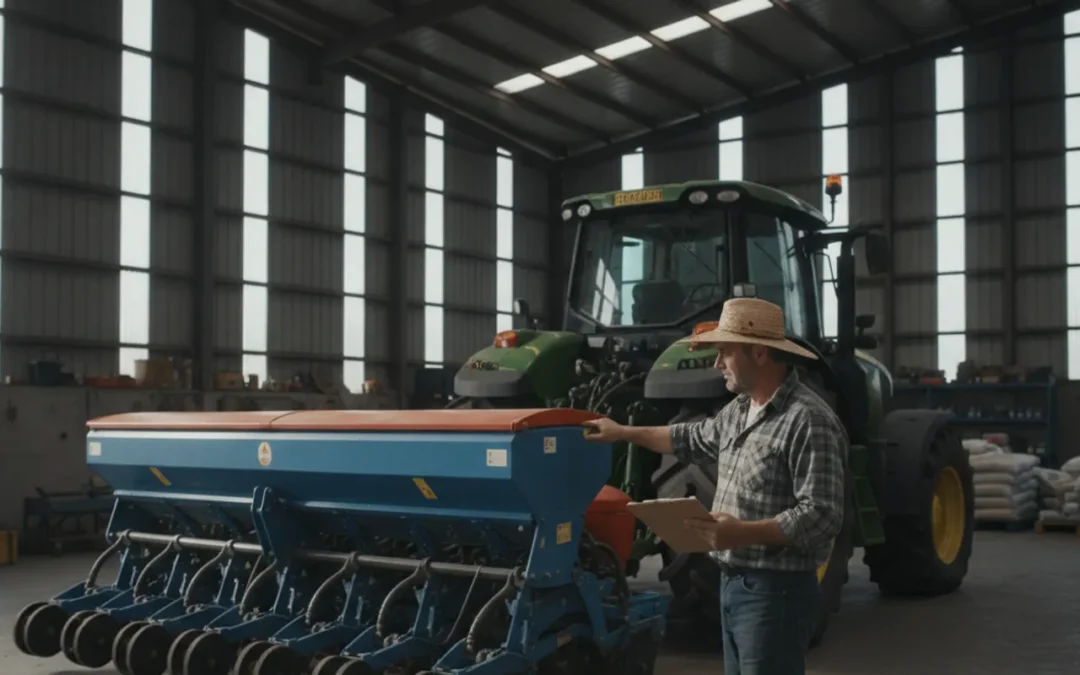
A farm equipment replacement planning checklist helps you decide whether to keep repairing a machine, replace it, or make a smaller targeted change. The decision is rarely just about age. Start with the work the equipment must do, its condition, the risk of downtime, and the time and cash available before the next operating window.
A planter component deserves the same careful thought as a whole machine. Spike closing wheels, for example, should be considered in the context of soil, residue, row-unit setup, and the condition of the rest of the planter. This guide gives you a repeatable way to gather evidence, compare options, and avoid treating a part change as a cure for a problem that has not been diagnosed.
Keep the scope practical: this is a decision process, not a promise that one repair or product will fit every operation. Use equipment manuals, qualified service advice, and confirmed specifications where those are needed. Write down what you know, what you assume, and what still needs an answer before money or field time is committed.
Why plan a replacement before a breakdown?
A failure during a narrow field window can leave little time to inspect alternatives or confirm compatibility. Planning ahead gives you room to collect repair estimates, check specifications, consider labor, and arrange a field test before the equipment is urgently needed. It also helps distinguish a true capacity or reliability problem from the understandable appeal of newer equipment.
Planning does not mean replacement is always the best answer. A repair can make sense when the machine remains dependable, the work is manageable, and the repair scope is clear. Replacement may deserve attention when recurring issues, limited capacity, or unplanned downtime interfere with timely work. Compare each path using the same assumptions and write down what is known versus uncertain.
Consider the timing of the decision, too. An apparently affordable repair can be a poor fit if parts will not arrive before the next operation. A replacement can also introduce risk if delivery, setup, or operator learning is left until the last minute. The calendar is part of the comparison, not an administrative detail to handle after choosing.
What belongs on a farm equipment replacement planning checklist?
- Define the job. Record the operations, acres or loads, working conditions, and dates when the machine must be ready. Include peak demand rather than only average workload. Note which tasks are essential and which can be rescheduled.
- Document condition. Note hours or acres if available, recurring faults, wear, maintenance history, and safety concerns. Take consistent photos of areas that need attention, and identify whether a finding is confirmed or only suspected.
- Scope repairs. List parts, labor, expected downtime, and what is not yet diagnosed. Separate a confirmed repair from a possible future failure. Ask what is included in an estimate and what could change after disassembly.
- Check capacity and fit. Consider power, implements, row configuration, storage, transport, and operator familiarity. For a component, identify the exact planter and row-unit arrangement before comparing parts.
- Assess labor. Identify who will operate, maintain, and service the equipment, and whether the option adds work during a busy period. Include the time needed for setup and routine checks.
- Compare total commitments. Include purchase or repair outlay, setup, financing if applicable, operating costs, and the value of retaining cash for other farm needs. Use estimates that cover the same time period.
- Set a decision date. Work backward from the date of use, allowing time for estimates, delivery, installation, and a real operating check.
Turn that list into a working page rather than a one-time brainstorm. Put the machine identity at the top, then list the intended job, known faults, estimates, open questions, and decision date. Leave space for a later review. If two people share the decision, agree on what evidence each person will collect and who will verify fit or service details.
When the question is a closing wheel rather than a full machine, review the Germinator closing wheel with hub and rim in relation to your current setup. The Germinator closing wheel overview and product details can help frame what specifications to verify; confirm fit for your particular planter before ordering.
How do repair, replacement, and deferral compare?
| Factor | Repair current equipment | Replace or upgrade | Defer and monitor |
|---|---|---|---|
| Cash commitment | Known work may be limited, but repeat repairs can accumulate. | Usually a larger planned outlay plus setup or transition costs. | Lower immediate outlay, while risk may remain. |
| Downtime | Depends on condition, parts, and whether faults recur. | May address known limitations, but delivery and commissioning take time. | Can be acceptable if risk is understood and a backup exists. |
| Compatibility | Existing configuration is retained if the correct parts are used. | Confirm fit with tractors, implements, row units, and practices. | No change now; keep monitoring wear and operating results. |
| Useful evidence | Inspection and a written repair scope. | Specifications, timing, workload, and support needs. | Inspection intervals, trigger points, and contingency plan. |
| Best question to ask | Does this repair address the verified cause? | Will the added capacity or reliability solve a defined constraint? | What condition would make waiting no longer reasonable? |
Deferral is not the same as ignoring a problem. It is a deliberate option only when the machine remains safe to operate and the consequences of waiting are manageable. Set a trigger for revisiting the choice, such as another fault, a repair estimate above a farm-set threshold, or a change in workload. If a safety concern exists, address it before continued use.
Use the table as a prompt, not a scoring formula. A serious unresolved safety issue should not be offset by a low price elsewhere. Likewise, a new machine is not automatically the strongest choice if the existing unit performs the required work and its maintenance needs are understood. Mark any factor that is a must-have separately from factors that can be traded off.
How can you estimate the cost of waiting?
Begin with the work that could be delayed if the machine became unavailable at the worst time. Ask whether another machine, a rental, custom work, or a schedule change could cover it. Record the direct cost of that backup and the practical limits: availability, transport, operator time, and whether it can handle the same conditions.
Use ranges when the outcome is uncertain. For instance, write down a low case where the repair holds through the season and a higher case where another interruption requires outside help. State the assumptions next to each estimate. A transparent range is more useful than a precise figure built on guesses.
Separate direct and indirect effects. Direct items may include parts, labor, transport, rental, or outside work. Indirect items may include time spent arranging a workaround, moving equipment between jobs, or delaying another operation. Do not assign a dollar value to every inconvenience if you cannot support it; simply record the constraint so it remains visible in the decision.
Compare like with like. If one option is a repair for the coming season and another is a multi-year purchase, note the different planning horizons. Include foreseeable setup and maintenance obligations without assuming a guaranteed service life. If a quote excludes installation or diagnosis, label those items as unknown rather than treating them as zero.
Planning farm machinery replacements identifies labor availability and cost, as well as price outlook, as considerations in machinery decisions. Use those prompts alongside current local estimates and your own workload; the document is not a substitute for current quotes or a farm-specific budget.
What should you inspect before changing a planter component?
Start with the field symptom rather than a product description. Check seed placement and furrow closure under representative conditions. Note whether the result changes with soil moisture, residue, speed, or row-unit settings. Inspect bearings, mounting points, and wear, and make sure the issue is not coming from another part of the system.
- Record planter make, model, row-unit type, and the existing hub, rim, and wheel arrangement.
- Check the part’s stated fit against that configuration; do not assume similar-looking parts interchange.
- Describe the problem in observable terms, such as inconsistent closure or visible variation across rows, rather than presuming a cause.
- Compare design, material, maintenance needs, and the availability of replacement components.
- Change one factor at a time where practical, then observe results in comparable field conditions.
Spike closing wheels are not a universal fix for every furrow or emergence concern. Soil texture, moisture, residue, planting depth, speed, and adjustments all affect what happens behind the planter. If several variables change at once, it becomes difficult to know whether a wheel, setting, or field condition explains the result. Troubleshoot first, then evaluate whether the component addresses the diagnosed need.
A useful inspection begins with a description that another person could understand without guessing. Instead of writing “bad closure,” note what you saw, on which rows, under what conditions, and whether the observation repeated. Record whether the furrow was examined immediately behind the planter or later. This does not establish a cause, but it creates a better basis for checking settings and discussing alternatives.
Then verify the entire interface, not just the wheel itself. Record the hub and rim arrangement, fasteners, clearances, visible wear, and any other relevant row-unit parts. Use the equipment documentation and product specifications to confirm compatibility. If the configuration is uncertain, pause before ordering and ask for help with the exact machine and row-unit details.
Farm Shop MFG describes its equipment as farmer-created for farmers and lists durable steel construction among its product attributes. Review the Farm Shop MFG product range and the specific listing before deciding whether a component fits your operation. The company’s equipment resources and closing wheels for corn guide offer additional context for questions to bring to your inspection.
How do you compare options without false precision?
Build a simple side-by-side record. For every option, use the same planning period and include initial cash, expected labor, time out of service, compatibility, and the consequences if the plan does not work. Do not assign service life or performance gains unless you have evidence relevant to your equipment and conditions.
Consider a planter whose closing component shows visible wear while the rest of the row unit appears serviceable. One path is to replace the correctly identified component and inspect the rest of the assembly. Another is to continue operating only if condition and safety permit, with a documented inspection schedule. A third is to investigate a broader row-unit issue if the symptom appears across components. The sensible comparison is not simply the part price: it is whether each path addresses the observed cause and is ready in time.
For a larger machine, use the same logic. A repair option should specify what work is included, likely downtime, and unresolved findings. A replacement comparison should include setup, operator learning, storage, and any changes needed elsewhere in the system. A lower purchase price may not be the lowest operational commitment if it requires substantial adaptation, while a larger purchase may not be justified if the current machine can reliably do the job.
One way to make the comparison concrete is to write a short case for each option. For repair: “The inspection found a specific worn part; the estimate covers that part and labor; availability is confirmed; the remaining unknown is whether inspection will reveal additional wear.” For replacement: “The current unit cannot complete the peak workload in the available window; the proposed unit has the needed capacity; storage, transport, and operator requirements have been checked.” For deferral: “The equipment is currently serviceable; a backup is available; we will revisit if a defined fault or cost threshold occurs.”
These statements reveal gaps. If the repair case does not identify a confirmed fault, request more diagnosis. If the replacement case cannot name the bottleneck it solves, reconsider whether the extra capacity is needed. If the deferral case has no backup or inspection trigger, it may be postponing a decision rather than managing it.
How should you plan the decision around the season?
Start with the date the equipment must perform, then work backward. Allow time to inspect, request estimates, verify parts or machine specifications, make a decision, arrange delivery, install, and test. Build in some margin for delays rather than scheduling the first test on the day the equipment is essential.
For a planter component, a practical sequence is: inspect after the season; record wear and field observations; verify the exact row-unit fit before purchase; install and check assembly before planting; then observe the first pass in representative conditions. If the issue is discovered close to planting, prioritize confirming the diagnosis and fit instead of making several untested changes at once.
For a whole machine, note seasonal workloads and competing uses. A unit that is adequate in ordinary conditions may become a bottleneck when multiple operations overlap. Conversely, a machine used briefly may not warrant replacement if a safe, dependable alternative can cover the work. Put the reason for the decision in writing so the choice can be reviewed after the season.
Give each step an owner and a date. One person might gather maintenance records, another might obtain the repair estimate, and someone familiar with the planter may verify its configuration. Add a check-in date before the purchase deadline. If a quote or part is delayed, that meeting creates a point to switch plans while there is still time, rather than discovering the delay when work is due.
How can you make a field comparison useful?
When testing a change is practical, decide in advance what you will observe. Choose comparable passes or strips, keep other settings consistent, and record soil moisture, residue, speed, and adjustment. Inspect the result at the same point in the operation. If conditions change sharply across the field, mark that in the notes rather than treating unlike areas as a clean comparison.
Use a short record with date, field, equipment configuration, setting, observed result, and follow-up. Photos can help when they show the same view and scale. Do not confuse a single observation with proof that one part caused an outcome; repeat observations across conditions when possible. These notes can guide a later repair, adjustment, or purchase discussion.
For example, if you are comparing a current wheel setup with a candidate change, choose a section where the field conditions are reasonably consistent. Keep operating speed and other settings stable for the comparison, and note any unavoidable differences. Inspect more than one row if possible, because a single row may not represent the planter. Record the outcome in plain terms, such as whether the furrow appears closed consistently, rather than scoring it with a number that has no defined method.
Make the test useful by deciding what result would change your next action. If the observed difference is unclear, the next step may be another controlled pass or checking a different setting, not immediate replacement. If the result varies with moisture or residue, document that boundary. A field note that says “worked in this condition, uncertain in that one” is more valuable than a broad conclusion based on one pass.
What should you include in an equipment decision record?
- Machine or component identification and current configuration.
- Workload, operating window, and relevant field or storage conditions.
- Condition findings, photos, maintenance history, and known faults.
- Options considered, estimates, assumptions, and unresolved questions.
- Compatibility checks, labor implications, and contingency plan.
- Decision, reason, decision date, and a date or trigger for review.
Keep the record short enough to update. A one-page summary is usually more useful than a long document that no one revisits. After the season, compare what happened with the assumptions: Were repairs repeated? Did the backup plan work? Did the workload change? That review makes the next replacement decision more grounded.
At the end of the operating period, add actual observations beside the original plan. Note whether the equipment was ready when needed, whether estimates matched the work done, how much downtime occurred, and whether the contingency worked. Do not use one season as a universal rule for every year; use it as evidence about this machine, this workload, and these conditions.
What is the most useful next step?
Gather the equipment identification, photos, maintenance notes, and a clear description of the problem. For a closing-wheel question, include planter and row-unit details, plus the conditions where the concern appears. That information makes a fit conversation more specific than asking whether a part works in general.
Review the Germinator closing wheel listing as one reference point, and compare its details with your configuration before ordering.
For a useful conversation, organize your questions in advance: Which dimensions or model identifiers should be checked? What parts are included? Are any related components typically inspected at the same time? What information would clarify whether the issue is the wheel, another row-unit component, or field conditions? Keep the answers with the decision record so the basis for the choice remains clear.
Farmers comparing several machines can use the same preparation: list the required tasks, peak workload, current condition, repair scope, fit constraints, labor needs, and deadline. A focused request is easier to compare across options than a general question about what to buy.
Ask about product compatibility
A written comparison helps you prepare before the season and choose the repair, replacement, or monitored option that best fits your workload and operating conditions.