
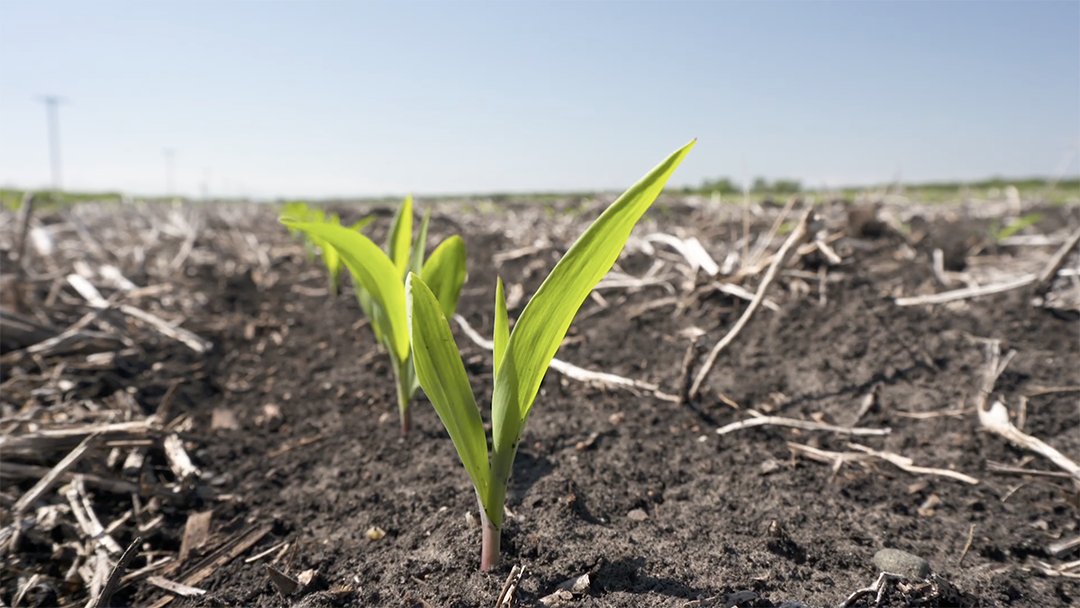
Seed companies invest heavily in developing varieties with higher yield potential, greater disease resistance, and improved stress tolerance. Farmers pay premium prices expecting that investment to pay back in the field. What many do not fully account for is how much the seed environment at planting determines whether premium genetics ever get the chance to express themselves. A top-performing variety placed in a poor seed zone delivers disappointing results. The environment controls what the genetics can actually do.
Seed performance factors that show up in replicated trial plots do not always translate directly to farm field conditions. Trial plots are managed intensively to minimize environmental variation. Farm fields have variable soil textures, compaction zones, drainage differences, and residue challenges, creating a wide range of seed environments within a single planting pass. Understanding that the physical environment around the seed shapes its performance as much as its genetic makeup changes how farmers think about where yield actually comes from in their fields.
What Creates a Seed Environment
The seed environment is the physical, chemical, and biological space immediately surrounding a seed after it is placed in the ground. It includes the soil particles pressing against the seed coat, the moisture those particles carry, the temperature they maintain, the oxygen they hold between their pores, and the biological organisms living nearby. Every one of these factors interacts with the seed from the moment it enters the trench. Together they determine how fast germination begins, how strongly the radicle emerges, and how quickly the seedling establishes above ground.
Crop establishment in the field begins entirely within this small zone. It is typically just a few centimeters in diameter but controls everything that happens in the seed’s first days underground. The planter creates this environment with every pass through the field. Opener discs shape the trench walls. The closing wheel determines soil firmness and moisture retention. Travel speed affects depth consistency. Each piece of equipment the farmer chooses affects the specific seed environment quality, which either supports or limits the genetic potential in every seed.
Why Environment Impacts Performance
Seeds placed in a high-quality environment germinate faster, root more vigorously, and emerge with enough stored energy remaining to support rapid early above-ground growth. Seeds placed in a poor environment spend more of their stored energy fighting adverse conditions rather than building the root and shoot architecture that carries yield potential through the season. Even a small difference in the time between planting and germination changes how much energy the seedling has available for its first weeks of autonomous growth after emergence.
Seed growth conditions also affect how the plant responds to management inputs applied later in the season. Herbicide applications are more effective on plants at a uniform growth stage. Starter fertilizer benefits plants with root systems actively seeking nutrients in the soil surrounding the seed zone. Fungicide timing aligns better with development when all plants are at the same stage. A strong seed environment creates the uniform, vigorous stand that makes every subsequent management decision more precise and cost-effective. A poor seed environment creates variability that multiplies management challenges throughout the growing season.
Key Elements of a Healthy Seed Zone
A healthy seed zone is not an accident. It is the product of the right conditions working together in the critical space around each seed after planting. Moisture, soil contact, temperature stability, oxygen, and physical space for root expansion all contribute to the environment that determines how quickly and reliably seeds reach their genetic potential. Each element can be managed at planting through the right equipment choices and field timing decisions.
1. Moisture Availability
Moisture is the first trigger for germination. The seed coat must absorb water quickly and consistently to begin the biochemical cascade that activates growth. Moisture availability in the seed zone depends on how firmly the surrounding soil presses against the seed and how well the closed trench prevents evaporation. Seeds in dry, loosely filled trenches wait for rain to deliver the moisture they need. Seeds in well-closed, moist trenches begin absorbing water immediately after planting and germinate days ahead of those in poor moisture conditions.
2. Soil Contact Quality
Physical contact between soil particles and the seed coat is what transfers moisture and maintains the temperature stability seeds rely on during germination. A seed floating in an air gap has no moisture bridge to the surrounding soil, regardless of how wet that soil is. Quality soil contact means pressure from multiple directions, no gaps, and particles small enough to press directly against the seed surface. Planting conditions that produce this contact level create seed environments where germination begins reliably and proceeds without interruption.
3. Temperature Stability
Temperature swings in the seed zone slow germination chemistry and can damage seeds that begin absorbing cold water during chilling events after planting. Stable temperature in the seed zone comes from firm soil surrounding the seed, insulating it from the rapid changes that occur at the soil surface between day and night. Seeds in well-sealed trenches experience smaller temperature ranges than seeds in loosely closed or shallow positions. That stability means germination enzymes work at a consistent rate, and the timing between neighboring seeds remains tight.
4. Oxygen Access
Respiration inside the germinating seed requires a steady oxygen supply from the surrounding soil. Oxygen reaches the seed by diffusing through air-filled pore spaces between soil particles. Compacted soil and saturated soil both reduce these pore spaces and cut off oxygen access. A healthy seed zone maintains enough looseness in the surrounding structure to allow oxygen diffusion without sacrificing the firmness needed for moisture contact. Balancing these two requirements is the central challenge of creating a seed environment that supports full genetic expression from the first day of germination.
5. Root Expansion Space
Once germination begins, the radicle needs physical space to push outward and downward through the soil. Hard layers beside or above the seed redirect roots laterally rather than allowing them to develop the deep, branching architecture that supports nutrient and water capture later in the season. Root expansion space in a healthy seed zone means the soil structure around the seed is firm enough to support the seed but open enough for root penetration. Equipment that closes the trench without over-compressing preserves this space and gives roots the environment they need to establish correctly from the very first hours after germination begins.
The Connection Between Environment and Yield
Yield potential starts in the seed zone. Genetics sets the ceiling for what a plant can produce under ideal conditions. The seed environment determines how close the plant actually performs to that ceiling. Fields with consistently high seed environment quality across all rows and soil zones produce crops that express more of their genetic potential than fields with variable environment quality. The best variety in a poor environment still underperforms. A solid variety in an excellent environment often surprises with results that exceed expectations.
The connection between seed environment and final yield is clearest in the data farmers collect over multiple seasons. Fields with tight emergence windows, uniform stand populations, and consistent row spacing year after year also show the most consistent yield results relative to local averages. Those outcomes trace back to the seed zone conditions created at planting. Farmers who build better seed trench conditions season after season build a compounding yield advantage that genetic selection alone cannot provide. Environment and genetics work together. Neither one is enough without the other performing at the level the crop requires.
Conclusion
Seed genetics set the potential. The seed environment decides how much of that potential the plant actually reaches. Premium seed placed in a poor physical environment consistently performs below its potential, regardless of what the replicated trial plots showed under managed conditions. Farmers who understand this relationship invest in both seed selection and the quality of the planting environment, rather than assuming one can substitute for the other.
Creating a consistent, high-quality seed environment does not require expensive technology. It requires the right equipment working correctly under the right field conditions. Attention to soil contact, moisture retention, temperature stability, oxygen access, and root expansion space at the moment of planting builds the foundation every seed needs to express its genetic potential. Farmers committed to better seed trench conditions protect their seed investment and maximize returns from every genetics decision they make during the off-season planning process.