
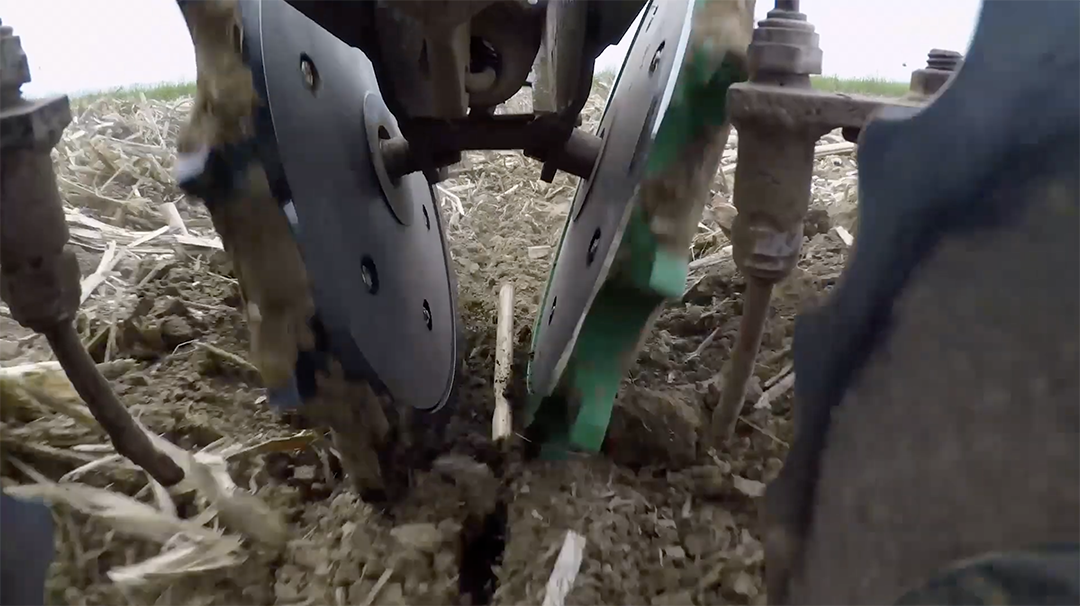
Most farmers spend serious time choosing the right seed, setting planting depth, and managing fertilizer rates. Far fewer give the same attention to what happens after the seed drops into the trench. Proper furrow closure is the step that seals every other planting decision into place. Without it, even the best seed in the most carefully prepared soil fails to perform at its potential.
Furrow closure issues affect crop performance in ways that are hard to trace back to the planting pass. Seeds that sit in poorly sealed trenches face moisture loss, air gaps, and unstable growing conditions from their very first hours in the ground. These problems show up days later as patchy emergence, thin stands, and yield gaps that leave farmers searching for answers. Understanding what proper furrow closure does changes how those problems get prevented.
What Is Proper Furrow Closure
Proper furrow closure means the trench opened by the planter disc is fully and firmly sealed after the seed is placed. Soil presses against all sides of the seed with no voids, no loose gaps, and no open channels that allow air or surface moisture to escape. The closing wheel is responsible for this action. When it works correctly, the seed sits in a stable, moist environment that supports fast and reliable germination from the moment planting ends.
Closure quality depends on several variables working together. Closing wheel type, down pressure, soil texture, and moisture content all influence the result. A wheel that performs well in firm, moist loam may leave gaps in loose, dry sand or smear and compact in heavy wet clay. Farmers dealing with variable field conditions need closing systems that adapt to those changes without losing consistent contact with the seed trench walls on every pass through the field.
Why Furrow Closure Impacts Crop Performance
The seed trench is a sealed microenvironment when closure works properly. Temperature stays stable. Moisture stays available. The seed absorbs water at a consistent rate and begins germination on schedule. Break that seal with an air gap or a loosely closed trench, and the environment changes immediately. Moisture escapes. Temperature swings widen. Germination slows or stops in affected areas, while neighboring seeds with better closure continue on schedule.
Planting consistency across a field depends heavily on how uniformly the trench closes behind every seed. One row with good closure and another with poor closure produce plants that compete unevenly from emergence onward. Larger plants shade and outcompete smaller ones that germinated late due to closure failures. Yield losses from this kind of within-row competition accumulate quietly and never show up as an obvious single cause at harvest time, which is exactly why proper furrow closure gets overlooked so often.
How Farmers Can Improve Furrow Closure
Improving furrow closure starts with understanding what the closing wheel is actually doing in each soil condition across the field. Farmers who inspect their seed trenches after planting gain immediate insight into where closure is working and where it is failing. From there, adjustments to pressure settings, wheel type, or equipment choice can target the specific gaps causing problems in their fields.
1. Consistent Soil Contact
Soil contact around the seed is the direct outcome of good furrow closure. When the closing wheel pushes soil firmly against both trench walls and the soil above the seed, moisture transfers quickly to the seed coat. This triggers germination chemistry more quickly and reliably than seeds sitting in loose or partially closed trenches. Consistent soil contact farming requires a closing system that maintains pressure evenly across all soil types encountered during the planting pass.
2. Reduced Air Gaps
Air gaps between the seed and the surrounding soil are among the most damaging effects of poor closure. Air does not conduct moisture. A seed surrounded by even a small air pocket cannot absorb the water it needs to germinate. Reducing air gaps requires firm, even pressure from the closing wheel across both sides of the trench. Fields with fewer air gaps around seeds show faster and more uniform emergence within the first week after planting.
3. Better Moisture Retention
A firmly closed trench acts like a lid over the seed zone. It slows surface evaporation and keeps moisture available at the seed coat for longer after planting. This matters most in warm, dry, or windy conditions where an open or loosely closed trench loses its moisture within hours. Better moisture retention from proper closure gives seeds the water access needed to complete imbibition and begin the germination sequence without interruption or delay.
4. Improved Seed Protection
Seeds left in poorly closed trenches face more than moisture loss. They are exposed to temperature extremes, pest activity, and physical movement from rain or wind. A well-closed furrow wraps the seed in firm, stable soil that buffers against all of these risks. Seed protection farming improves directly when closure is consistent. Each seed sits in a deliberately sealed environment created by the farmer, rather than one left to chance after the planter moves on.
5. Uniform Germination Support
Uniform germination requires every seed to start the same process at roughly the same time. That only happens when each seed experiences the same conditions in the hours and days after planting. Proper furrow closure delivers those conditions by creating a consistent environment from seed to seed across the entire field. Farmers who improve furrow closure reduce the spread between the first and last seed to germinate in a row, which directly improves stand uniformity and final yield.
6. Long-Term Benefits in the Field
Fields where furrow closure is managed consistently build a track record of stronger, more uniform stands season after season. Plants that emerge together compete equally and develop at the same rate. Canopy coverage becomes uniform, reducing weed pressure and improving the crop’s efficiency in capturing sunlight and moisture throughout the growing season. These advantages compound each year and translate into more predictable yield results across variable field conditions.
Equipment that delivers a reliable closure also protects long-term soil health. Consistent, controlled closure avoids over-compaction, which damages soil structure and restricts future root development. Farmers who invest in tools designed to improve furrow closure reduce both input waste and the hidden yield drag that poor closure creates year after year. The returns include cleaner stands, lower replanting costs, and harvest results that more closely match the field’s true potential.
Conclusion
Proper furrow closure is not a finishing detail at the back of the planter. It is a core step that determines whether everything done before it actually results in a strong, productive crop. Moisture retention, seed stability, air gap prevention, and germination timing all depend on how well the trench closes around each seed. Farmers who treat this step with the same care as any other part of planting gain a direct and measurable advantage.
The yield and consistency benefits of proper furrow closure show up quickly and last throughout the season. Tighter emergence windows, stronger stands, and fewer thin spots across the field are all traceable back to this one step. Farmers who want to improve furrow closure performance should start by inspecting actual seed trenches after planting and making the adjustments needed to achieve firm, consistent closure across all soil conditions.