
Introduction
Most farmers focus on seed selection, planting depth, and row spacing when planning their crop. Closing wheel pressure rarely gets the same attention. Yet pressure directly affects how well each seed contacts the surrounding soil. Without the right pressure, even the best seeds planted at the perfect depth can fail to perform as expected.
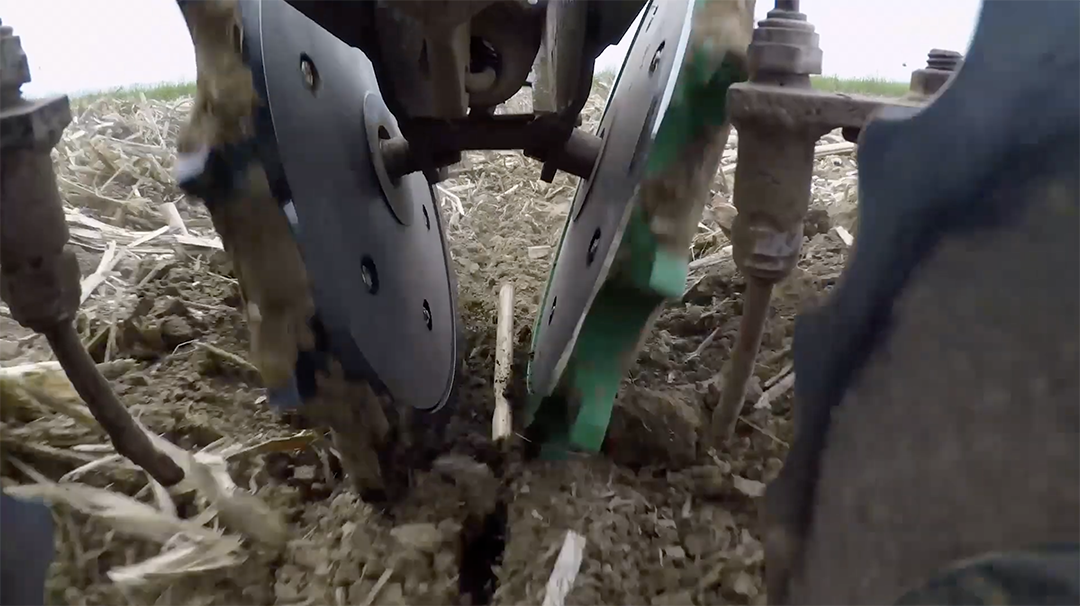
Closing wheel pressure controls the force applied to the soil after the seed drops into the trench. Too much force compacts the soil, blocking root development. Too little force leaves gaps that dry out seeds before they germinate. Understanding and managing closing wheel pressure is one of the most important and overlooked steps in modern planting. The Germinator closing wheel was designed with this challenge at its core.
What Is Closing Wheel Pressure
Closing wheel pressure is the downward force a closing wheel exerts on the soil surface after the seed is placed. This force seals the trench and holds the seed in place. The right amount of pressure creates firm soil contact without crushing the soil structure around the seed zone. It is measured and adjusted based on soil type, moisture content, and field conditions.
Pressure settings vary by planter and soil environment. Light pressure works better in wet, sticky soils that compact easily. Heavier pressure is sometimes needed in loose or dry soils to properly firm the trench. Finding the right balance requires understanding how the soil behaves in each field. Many farmers use the same pressure setting across all conditions, resulting in inconsistent results throughout the planting season.
Why Incorrect Pressure Creates Problems
Too much closing wheel pressure creates compaction directly above the seed. This compressed layer restricts root emergence and can trap moisture, leading to seed rot. Plants that push through compacted soil use more energy and emerge weaker. They are more vulnerable to disease and environmental stress from the very first day of growth.
Too little pressure leaves the trench open or loosely filled. Air pockets form around the seed, cutting off moisture access. Seeds dry out before root hairs can form. Germination slows or fails in those zones. Uneven pressure across a field leads to uneven emergence, which reduces the uniformity farmers need for efficient management and strong yields at harvest time.
How Germinator Maintains Proper Pressure
The Germinator closing wheel is engineered to deliver consistent, appropriate pressure across varying field conditions. Its design responds to variations in soil type and moisture without requiring constant manual adjustment. Farmers can rely on steady performance from row to row and field to field throughout the entire planting season.
Balanced Force Application
The Germinator wheel applies force evenly across the width of the trench. It does not concentrate pressure in a single area, preventing localized compaction. Each seed benefits from the same level of firming. This balance means soil closes properly around the seed without creating hard spots that restrict root growth.
Consistent Soil Contact
Good soil contact is what triggers germination. The Germinator wheel maintains steady contact with the trench walls even as soil texture changes. It keeps the seed surrounded by firm, moist soil at all times. This consistent contact reduces moisture loss and speeds up germination across the entire field.
Reduced Compaction Risk
The Germinator design avoids over-applying pressure in wet or heavy soils. Its shape and material allow it to firm the trench without creating a compacted crust above the seed. Roots emerge freely and establish deeper, stronger systems early in the growing season. Less compaction means better long-term plant health.
Even Pressure Distribution
Pressure that shifts or spikes as the planter moves across field variations causes inconsistent trench closure. The Germinator wheel evenly distributes pressure continuously along the row. It responds to small field changes without causing sudden pressure increases. Farmers get even results whether passing over firm knolls or softer low spots.
Improved Field Consistency
Consistent pressure across the field leads to consistent emergence timing. Plants come up together, compete equally, and develop at the same rate. This uniformity makes crop management easier and more effective. The Germinator closing wheel helps achieve that consistency by maintaining proper planter pressure control throughout every planting pass.
Key Benefits for Field Performance
When closing wheel pressure is managed correctly, fields produce more uniform stands. Plants emerge within a tighter window and grow at a similar rate. This improves canopy development, light interception, and nutrient uptake across the row. Farmers spend less time managing uneven areas and more time focused on other critical tasks during the season.
The long-term benefit becomes clear at harvest. Fields with even emergence and good root development consistently yield more per acre. The Germinator closing wheel contributes directly to that outcome by controlling planting efficiency from the first moment the seed enters the ground. Pressure management is not a minor detail. It is a key driver of field performance and final yield.
Conclusion
Closing wheel pressure plays a far bigger role in planting success than many farmers realize. It determines how well seeds connect with soil, how quickly they germinate, and how strongly they establish. Getting pressure right across all soil conditions is what separates average stands from consistently high-performing crops.
The Germinator closing wheel takes the guesswork out of pressure management. It delivers a balanced, consistent force that adapts to changing field conditions without constant operator adjustment. Farmers who deal with planter efficiency issues can significantly improve their results by upgrading to a closing wheel designed for reliable performance across all soil types.