
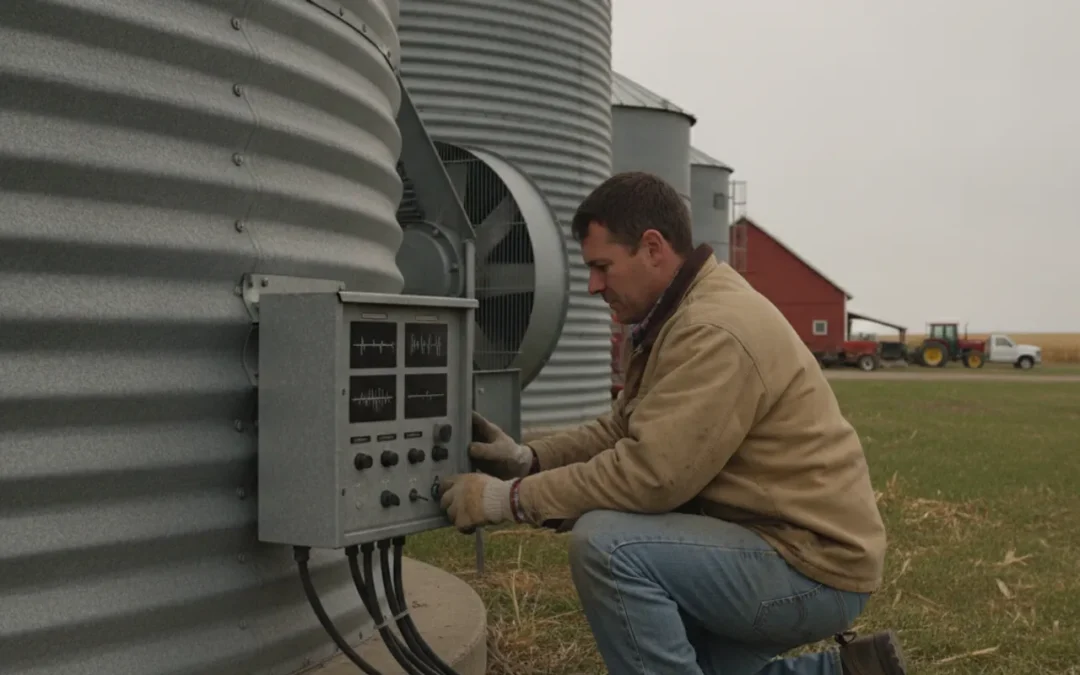
A grain storage equipment buying checklist can help you compare more than the price tag. Start with the grain you store, the bins you already own, and the decisions you need to make during storage. Then compare capacity, monitoring, airflow, controls, installation, and support as one system rather than as separate purchases.
Discuss your grain storage needs
What should you define before comparing equipment?
Write down the job the equipment must do. A system intended to monitor bin conditions has a different role from equipment intended to move air or control a fan. Clarifying that distinction keeps a useful sensor from being mistaken for an automatic operating decision.
- Stored crop: List the crops and whether bins are used for dry grain, grain needing additional management, or more than one purpose.
- Bin inventory: Record each bin’s approximate capacity, construction, access points, existing fans, and any known limitations.
- Management goal: Decide whether you need condition visibility, fan operation support, grain movement, or a combination.
- Operator routine: Note who checks the bins, how often they can respond, and how they currently record observations.
- Constraints: Identify power availability, mounting locations, connectivity needs, and the timing of installation.
For broader equipment decisions, use this farmer’s guide to choosing agricultural equipment alongside the checklist below. It helps keep the purchase tied to field and storage needs instead of features alone.
How do monitoring, aeration, and fan control differ?
These terms describe related but distinct functions. Monitoring gives you information about conditions. Aeration moves air through grain to manage conditions when the grain and weather allow. Fan controls manage when fans operate; the right operating decision still depends on the system design, grain condition, and management plan. To compare monitoring options before you buy, see best grain bin monitoring systems compared.
| Equipment type | Main role | Questions to ask | What it does not automatically replace |
|---|---|---|---|
| Temperature or humidity monitoring | Provides readings for checking stored-grain conditions | What is measured, where are sensors placed, and how are readings reviewed? | Inspection, interpretation, or a fan-management plan |
| Aeration equipment | Moves air through grain under suitable conditions | Does the existing fan and bin arrangement suit the stored grain and intended use? | Monitoring or the decision about when conditions are suitable |
| Fan control | Manages fan operation according to its design and setup | What inputs guide operation, and what remains the operator’s responsibility? | Correct installation, system checks, or sound grain-management judgment |
| Grain handling equipment | Moves grain between bins or through handling points | What capacity, route, and safe operating procedures are required? | Condition monitoring or storage management |
Do not assume a product that measures conditions also controls a fan, or that a controller measures every condition relevant to a storage decision. Ask the supplier to describe the function in plain terms and identify what the operator must still check.
Which bin and capacity details matter?
Match the equipment to the actual bins, not a generic farm profile. Record the bin’s rated capacity, approximate fill level, access points, fan arrangement, and whether the equipment is intended for one bin or several. If grain is moved between bins, keep a simple record of the new bin, date, crop, and any known condition or handling notes. That record helps you interpret later readings in context.
For a bin that will store dry shelled grain, structural condition matters. Purdue Extension’s guidance on adapting silage silos for dry grain storage specifically notes that a silo must be structurally sound and sufficiently hooped or reinforced for that use. This is a reminder to verify that the storage structure is appropriate before treating monitoring or fan equipment as the solution.
Check mounting and sensor placement requirements before ordering. Ask how the equipment fits the bin’s dimensions and whether the installation requires access that is difficult to reach once the bin is loaded. If a system is sold for a stated capacity range, confirm how that range applies to your bin and grain-handling routine.
How should you compare monitoring systems?
Begin with the measurement and its use. Find out whether the system measures temperature, humidity, or another condition, how readings are presented, and how a farmer can tell when a reading should prompt a closer inspection. Ask whether the equipment depends on a cloud connection, a phone, or a local display, and what continues to work if a connection is unavailable.
- Identify the exact readings provided and their units.
- Ask how many sensors are included and where they should be installed.
- Confirm how readings are viewed, stored, or compared over time.
- Find out what alerts mean, how they are delivered, and what action they recommend.
- Check whether the system has recurring fees, connectivity requirements, or replacement components.
- Ask how to verify a reading when it does not match other observations.
A sensor is an aid to decision-making, not a guarantee that grain is in good condition. A useful monitoring setup should fit your inspection routine and make it easier to identify changes that deserve attention. Review the Grain Temp Guard monitoring information to understand one option’s stated role, then compare that role with your own bin-management needs.
What should you check in a fan-control system?
Ask what the system uses to determine fan operation, which fans it can manage, and what operating modes are available. Clarify whether it responds to measured conditions or follows settings chosen by the operator. The answer should explain the control logic without implying that a controller can account for every crop, weather, or bin condition.
Before purchase, confirm electrical compatibility, wiring requirements, environmental protection, and who is expected to install or test the system. Determine what happens after a power interruption and whether the operator can override or manually check operation. Keep the fan’s maintenance and the grain-management plan separate from the control purchase: an automated switch does not remove the need to inspect equipment and grain.
Compare an automatic bin fan control system by its stated capabilities and fit with the fans already on your farm. Ask for clear answers about setup, monitoring inputs, operating responsibility, and support before deciding.
How do costs and requirements compare?
Compare the complete installed and operating picture rather than only the initial price. Request an itemized description of the equipment, installation work, required accessories, connectivity, and likely replacement parts. If you already own fans or monitoring equipment, ask what can be retained and what must be changed for the new system to function as intended.
| Cost or requirement | What to confirm | Why it matters |
|---|---|---|
| Core equipment | Included sensors, controller, cables, and mounting hardware | Prevents comparing unlike packages |
| Installation | DIY steps, electrical work, access needs, and any professional labor | Sets realistic timing and total project scope |
| Ongoing operation | Subscriptions, connectivity, power use, and service requirements | Shows whether costs continue after purchase |
| Compatibility | Bin type, fan arrangement, power, and existing equipment | Reduces risk of a system that does not fit the site |
| Support and parts | Documentation, troubleshooting contact, and replacement availability | Helps plan for operation during busy periods |
Use the same assumptions when you compare options. If one quote includes installation and another does not, make that difference visible. Avoid assigning a value to avoided loss or labor without using figures that reflect your own operation and records.
What installation and support questions belong on the checklist?
Ask for the installation sequence and the tools or skills it requires. Verify whether equipment should be installed before filling a bin, whether wiring must be protected from weather or damage, and how the system is tested after installation. Follow the manufacturer’s instructions and applicable electrical and workplace safety requirements.
- Who installs the equipment, and what preparation is needed?
- Can it be fitted while the bin is loaded, or should installation happen beforehand?
- What checks confirm the sensors and controls are operating?
- Where are troubleshooting instructions and support available?
- What parts are consumable, and how are replacements identified?
- What records should the operator keep after a move, repair, or sensor change?
For a farmer-friendly comparison of available products, review Farm Shop MFG’s product range and the relevant product details. Ask questions before ordering if bin configuration or intended use is uncertain.
How can you make a short list without overbuying?
Score each option against the requirements you wrote down. Use a simple rating such as “fits,” “needs clarification,” or “does not fit.” Do not give a high score just because a product has more features; give it credit for functions you will actually use and can maintain.
- Eliminate mismatches. Remove options that do not fit your bin, fan, power, or installation constraints.
- Compare core function. Separate monitoring, aeration, control, and grain handling rather than treating them as one feature.
- Check operating burden. Consider who will review readings, respond to alerts, and keep equipment maintained.
- Compare full cost. Include equipment, installation, recurring charges, and likely service needs.
- Document unanswered questions. Get clarification in writing before committing.
This method also keeps the purchase distinct from broader decisions about handling or storage. A system that is right for one bin may not be the best fit for a different bin with another fan arrangement or management routine.
What should you record after buying?
Keep a compact equipment record with the bin identification, product and model, installation date, sensor positions, fan connections, settings, and contact information for support. Record changes when grain is moved between bins, equipment is repaired, or sensors are replaced. Include the date and any observed condition so later readings can be interpreted against what actually happened.
Use the record to make routine checks repeatable. It can show which readings are typical for that bin, help a second operator understand the setup, and prevent assumptions from being carried over after a change. Keep the equipment manual and the farm’s grain-management procedures together where the operators can find them.
How does a bin-to-bin move change the equipment check?
Moving grain changes the context in which readings and controls are used. The equipment may stay in place, but the crop is now in a different structure with its own capacity, fan arrangement, sensor positions, and operating history. Before transferring grain, confirm that the destination bin is suitable for the intended use and that the monitoring or control equipment there is installed and working. Do not carry over assumptions about one bin’s readings or settings to another bin without checking the differences.
Use a transfer record that travels with the grain-management notes. Include the source and destination bin, date, crop, approximate amount moved, and any known issue observed before or during handling. Record whether the destination bin’s sensors were checked and whether the fan-control setup matches that bin. If the source bin had an unusual reading or a recent change in condition, note it so the next operator understands the history rather than treating the grain as an entirely new lot.
- Confirm the destination bin identity and available capacity before the move.
- Check that its fan and monitoring equipment correspond to the actual installation.
- Note any equipment that is disconnected, out of service, or awaiting repair.
- After the transfer, verify the readings and controls using the manufacturer’s directions.
- Update the bin record so future comparisons use the right baseline.
This simple handoff helps prevent a common recordkeeping gap: readings may appear to belong to a crop when the sensor location or bin assignment has changed. A written transfer note gives each operator the information needed to interpret the next observation. It does not replace inspection or determine whether a fan should run; it preserves context for the person making those decisions.
How can you compare two equipment proposals fairly?
Prepare a one-page request with the same information for each supplier. Describe the bin dimensions and rated capacity, the crop and intended use, existing fan and electrical details, sensor locations, connectivity conditions, and who will install and operate the equipment. Ask each supplier to identify assumptions and exclusions. This makes it easier to see whether a proposal is genuinely comparable or whether one leaves important work outside its quoted scope.
For example, suppose Proposal A includes sensors and a display but expects the farm to provide mounting hardware and installation. Proposal B includes installation but uses a connectivity service with a recurring charge. The initial prices alone do not tell you which is the better fit. List the hardware, labor, recurring charges, and any requirement for a phone or network connection in separate rows. Then ask what happens if the connection is unavailable and whether local readings remain accessible.
Keep claims about expected savings separate from the documented equipment scope. Ask what conditions an estimate assumes, what the farmer must do for the system to function as described, and whether the estimate applies to your crops, bins, and management routine. Avoid converting an example from another operation into a promise about your own outcome. Your records are the right basis for estimating your costs and potential value.
| Comparison item | Proposal A | Proposal B | Follow-up question |
|---|---|---|---|
| Included hardware | List model and components | List model and components | What is excluded? |
| Installation | Farm or supplier responsibility | Farm or supplier responsibility | What preparation is required? |
| Operating needs | Power, phone, network, fees | Power, phone, network, fees | What works during an outage? |
| Support | Instructions and contact path | Instructions and contact path | How are issues diagnosed? |
What questions should you answer for each bin?
Rather than selecting one package for the whole farm without checking site differences, make a small worksheet for each bin. A bin with an existing fan and suitable monitoring may need a different purchase from a bin with limited access or no compatible control. Record what is known and mark uncertain details for confirmation before ordering.
- Identity and use: Which bin is this, what crop will it hold, and is the use changing?
- Structure and access: Is the bin in suitable condition, and can the proposed equipment be installed and serviced safely?
- Air movement: What fans are present, and what information is needed to confirm compatibility?
- Monitoring: Which conditions are measured, where will sensors sit, and who reviews the readings?
- Controls: Which fan or fans are managed, what inputs guide operation, and how can an operator check or override it?
- Continuity: What happens during loss of power, connectivity, or a component fault?
Use the worksheet to distinguish confirmed facts from assumptions. If you do not know the fan model or wiring arrangement, do not guess; take a photo or gather the relevant equipment information and ask the supplier what is needed. If a measurement or specification is unclear, request an explanation in writing. This small step can prevent buying equipment that appears suitable in a general description but does not match the site.
How should you plan the timing of a purchase?
Work backward from the date you need the system ready. Allow time to identify bins, gather equipment details, resolve compatibility questions, arrange any electrical work, install the hardware, and test it before relying on it. Ask about lead times and required preparation rather than assuming a product can be fitted immediately. If installation must take place before a bin is filled, put that constraint on the calendar early.
Separate the purchase decision from the commissioning check. After installation, confirm that the sensors report as expected, the display or app can be accessed by the intended operators, and the controls behave according to the documented setup. Keep a note of the test date, any correction made, and who verified the result. If the test does not match expectations, pause and resolve the issue with the manufacturer’s instructions or support rather than treating the system as ready.
Finally, assign routine ownership. A monitoring system is useful only when someone knows how to check readings and what farm procedure to follow when something merits attention. A fan control still needs inspection and a clear understanding of what it controls. Name the primary operator and a backup, show both where the instructions and records are kept, and decide how changes will be communicated when grain moves or equipment is serviced.
What is the practical next step?
List your bins, fans, grain uses, and monitoring goals, then ask suppliers to answer the same compatibility and operating questions. If you want to discuss a Farm Shop MFG product or your equipment needs, contact the team with the bin details and the questions you still need resolved.
A clear checklist turns a broad equipment search into a comparison based on your bins, your operating routine, and the work you need the system to do.