
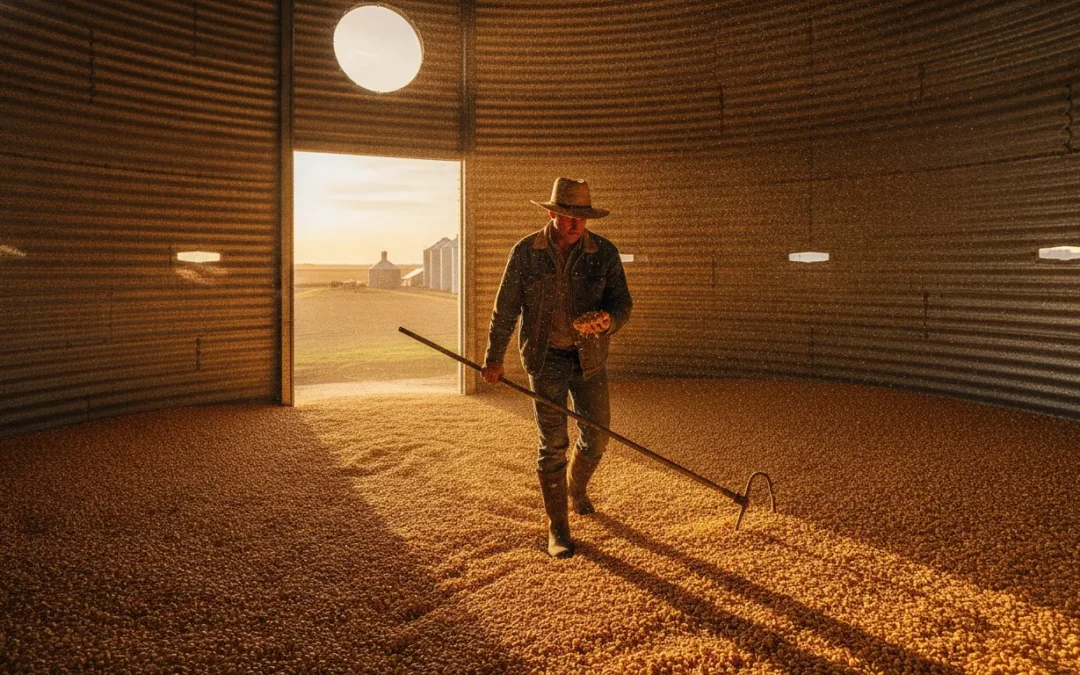
A hot spot in a grain bin rarely announces itself before quality is lost. Moisture migration, warming grain, mold, and mycotoxins can turn a manageable storage issue into a costly claim, discount, or unsellable load. Iowa State University Extension warns that storage losses can significantly damage farm profitability and may exceed the crop’s profit margin. That is why temperature monitoring is not just a convenience during harvest. It is a way to protect bushels you have already produced.
The grain spoilage cost farmers annual loss can reach thousands of dollars in a single bin when a hot spot spreads or quality discounts reduce the value of stored grain. Continuous temperature data helps you find rising heat early, so you can aerate and correct the condition before a localized problem becomes a catastrophic loss. Learn how monitoring works in our guide to preventing grain spoilage losses.
The size of that risk depends on how often spoilage develops, which crops are stored, and how quickly a farmer can respond. Start by looking at how common these storage failures are in on-farm bins and why early warning matters.
If one hot spot can cost you thousands of dollars in a single season, talk to a farmer at the farm shop about protecting your bins.
How Common Is Grain Spoilage in On-Farm Storage?
Grain spoilage is not an unusual failure reserved for neglected bins. It is a recurring storage risk whenever moisture, temperature, and airflow get out of balance. The financial damage can reach beyond the value of the visibly damaged grain. Iowa State University notes that storage losses can significantly affect farm profitability and may exceed the crop’s profit margin itself. In other words, a bin can hold a valuable harvest while quietly eroding the return that harvest was supposed to produce. Storage losses can be devastating to farm profitability.
The primary driver is usually the combination of high grain moisture and poor temperature control. Moist grain is more vulnerable to heating, mold growth, and insect activity, while temperature differences inside the bin encourage moisture movement. Iowa State Extension identifies high moisture and elevated temperatures as conditions that accelerate spoilage and infestation. That is why drying grain to the appropriate level is only the first step. The grain must also be kept at a stable temperature through timely aeration and regular checks. Learn more about the annual cost of grain spoilage.
Why grain spoilage risk continues after harvest
Storage management does not end when the bin is filled. Prevention is a year-round task that requires consistent attention to temperature and airflow. A cold, stable grain mass in winter can begin changing as outside temperatures rise. Spring warming is especially important because gradual temperature increases can create conditions for hot spots before a problem is obvious from the outside. Waiting for a smell, visible mold, or a quality complaint means the loss may already be underway.
Continuous monitoring is the standard defense against early spoilage and mycotoxin development. A sensor-based system provides a steady temperature record instead of relying only on occasional manual checks. That data helps identify a warming area early, so the operator can investigate and make an aeration decision before a localized problem spreads. USDA guidance recognizes continuous temperature monitoring as a recommended practice for detecting early spoilage and mycotoxin development in stored grain: USDA grain storage guidance.
For farmers calculating the grain spoilage cost farmers annual loss can create, the practical question is not whether every bin will spoil. It is whether a small, preventable warning will be caught before it becomes a large quality and revenue problem. Use prevent grain spoilage losses as the starting point for a monitoring plan.
What Does One Hot Spot Cost in Spoiled Bushels?
A hot spot rarely stays a small problem. Grain spoilage often begins in an isolated area, then spreads through the surrounding grain when heat and moisture create better conditions for mold and deterioration. Ohio State University Extension identifies isolated hot spots as a primary cause of sudden, widespread spoilage. Which is why finding a warm section early matters more than simply checking whether the average bin temperature looks acceptable. Read more about temperature management in farm grain bins.
The dollar math is straightforward. Every bushel that loses grade, cannot be sold as intended, or must be heavily discounted reduces the value of the crop. A hot spot that rots a meaningful portion of a corn or soybean bin can erase thousands of dollars from one storage asset. The final loss depends on bin capacity, crop price, affected volume, quality discounts, and whether the grain can be salvaged. That uncertainty is not protection. It is the reason early detection belongs in the storage plan.
How moisture migration creates a localized failure
Temperature differences inside a bin move air through the grain mass. That movement can carry moisture toward the surface, where it may condense and create a concentrated area of damp grain. Moisture migration is associated with localized spoilage and mold growth at the grain surface, according to Ohio State University Extension. Once that area warms, biological activity can accelerate, producing an even larger temperature difference and a faster deterioration cycle.
High moisture and poor temperature control compound the risk. Farmers may first notice a crust, odor, caking, or a change in grain flow, but visible evidence can arrive after value has already been lost. A temperature rise in one cable or sensor zone can provide an earlier warning than a visual inspection.
Overdrying adds a quieter loss
Not every loss comes from visibly spoiled grain. Overdrying reduces sellable weight, which lowers revenue per bushel even when the grain still looks marketable. Unnecessary fan operation can therefore reduce the return from a bin in two ways: a hot spot can damage quality, while excessive drying can remove saleable weight. Iowa State University Extension notes that this direct weight loss is an often-overlooked financial cost.
Spring warming deserves particular attention. As outside temperatures rise, stored grain can warm gradually, making this a high-risk period for renewed activity and moisture movement. Continuous temperature checks give farmers a chance to act before one warm area becomes a full-bin loss. For the broader prevention strategy, see this guide to preventing grain spoilage losses.
Spoilage by Crop: Corn vs Soybeans vs Wheat Losses
Grain spoilage does not look identical in every bin. The crop, starting moisture, temperature pattern, and length of storage all change how quickly value is lost. That is why a single moisture target or inspection schedule is not enough. Use the table below as a management framework, then confirm the storage target for your crop, market, and planned storage period with local extension guidance.
| Crop | Ideal storage moisture | Key spoilage risk | Main loss type | Relative severity |
|---|---|---|---|---|
| Corn | Crop-specific safe target, adjusted for storage length. | Hot spots, moisture migration, and mold or mycotoxin pressure | Dry matter loss, spoilage, and overdrying weight loss | High when warm or too wet. Temperature control is critical for long-term storage. |
| Soybeans | Crop-specific safe target, adjusted for storage length | Moisture migration, localized heating, mold, and insect pressure | Weight loss from overdrying, quality loss, and potential discounts. | High when moisture or temperature is uneven. Inspect vulnerable zones early. |
| Wheat | Crop-specific safe target, adjusted for storage length | Hot spots, moisture migration, insects, and mycotoxin pressure | Dry matter loss, reduced grade, and quality discounts. | High during extended storage without consistent aeration and monitoring. |
For corn, research on equilibrium moisture relationships supports using moisture data alongside temperature data rather than treating a calendar date as a storage decision. The goal is to keep the grain mass stable and identify conditions that can support spoilage before the problem spreads. The USDA Agricultural Research Service has specifically examined these moisture relationships for corn storage monitoring: review the research on corn moisture monitoring.
Corn and wheat receive clear emphasis in storage guidance because temperature management is essential to preserving quality during long-term storage. Soybeans still require the same disciplined approach: avoid assuming a cool surface means the whole bin is safe. A developing hot spot can create localized deterioration, while excessive fan operation can remove sellable weight. Iowa State notes that overdrying reduces crop weight and lowers revenue per bushel, making unnecessary drying a real cost even when visible spoilage has not occurred. In practical terms, the best defense against crop-specific grain spoilage is a combination of correct moisture at entry, uniform temperature, and timely response to changing readings.
How Early Detection Changes the Math
The economics of grain storage shift when you can act on a temperature trend instead of discovering damage during unloading. Grain spoilage cost farmers annual loss is not driven only by the final amount of grain that must be discarded. It can also include reduced quality, lost saleable weight, extra drying, and the missed opportunity to market grain when prices are stronger. Early detection keeps a manageable storage issue from becoming a full-bin problem.
A practical monitoring workflow gives you a short list of decisions rather than another number to collect. The goal is to identify a change, determine whether it is spreading, and respond while the grain still has value.
- Monitor temperature at multiple depths. A single reading cannot represent the conditions throughout a grain mass. Sensors placed at different depths provide a more accurate picture of the bin and help identify localized changes that a surface check may miss. Extension guidance recommends using sensor data from various depths to support effective aeration decisions: sensor placement and stored-grain aeration guidance.
- Watch for warming signals. A gradual rise matters, especially when outside temperatures begin climbing in spring. Automated monitoring can provide continuous, real-time temperature data, making it easier to spot a developing hot spot before it becomes visible through widespread quality loss. Research and extension guidance recognize temperature monitoring as an effective tool for making timely aeration decisions across storage conditions: research on temperature monitoring in stored grain.
- Act before mold and spoilage spread. A hot spot may start in a small area, but undetected heating can expand through the bin. Responding early may mean selecting the right aeration window, checking the affected area, or moving grain before moisture migration creates localized mold growth. Oklahoma State guidance describes automated monitoring and controls as a way to support proactive management and protect grain value: grain handling automation and controls.
- Avoid overdrying while correcting the problem. Running fans without a data-based reason can remove unnecessary moisture, reduce sellable weight, and lower revenue per bushel. Temperature monitoring paired with smart aeration control supports a more precise response, preserving quality without treating every fluctuation as a reason to run the fan.
That is where the financial case becomes practical. Iowa State Extension notes that the cost of temperature monitoring is often offset by prevented losses in the first storage season. The system does not need to prevent every storage risk to pay for itself. Preventing one avoidable escalation, reducing unnecessary drying, or preserving a saleable portion of the crop can materially change the result. For a deeper framework, see this guide to preventing grain spoilage losses.
Grain Spoilage Cost Farmers Annual Loss and the ROI
One overlooked hot spot can become a five-figure loss, and the return on monitoring is measured in protected value, not just equipment cost. Grain Temp Guard costs $499 as a standalone system with no subscription. That makes it a relatively small upfront investment compared with a single $20,000 spoilage event involving lost bushels. Quality discounts, cleanup, and the lost opportunity to sell grain when the market is favorable.
The break-even math is straightforward. Preventing just 2.5 percent of a $20,000 loss covers the purchase price. A farmer does not need to prevent an entire bin from spoiling for the system to pay for itself. Catching a developing temperature problem early may provide time to run aeration, inspect the affected area, or move grain before quality declines further. Iowa State guidance also notes that proactive monitoring can extend storage life and give farmers more flexibility to wait for better prices. Rather than selling under pressure because grain condition is deteriorating. avoid catastrophic grain losses by finding problems while they are still manageable.
Compare the full cost, not just the sticker price
AGI BinManager is commonly positioned as a higher-cost alternative at $3,000 or more, plus a subscription. Grain Temp Guard is $499 with no recurring subscription, so the ownership math remains simple from the first season forward. That difference matters when you are evaluating several bins, planning capital purchases, or deciding whether monitoring can fit this year’s equipment budget. The right comparison is not simply which system has more features. It is how much protection you need, what recurring costs you accept, and whether the system gives you usable information before a small issue becomes widespread spoilage.
Monitoring can also protect against a quieter form of loss: unnecessary fan operation. Over-drying lowers sellable weight and reduces revenue per bushel, even when the grain never visibly spoils. Oklahoma State research identifies reduced over-drying loss as one way automated systems can create ROI. For farms evaluating the broader economics of storage, see this guide to managing grain drying costs.
Research from Iowa State Extension indicates that monitoring investments can be offset by prevented losses in a single storage season. That is not a guarantee for every bin or crop. It is a practical way to evaluate the purchase: compare $499 against the value of one prevented hot spot, one avoided quality downgrade, or less unnecessary drying. For a farmer storing valuable grain through changing seasons, that is cheap insurance with a measurable payback threshold.
Before you risk another season of stored grain, ask the farm shop how Grain Temp Guard fits your bins.
Frequently Asked Questions
What is the biggest cause of grain spoilage in a bin?
High moisture combined with poor temperature control creates the conditions for mold, insect activity, and rapid quality loss. Spoilage often begins in a small hot spot, then spreads if the temperature increase is missed. Research from Iowa State University Extension identifies moisture and temperature management as core parts of protecting stored grain.
How often should grain bin temperature be checked?
Check stored grain regularly throughout the storage season, with closer attention during spring warming and other periods when outside temperatures change quickly. Continuous sensor data is more useful than occasional checks because it can reveal a gradual temperature increase before it becomes visible spoilage. Sensors placed at multiple depths provide a more accurate picture than a single reading, according to University of Minnesota Extension.
Can temperature monitoring prevent all grain spoilage?
No. Monitoring is one part of a complete storage plan that also includes clean bins, proper drying, inspections, and timely aeration. A monitor cannot correct grain that entered storage too wet, but it can provide earlier warning of hot spots. Moisture migration, and warming conditions so you can respond before losses spread.
Does a grain temperature monitor pay for itself?
It can, when early detection prevents even a portion of a serious spoilage or overdrying loss. Grain Temp Guard costs $499 with no subscription, and Iowa State research notes that monitoring investments may be offset by prevented losses in a single season. Avoiding unnecessary fan operation can also protect sellable weight, since over-drying reduces revenue per bushel.
Contact us about protecting stored grain
Temperature monitoring gives you a clearer way to spot changing conditions before a manageable issue becomes a serious storage loss. If you want to discuss whether Grain Temp Guard fits your bins and monitoring routine, contact the Farm Shop MFG team. We can help you ask the right questions about protecting your stored grain and choosing a practical next step.